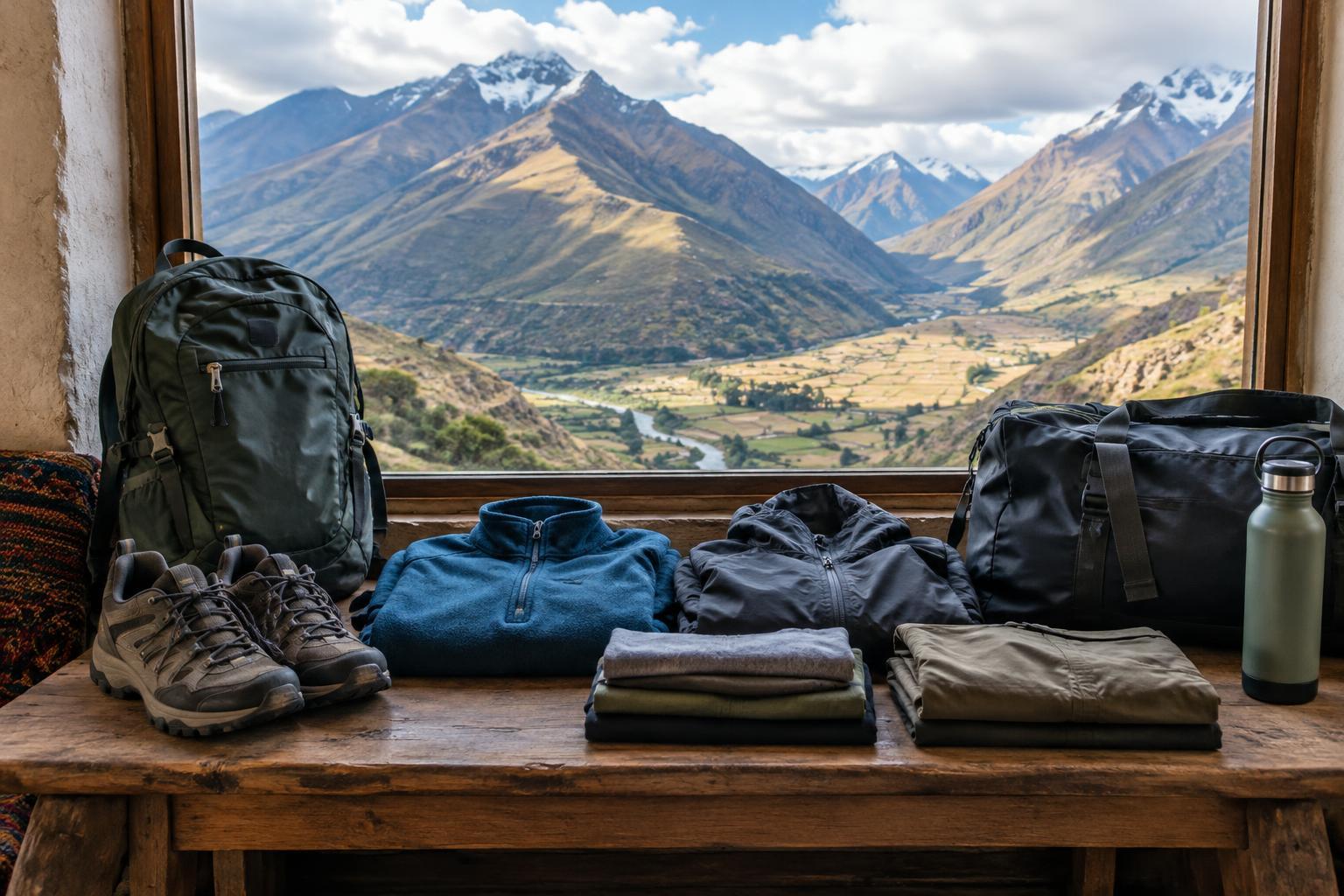
Pack for the places on your route, not just the season
An Andean trip can take you from a warm valley to a cool mountain town and an exposed walking route. Conditions also vary by country, altitude and time of year. Rather than packing for one forecast, look at each stop on your itinerary: where will you sleep, how long will you be outdoors, and will you need to carry your own bag? Those answers are more useful than a single label such as “summer” or “dry season.”
Aim for clothes you can combine, remove and dry without much fuss. A small group of versatile pieces usually works better than separate outfits for every possible temperature. Before departure, check the expected conditions and any baggage limits for your transport or accommodation. Leave a little space in your bag so that repacking on a travel day is straightforward.
Build a simple layering system
Start with a comfortable base layer that suits your activity. For walking, a lightweight top that dries reasonably quickly is often more practical than a heavy cotton one that stays damp. Add a long-sleeved layer for sun or cooler air, then a fleece or sweater for warmth. A compact insulated jacket can be useful for chilly mornings and evenings, particularly if your route includes higher elevations.
Your outer layer should address wind and rain. A waterproof jacket with a hood is more adaptable than relying only on an umbrella, especially on open paths. If you expect extended walks in wet conditions, consider rain trousers too. The goal is not to wear everything at once: it is to have options you can adjust before you become too hot or cold.
Pack a sun hat, sunglasses and sunscreen alongside your warmer layers. Bright sun and cold air can occur on the same day. A warm hat and light gloves take little room and can make early starts more comfortable. Choose items you will actually wear; the most technical garment is not necessarily the most useful one for your trip.
Choose footwear for your walking plans
Footwear should match the surfaces and distances on your itinerary. Comfortable walking shoes with reliable grip may be enough for town visits and easier paths. For rougher trails or longer days, you may prefer supportive trail shoes or boots. Whatever you choose, wear them before the trip rather than saving them for the first walk. Bring socks that fit well and pack at least one spare pair where you can reach it.
A lighter second pair of shoes or sandals can give your feet a break after walking and help if your main pair gets wet. You do not need to fill your luggage with specialist gear for an occasional stroll, but avoid assuming that smooth-soled city shoes will suit uneven or muddy ground. If a particular trek is central to your plans, check its terrain and equipment requirements separately.
Keep daily essentials in a manageable daypack
A daypack should hold the layers and supplies you might need before you return to your main luggage. A useful starting set is a rain jacket, warm layer, water, snacks, sun protection, personal essentials and any tickets or documents needed that day. A small pouch can keep valuables and easily lost items together. Put rain-sensitive contents in a dry bag or reusable waterproof liner; a pack cover alone may not protect every opening.
Think about carrying comfort as well as capacity. A bag that is easy to lift and sits comfortably when partly full is more helpful than one you are tempted to overload. Keep frequently used items near the top, and move layers in or out as conditions change. If you are joining an organised walk, confirm what you must carry yourself and what, if anything, can go in separate luggage.
Make your main luggage easy to move and repack
Choose a main bag you can manage on stairs, uneven streets and short walks between transport and accommodation. A suitcase may suit an itinerary with simple transfers, while a backpack or soft-sided bag may be easier when you will carry it more often. Check size and weight restrictions for each stage of travel rather than assuming one allowance applies throughout.
Packing cubes or simple bags can separate clean clothes, laundry and wet gear. Bring a small amount of laundry soap if you expect to wash items by hand, and allow time for them to dry. Repeating a few outfits is usually easier than hauling clothes you might never use. If you plan to buy locally made textiles, leave room for them and choose purchases thoughtfully. A flexible bag and a modest packing list will give you more freedom when the route—or the weather—changes.


