Why soup deserves a closer look
Soup is an everyday option in many parts of the Andes. You might encounter it as the first course of a set lunch, a substantial dish at a small restaurant or a warming meal after a walk. What arrives in the bowl depends on the place, the cook and what is available that day. A name that sounds familiar across borders may describe quite different recipes, so it helps to treat the menu as a starting point rather than a complete description.
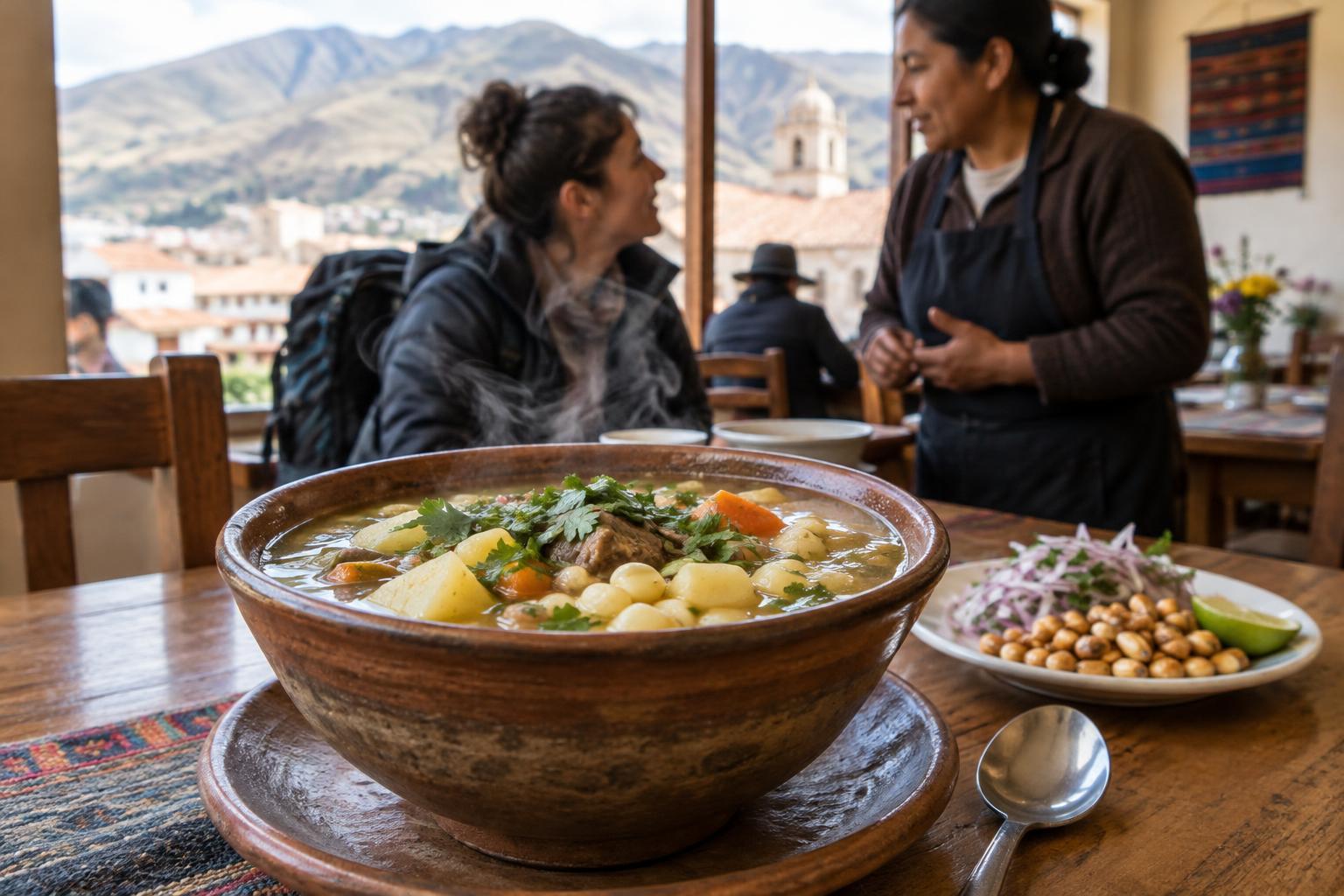
Some bowls are mostly broth, while others contain potatoes, maize, grains, vegetables or meat and are filling enough for a meal. If you want something light, ask whether the soup is a caldo, or broth, and what comes in it. If you are hungry, ask whether it is served as a starter or as a plato de fondo, a main course. The answer can save you from ordering too much food—or expecting a full lunch from a small bowl.
Names you may see on a menu
Sopa is a broad word for soup, and caldo commonly signals a broth. Neither word guarantees a particular texture or set of ingredients. A sopa de quinua may feature quinoa alongside vegetables and sometimes meat or meat stock. A caldo de gallina is usually associated with chicken, but the accompaniments and size of the serving vary. If a menu lists a sopa del día, or soup of the day, asking what it contains is more useful than guessing from the price or the restaurant’s other dishes.
Locro is another name worth asking about rather than defining by one recipe. In some places it refers to a thick potato-based soup; elsewhere, dishes with that name may include different vegetables, grains or meat. Even where two kitchens serve something similarly named, one version may be smooth and another chunky. Think of these names as clues to a conversation. A brief question at the counter can tell you more about today’s pot than a general description ever could.
How to ask before you order
A few simple questions work better than memorizing a long list of dishes. ¿Qué lleva la sopa? means “What does the soup contain?” If you need to check for meat, ask ¿Lleva carne? For chicken stock, try ¿Lleva caldo de pollo? You can also ask ¿Es picante? if you prefer to avoid a spicy dish. These phrases are useful openings, but ingredients may change during preparation, so explain any important dietary restriction clearly rather than relying on a dish name alone.
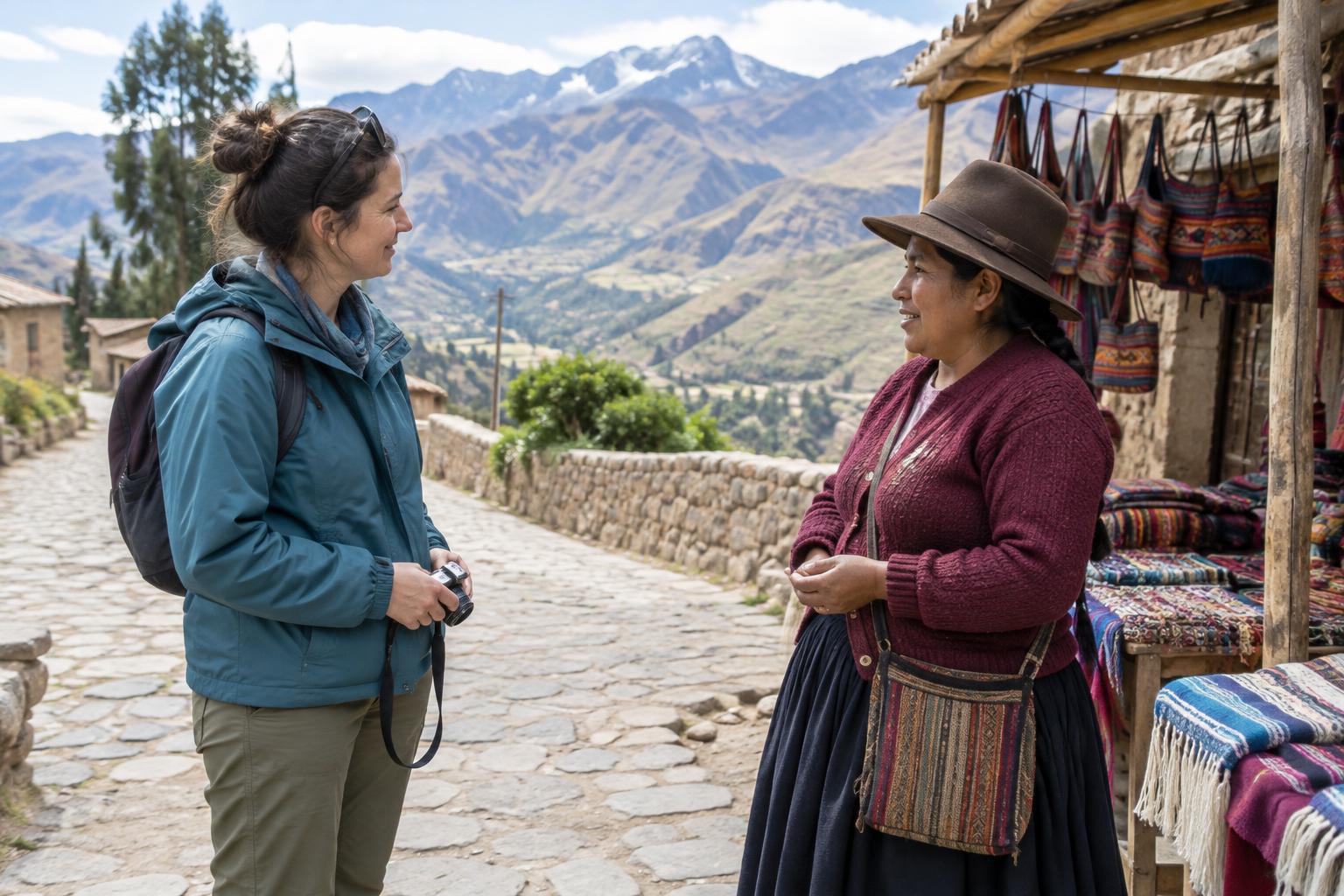
If you do not speak much Spanish, point to the listing and ask the question slowly. A written note describing an ingredient you cannot eat may help when a kitchen is busy, although it cannot guarantee that a dish will be suitable. Be especially specific about broth, fat and garnishes: a vegetable-filled soup is not necessarily vegetarian. When an answer remains unclear, it is reasonable to choose something else without making a fuss.
It is also worth asking what comes with the bowl. Bread, rice, maize, avocado, herbs or sauces may be served alongside soup in different places. A sauce on the table need not go straight into the pot; taste a little first, or ask how it is usually used. If the price is not displayed, confirm it when ordering, particularly when choosing between a small serving, a main-course bowl and a set meal.
Eating with curiosity and respect
Small restaurants often prepare a limited amount of food, and the soup offered at lunch may not be available later. If the day’s choice does not suit you, ask what else is ready rather than assuming a dish can be remade without an ingredient. Where a menu is brief, staff may be serving several tables at once; a friendly greeting and one clear question can make the exchange easier for everyone.
Notice the details without expecting every bowl to stand for an entire region. A potato soup in one town can differ from one served a short journey away, and households may make their own versions of a dish you tried in a restaurant. You can enjoy those differences without declaring one version the authentic one. The most useful habit is simple: read the name, ask what is in today’s pot and order the bowl that suits your appetite.