Start by understanding your accommodation
A place can look dry without having the same water situation as the next town or valley. Supply may vary by season, source and infrastructure, while individual hotels and guesthouses may use different storage or heating systems. Rather than assuming one rule applies throughout the Andes, read any information your accommodation provides and ask your host if there is anything guests should know about water use.
A simple question—“Are there any water-saving practices you would like guests to follow?”—gives staff room to explain what matters at their property. They may have guidance on shower times, laundry, toilet flushing or drinking water. Follow that guidance instead of changing taps, valves or other equipment yourself. Being considerate means working with the people who maintain the place, not trying to manage its water system for them.
Make showers and sink use more deliberate
Shorter showers are an easy place to begin. Have your towel and clothes ready before turning on the water, and turn it off while soaping up if the shower controls make that straightforward. If hot water takes time to arrive, ask your host whether there is a recommended way to use the system; running a tap for a long time may not be necessary. You do not need to skip basic hygiene to save water—the aim is to avoid water running when it is not doing anything useful.
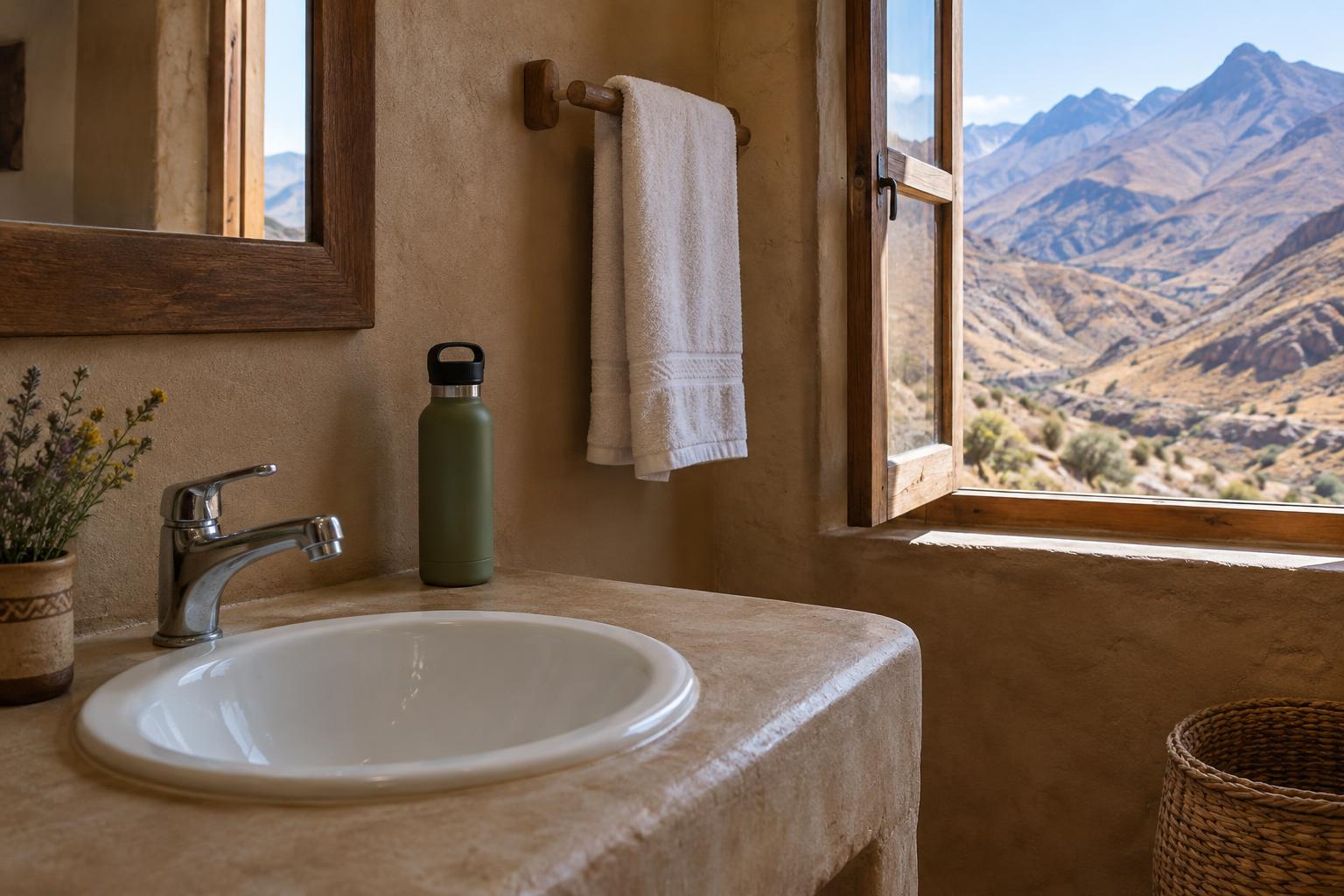
The same habit works at the sink. Turn off the tap while brushing your teeth or shaving, and fill a small cup or basin when that is more convenient than leaving water flowing. Report a dripping tap or a toilet that keeps running. A guesthouse may not notice a problem in a room until someone mentions it, and a polite report lets staff decide how best to fix it.
Think twice before requesting laundry or fresh linens
Packing clothes that can be worn more than once, aired overnight or washed in a small batch can reduce the need for a full laundry service. Before washing items in your room, check the accommodation’s rules: some places prefer guests to use a designated sink or laundry service, and drying wet clothes indoors may cause problems. If you do use a service, combining items into one load is generally more sensible than sending a few pieces each day.
Many accommodations offer towel or linen changes on request. Keep a towel for another day when it is clean and can dry properly, and decline an unnecessary sheet change during a short stay. There is no need to keep using damp or dirty items; the useful habit is to ask for a change when you need one rather than treating it as automatic.
Handle drinking water without creating another problem
Bring a reusable bottle, but check whether tap water is suitable for drinking before filling it. If it is not, ask your host what safe options are available, such as treated water or a refill point. A filter or treatment method can be useful for some trips, but it needs to be appropriate for the water source and used according to its instructions. Do not assume that clear-looking water is safe.
Refill only what you expect to drink, and avoid pouring away large amounts of safe drinking water at checkout. At the same time, do not cut back on drinking water to conserve it. Staying hydrated, especially during active days at altitude, is a different matter from leaving a shower running or requesting an unnecessary wash.
Respect local practices rather than imposing your own
Water conservation should not become a reason to judge how residents or staff use water. Hosts know the practical demands of cleaning rooms, preparing food and running their accommodation. Guests can help most by following posted guidance, making modest changes to their own routines and raising questions courteously.
If a property asks you to put toilet paper in a bin, limit shower time or use a particular drinking-water station, follow those instructions. If something is unclear, ask rather than guessing. Small, consistent choices—closing a tap, reusing a clean towel and reporting a leak—make for a more respectful stay without pretending that individual travelers can solve a region’s water challenges on their own.