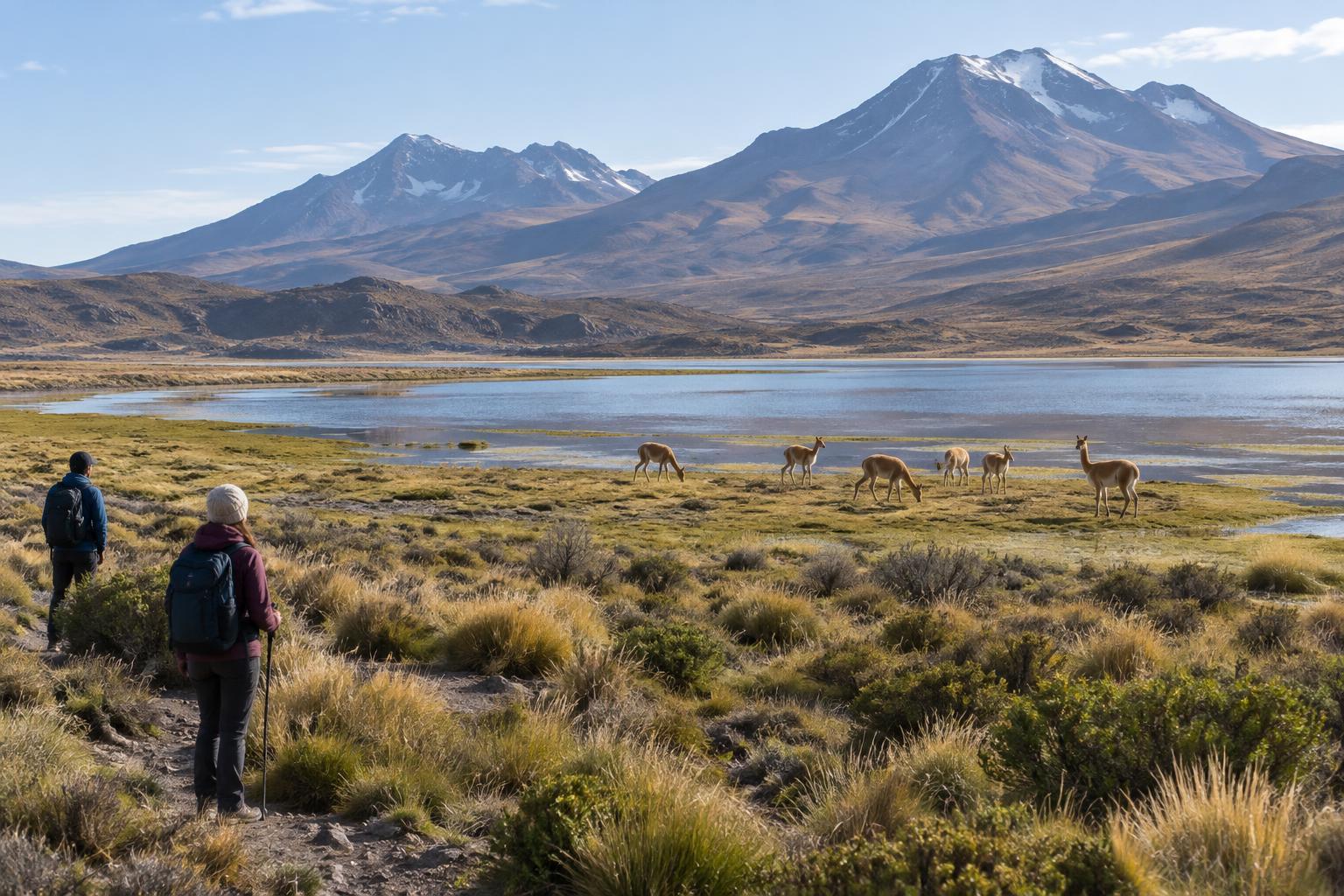
Let the animal set the distance
The Andes offer chances to see wildlife in very different settings: birds over mountain valleys, animals grazing on open grassland and waterbirds at highland lakes. The most rewarding encounters often begin with a simple choice to stop and watch rather than move closer. Bring binoculars if you have them, and use a camera’s zoom instead of trying to fill the frame by approaching an animal.
There is no single safe viewing distance for every species or situation. Stay farther away from nests, young animals and feeding or resting wildlife. If an animal looks up repeatedly, stops what it is doing, moves away or changes direction because of you, you are probably too close. Back away calmly and give it room to return to its normal behaviour. Never surround an animal with other visitors or block its route across a trail.
Why feeding wildlife causes problems
Food offered with kind intentions can still harm wildlife. Human snacks may be unsuitable, and repeated handouts can encourage animals to approach people, roads or campsites. Even food that seems natural can change how an animal spends its time and where it looks for a meal. The safest rule is straightforward: do not feed wild animals, whether you are on a remote walking route or beside a busy viewpoint.
Prevent accidental feeding, too. Keep lunch and snacks packed away when you are not eating, secure food scraps and carry out all rubbish, including crumbs and fruit peels. Do not leave food behind for an animal you could not photograph or for one that appears hungry. If wildlife approaches, remain calm, put food away and allow it a clear way to leave. Do not try to lure it closer for a picture.
Move quietly through shared habitat
A trail is a route for visitors, not a boundary that wildlife understands. Walk at a measured pace, keep voices low near animals and pause to let them move without pressure. Avoid chasing birds into flight or following an animal that retreats. At wetlands, stay on established paths and viewing areas where available; stepping towards the water for a better angle can disturb birds and damage fragile ground.
Keep dogs under control and follow local rules about where they are permitted. A dog does not have to catch an animal to cause a disturbance: running towards wildlife can interrupt feeding or separate animals from one another. If you travel with a guide or group, agree beforehand that watching comes before getting close. A brief, distant sighting is better than a prolonged encounter created by crowding an animal.
Photograph without staging an encounter
Wildlife photography rewards patience, but a photograph is never a reason to change an animal’s behaviour. Do not use food, calls or repeated approaches to draw an animal into view. Be especially cautious around nests and young animals; if you notice them, give the area extra space and move on rather than waiting nearby for a closer shot.
Consider the space your group occupies as well as your own position. Several people edging forward one at a time can leave an animal with nowhere comfortable to go. Keep to permitted paths and respect barriers, even when other visitors cross them. If you cannot make the image without disturbing wildlife, enjoy the moment without taking the photograph.
Follow local guidance and leave room for uncertainty
Protected areas and walking routes may have different rules about access, dogs, drones and viewing points. Check posted guidance and follow instructions from rangers or authorised local guides. Where no rule gives a clear distance, use the animal’s behaviour as your cue to stay back. A quiet animal is not necessarily comfortable with your presence, so resist treating stillness as permission to approach.
Responsible wildlife watching is less about identifying every species than about making good decisions in the moment. Carry what you need to keep food and litter contained, allow extra time so you are not rushing past animals, and be willing to change your plans if a route brings you too close. Giving wildlife space lets an encounter remain what it should be: a glimpse into an animal’s life, not an interruption of it.


