A short walk in a high mountain setting
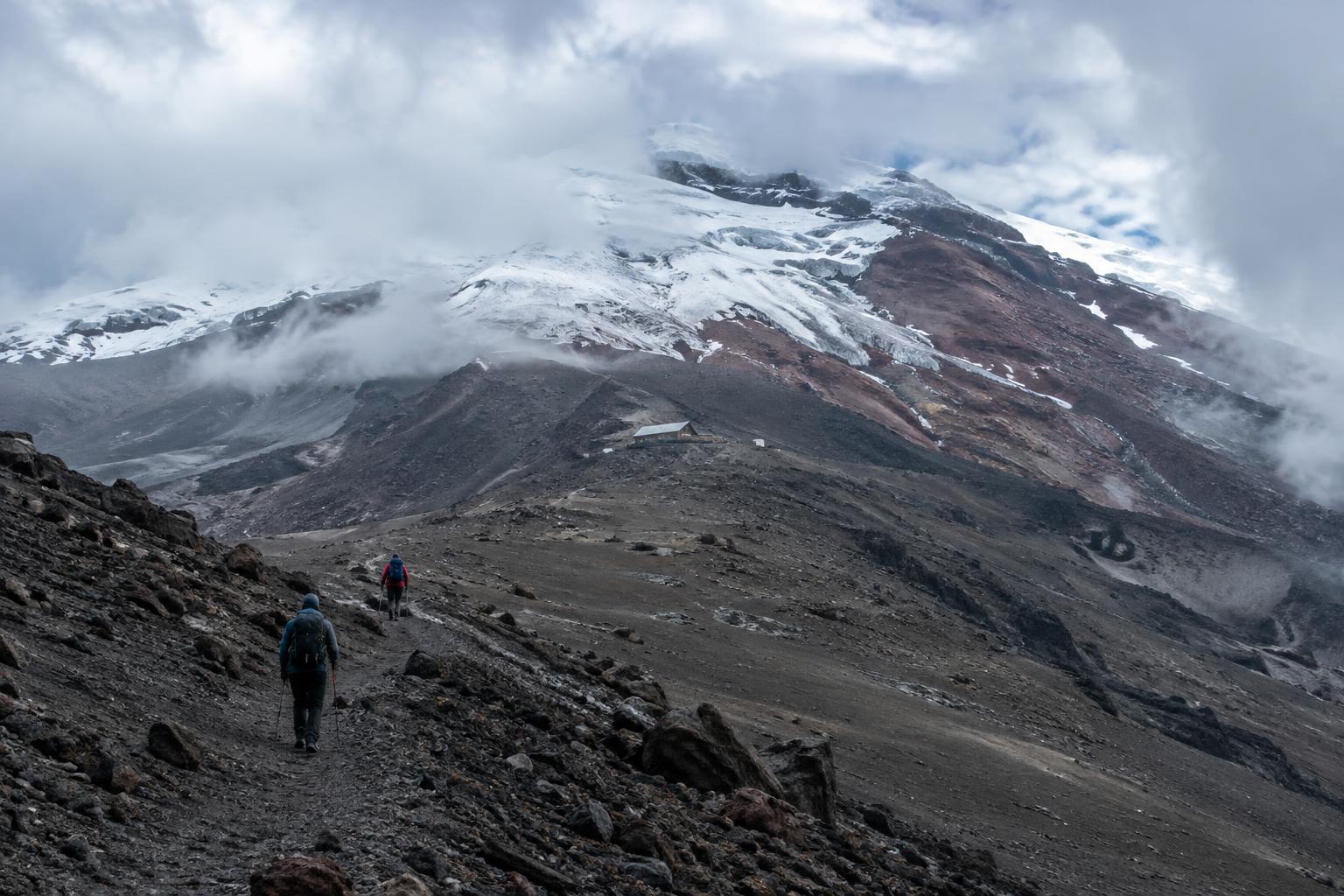
José Rivas Refuge sits high on Cotopaxi, the volcano that dominates the landscape of its namesake national park in Ecuador. Many visitors approach it from the upper vehicle parking area. The walking distance is modest compared with a full-day hike, but the climb can feel unexpectedly hard: the air is thin, the slope is sustained, and each step may slide slightly on loose material.
Treat the refuge as the destination for a separate high-altitude outing, not as an easy add-on to an already packed day. The walk to the building is not a summit attempt, and reaching it does not mean it is safe to continue higher. Allow time to pause, turn around if needed, and make the descent without rushing.
What the ground feels like
The usual approach crosses an open volcanic slope with ash, grit and small stones underfoot. Where several tracks are visible, choose an established route rather than cutting straight uphill across loose ground. Uphill progress can be slow because your feet may slip back; downhill, the same surface calls for short, controlled steps. Sturdy footwear with reliable grip is more useful here than trying to move quickly.
Conditions can alter the character of the walk. Rain may make the ground slippery, while snow, ice or poor visibility can make an otherwise straightforward line difficult to follow. Do not assume that a track visible from the parking area will remain clear all the way up. If the surface or weather is beyond your experience, turning back is a sound decision.
Wind, cold and altitude
The slope offers little shelter. Sun can feel strong during a clear spell, yet wind, cloud and precipitation can make the same walk cold within minutes. Carry a warm layer and a wind- and rain-resistant outer layer, even if conditions seem mild lower down. Bring water, protect exposed skin from the sun, and keep essential items close to hand rather than buried in a vehicle bag.
Altitude deserves as much attention as the trail. Driving high into the park does not give your body much time to adjust, and people respond differently. Walk at a pace that lets you speak comfortably, take breaks, and avoid treating the refuge as a target you must reach. A worsening headache, dizziness, nausea or unusual weakness is a reason to stop and descend rather than push on. If you are uncertain how altitude may affect you, seek appropriate health advice before your trip.
Checks to make before you travel
Cotopaxi is an active volcano, so access arrangements can change. Before leaving for the park, check current official park guidance for entry, permitted routes and any volcano-related restrictions. Confirm whether the road to the upper parking area is open and suitable for your planned transport; a vehicle reaching the park entrance is not necessarily able to reach the trailhead.
Also check the weather forecast for the mountain area, not just a nearby town, and leave room in your plans for a change of day. If you hope to use the refuge for a rest or refreshments, verify its current opening arrangements rather than relying on it for food, water or shelter. Keep any permit, identification or registration requirements in mind, and follow instructions given by park staff at the entrance or on the route.
Walk lightly and leave room to change plans
Stay on established tracks where possible, carry out everything you bring, and give other walkers space on narrow or unstable sections. The exposed terrain is part of the attraction: there is no need to climb beyond the refuge or wander off route to appreciate views of Cotopaxi’s slopes and the surrounding páramo.
A satisfying visit may mean reaching the refuge, or it may mean turning around sooner after a careful look at the conditions. Decide on a turnaround point and time before starting, especially if daylight is limited or your group walks at different speeds. That flexibility makes it easier to enjoy the landscape while taking its altitude, weather and changing access rules seriously.