What makes a páramo walk different
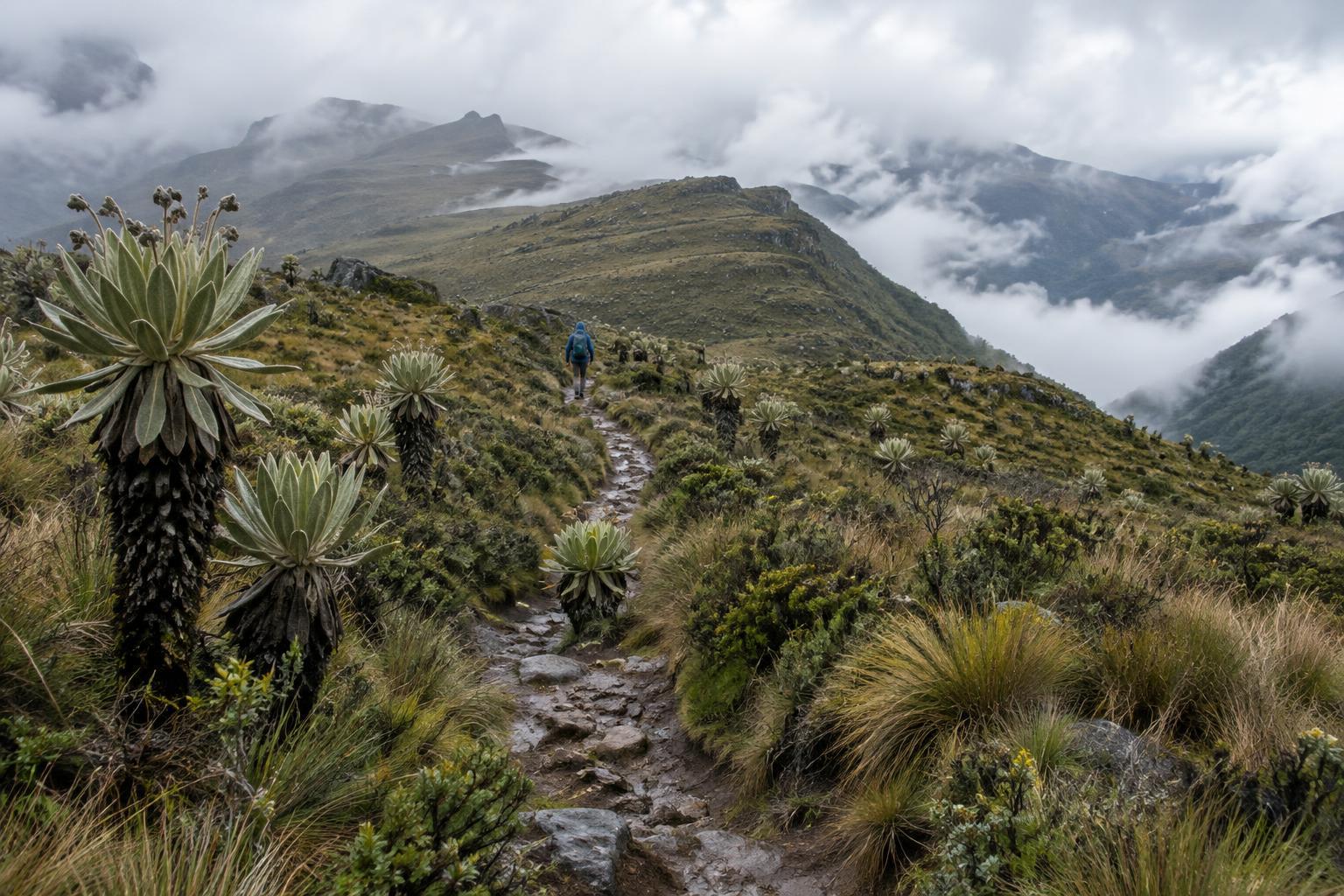
Páramo is a high-altitude landscape found above the Andean treeline and below permanent snow. In Colombia, a walk may pass through open grassland, low shrubs, wetlands and slopes dotted with frailejones: plants whose rosettes and tall flower stalks give parts of the landscape an unmistakable silhouette. The broad views can make the ground look easy to cross, but distance is difficult to judge when a ridge is exposed and landmarks disappear into cloud.
Conditions vary considerably between sites. A marked day route near a park entrance is a different undertaking from a remote traverse with few clear junctions. Before choosing a walk, check its distance, elevation gain and highest point as well as the time you expect to spend moving. Ask locally which routes are open and whether entry arrangements or a guide are required; rules can differ by protected area and may change.
Read the ground beneath your feet
Páramo paths can shift quickly from firm earth to slick stone, loose gravel or saturated soil. Boardwalks may cross particularly wet stretches, while narrow tracks can run beside drainage channels that are deeper than they first appear. After rain, even a short walk may take longer than planned. Sturdy footwear with reliable grip helps, but careful foot placement matters just as much.
Stay on established paths, even when a muddy section offers an inviting shortcut. Detours widen trails, damage vegetation and can lead walkers onto fragile or boggy ground. If a path becomes difficult to follow, stop and establish your position rather than pressing across open terrain. A downloaded map is useful, but it should complement route information obtained before setting out; a phone signal or battery may not last the whole day.
Prepare for weather that changes the walk
Cool air, strong sun, wind and rain can all be part of one outing. Cloud may arrive fast enough to remove a view of the next landmark, while wind can make an exposed ridge feel much colder than a sheltered trailhead. Dress in layers that can be adjusted without unpacking everything. Carry a waterproof outer layer and keep spare warm clothing dry inside your pack.
Start with enough daylight to finish comfortably, and agree on a turnaround time before you leave. That decision is easier to follow when it is made before the summit or viewpoint comes into sight. If visibility drops or weather makes the route uncertain, turning back is a sensible outcome, not a failed walk. Bring drinking water, food and sun protection even if the morning feels cold.
Give altitude room in your plans
Many páramo routes begin at elevations where travelers may notice that climbing feels harder than it did at lower altitude. A slower pace and frequent pauses can make the day more manageable. If your itinerary allows, spend time at higher elevations before attempting a demanding route, and avoid treating a stated walking time as a target to beat. People respond to altitude differently, so leave room to shorten the outing.
Tell someone your intended route and expected return time, especially if you are walking without a guide. In a group, plan around the least comfortable walker rather than letting the party spread out. Know where you can turn back, and take persistent or worsening symptoms seriously rather than pushing on for a viewpoint.
Walk lightly through a sensitive landscape
Páramo vegetation grows in conditions that can make recovery from trampling slow. Look at frailejones without touching or climbing them, keep to permitted trails and carry out everything you bring in, including food scraps. Keep a respectful distance from wildlife. If you pass farms, homes or people at work, remember that a walking route can also be someone else’s everyday landscape.
Good preparation is part of responsible travel here. Choose a route suited to your group, follow the access rules for that particular area and use local route knowledge when the way ahead is unfamiliar. With time to watch the light, weather and ground, a páramo walk can be memorable without needing to leave the path.


