Choose a route, not just a destination
Walking between villages can reveal a landscape that is easy to miss from a vehicle: fields beside the path, changing views across a valley and the gradual transition from one settlement to another. These routes can also be harder to follow than a named hiking trail. A track may lead to a home, a field or a grazing area rather than the next village. Start with a route whose access and destination you can establish, rather than assuming every visible path is open to visitors.
Before setting out, identify your intended finish, likely walking time and a way to shorten the day. Check whether the route crosses private land or requires permission; arrangements can vary from place to place. A local map, accommodation host or knowledgeable guide may help you clarify the route, but ask specific questions: Which path leaves the village? Are there gates? Is there a junction where walkers commonly go wrong? If you cannot establish where a path leads or whether you may use it, choose a clearer alternative.
Navigate the small decisions
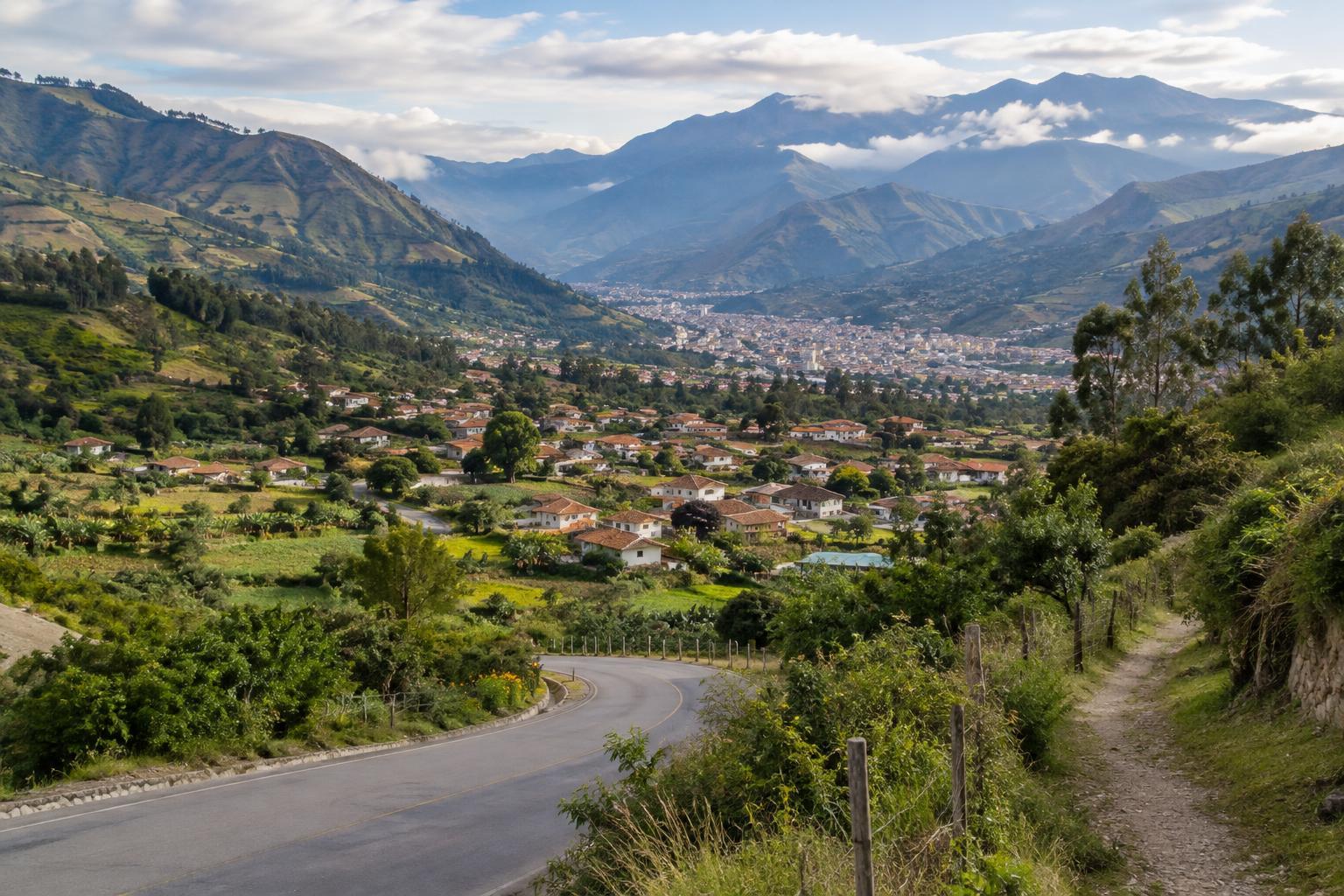
On a village path, navigation often comes down to a series of modest choices rather than one dramatic turn. At each junction, pause and compare the direction of the path with your map or saved route. Look back occasionally so that return landmarks will be familiar. A broad track is not necessarily the right track, and a narrow footpath can become indistinct where animals or vehicles have created parallel lines.
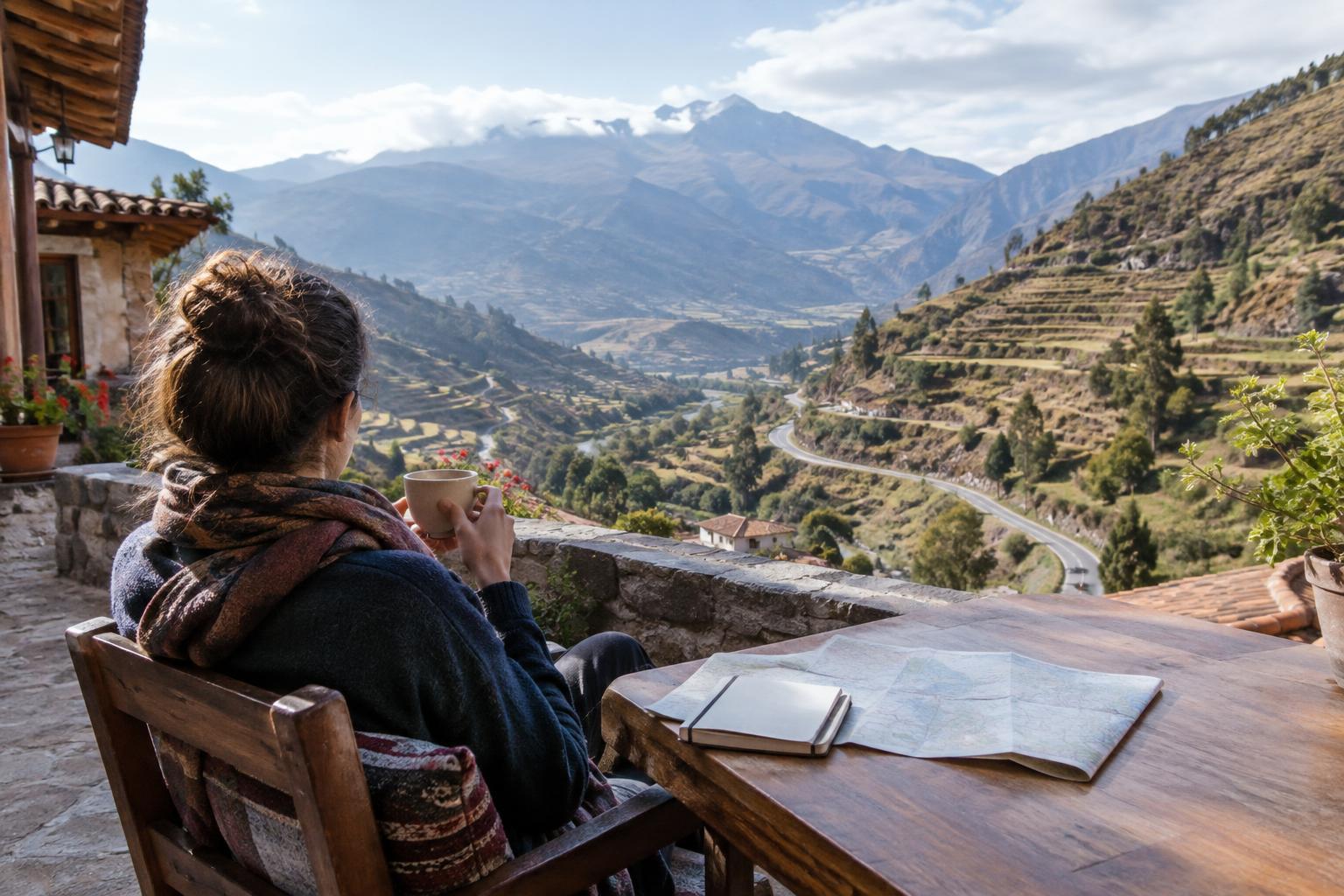
Keep a map available without relying entirely on a phone signal or battery. Save any route information you need before leaving, carry enough power for the day and make a note of places where you could turn back. If you lose the route, return to the last junction you recognised instead of cutting across fields to rejoin it. A shortcut that looks simple from a distance may cross crops, fencing, steep ground or land you do not have permission to enter.
Allow more time than the distance suggests. Rough surfaces, climbs and time spent checking directions can slow progress. Start early enough that a wrong turn or a conversation about the route does not leave you walking unfamiliar ground after dark.
Treat working paths as shared space
A path may be part of someone's everyday journey or working area. Give people and loaded animals room to pass, keep your voice and group spread modest around homes, and avoid blocking entrances while checking directions. If you want to photograph people or their homes, ask first and accept a refusal without pressing. Respectful walking is less about performing a set of gestures than paying attention to how your presence affects others.
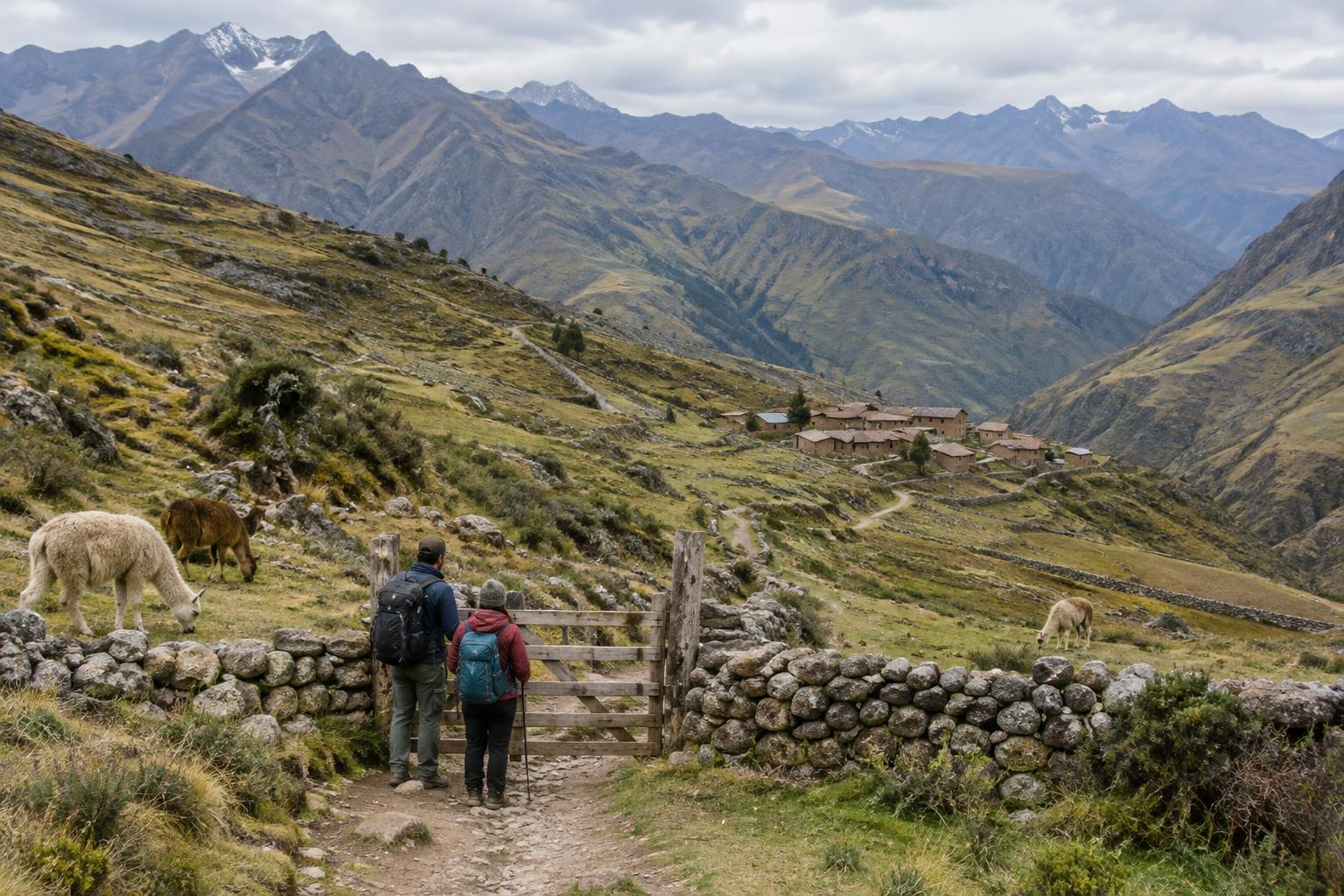
Pass through gates as you find them, closing one if it was closed. Do not climb over walls or move barriers to make your route easier. Around livestock, slow down, leave space and avoid walking between animals that appear to be together. If a dog approaches, stay calm, avoid running and give it room while you assess whether it is safe to continue. Where an animal, fence or uncertain access blocks the way, turning back is a sensible route decision, not a failed walk.
Carry out your litter, including food scraps, and keep to the established path where practical. In cultivated areas, stepping aside to make room for someone should not mean stepping onto crops. Small choices like these matter especially on routes that were not designed primarily for recreation.
Stay ready to change the plan
Conditions can change within a single walk. Rain may make an earthen path slippery, a stream may be harder to cross than expected, or cloud may obscure the landmarks you planned to use. Altitude can make an ordinary climb feel slower than it looks on a map. Bring layers, water, food and footwear suited to the ground, then set a turnaround time before you start. Do not treat a planned finish as a reason to push through an unsafe crossing or uncertain terrain.
Before leaving, tell someone where you intend to walk and when you expect to return. If plans change, update them when you can. At the end of the day, judge the walk by whether you followed a route you could navigate and left the path usable for others—not by whether you reached every point you had marked on a map.