Start with the trip you want, not just the photograph
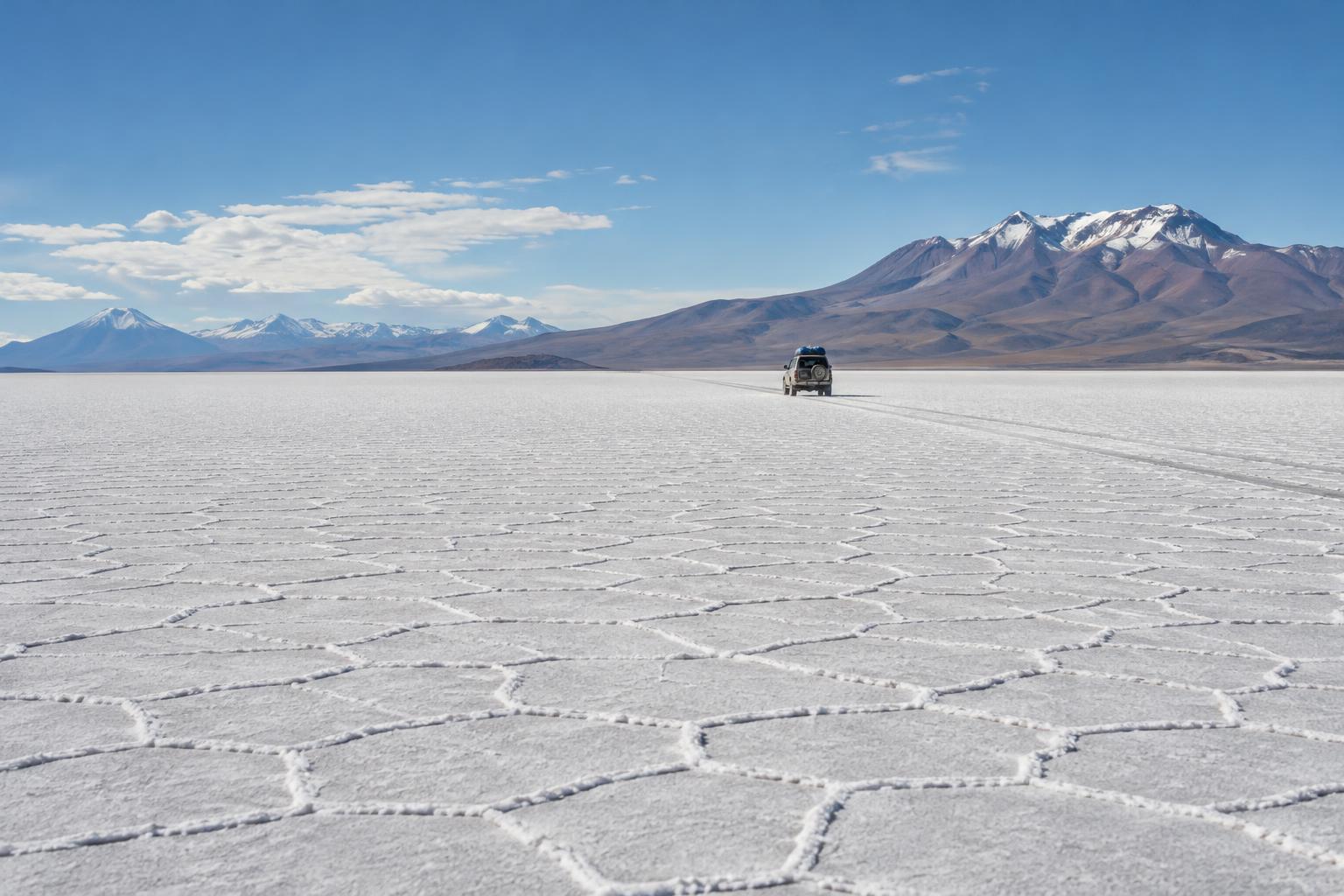
The Salar de Uyuni is often pictured as an uninterrupted white horizon or, after rain, a vast reflection of the sky. Both images show only part of the experience. A visit might be a day spent on the salt flat, or several days travelling through high-altitude landscapes where lagoons, rock formations and small settlements share the itinerary.
Before comparing tours, decide how much time you want to spend in a vehicle and whether the salt flat itself or the wider region is your priority. Departure point matters because it shapes the direction of travel, the amount of ground covered and where your journey ends. It can also affect how comfortably the route fits into the rest of your South America trip.
Uyuni, Tupiza or San Pedro de Atacama?
Uyuni is the straightforward starting point for travelers who are already in Bolivia and want to focus on the salt flat. Day trips commonly return to town, while longer routes continue into the surrounding highlands. This is a useful choice if you have limited time or want to keep your onward plans flexible. Check the actual itinerary, though: tours with the same advertised length may spend different amounts of time on the salt.
Tupiza, farther south in Bolivia, appeals to travelers who want the journey across the region to be part of the experience. Multi-day routes often approach the salt flat toward the end, passing through varied landscapes along the way. They generally require more time than a short outing from Uyuni. If reaching the salt flat on a particular day is important to you, ask for the planned sequence rather than assuming every Tupiza departure follows the same route.
San Pedro de Atacama in Chile is an option if Bolivia fits naturally after a stay in northern Chile, or if you are travelling in the opposite direction. These are cross-border journeys, not simply salt-flat excursions. Confirm where the tour starts and finishes, what border arrangements you must handle yourself and whether transport beyond the advertised endpoint is included. Entry requirements depend on your nationality and circumstances, so check them independently before committing.
Understand what a tour route includes
A day tour from Uyuni gives you a concentrated introduction to the salar. A multi-day route usually adds long drives through remote, elevated terrain, with stops that may include lagoons, volcanic scenery and other natural features. The extra days provide variety, but they are not necessarily extra days on the salt flat. Read the stop-by-stop plan and ask which visits are conditional on road and weather conditions.
It is worth clarifying the practical details that can disappear behind a simple itinerary: the number of passengers per vehicle, the style of accommodation, meals and drinking water, access to bathrooms, and whether entrance fees are included. Ask how the operator handles a breakdown or a change of route. A clear explanation is more useful than a promise that every stop is guaranteed.
If you plan to continue to another town or country, confirm the precise finishing point and approximate arrival window before arranging onward travel. Routes cover large distances, and delays can happen. Leaving a buffer is usually less stressful than relying on a tight connection.
Allow for conditions and altitude
Conditions on the salar change with the seasons and from one visit to another. A dry surface can bring the bright, geometric landscape many travelers expect; standing water can create reflections but may restrict where vehicles can go. Neither effect should be treated as guaranteed. Ask what the operator expects to be accessible during your visit and how the itinerary changes if a section cannot be crossed.
The wider southwest Bolivia routes travel at high elevation, and nights can feel cold even when daytime sun is strong. Pack layers, sun protection and water you can reach during the drive. If you have just arrived from a much lower elevation, consider how the trip fits into your broader travel plans rather than treating a demanding multi-day route as an automatic first stop.
Choose with care for people and place
The salt flat and its surrounding settlements are places where people live and work, not just backdrops for photographs. Follow local guidance about where vehicles and visitors may go, take waste away with you, and ask before photographing people. A respectful visit also leaves room for a guide to explain why a planned stop may need to change.
When comparing operators, look beyond the headline price. Ask direct questions about vehicle occupancy, driver rest, accommodation and how waste is managed. You may not be able to verify every answer in advance, but specific, consistent information helps you choose a trip that suits your expectations. The best departure point is ultimately the one that gives you enough time for the route you want without rushing the journey around it.


