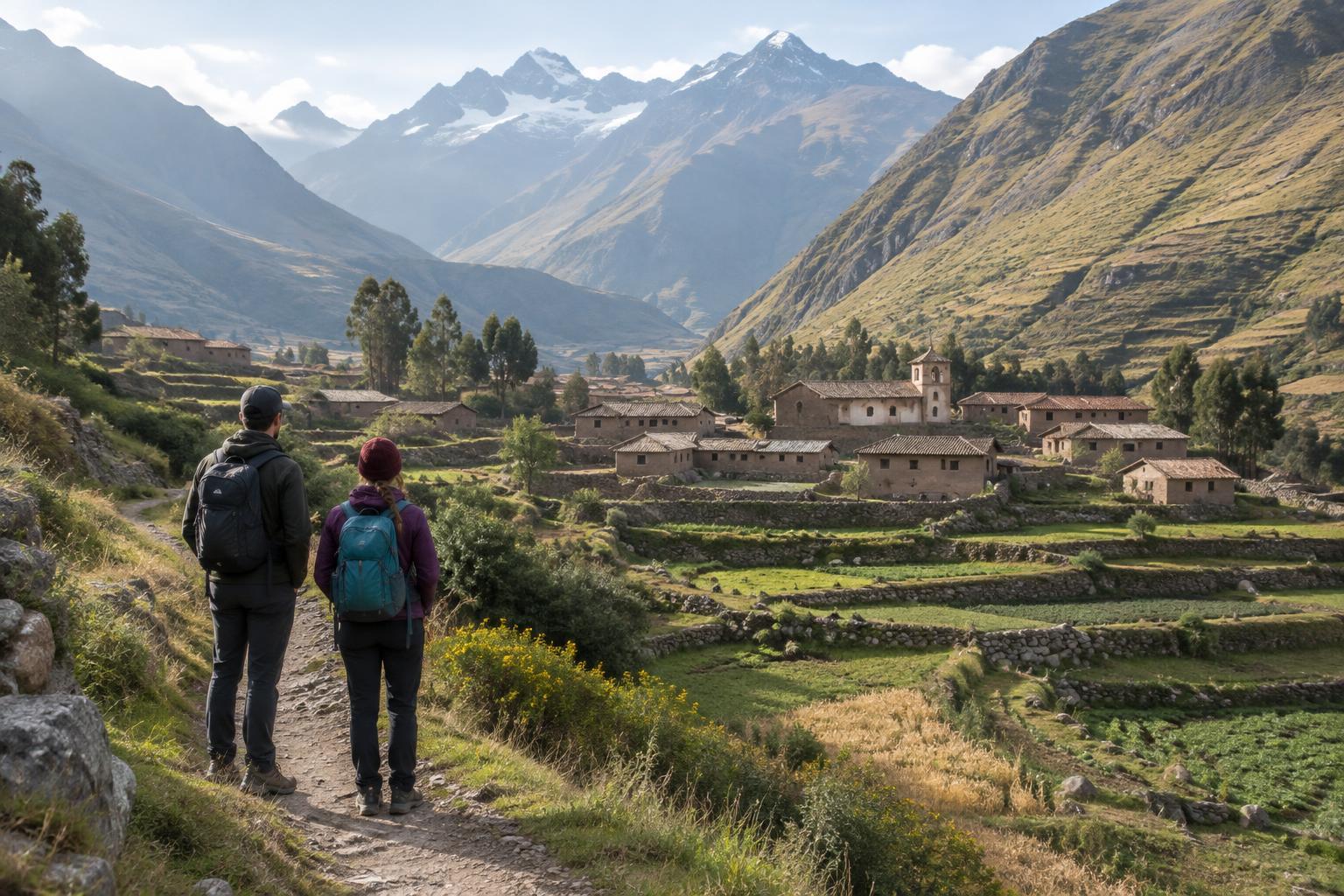
Think beyond the number of visitors
A small settlement can feel crowded long before a trail or street looks busy. Visitors may gather at a doorway, fill the seats of a café or stop in a place residents need to pass through. The effect depends on the space, the activity underway and whether people expected guests. A group arriving together can have a different impact from the same number of people passing through over several hours.
Before adding a community stop to your route, ask what you hope to do there. Buying a meal or joining an activity that is openly offered to visitors is different from wandering into residential areas in search of an “authentic” encounter. If you have no clear reason to enter a small village, a viewpoint or established walking route may be a better place to pause.
Keep groups manageable
There is no group size that works everywhere. A few walkers might be easy to accommodate on a wide public path but disruptive inside a small workshop or family-run business. If you are organising a visit, ask the person hosting it what size works for them, and treat their answer as a limit rather than a target to exceed. Make sure everyone in the group knows where they may go and what, if anything, has been arranged.
Splitting a large party into smaller groups does not necessarily solve crowding if everyone arrives in succession. Leave enough space and time for ordinary activity to continue, and be prepared to change plans if a place is already busy. Where a visit involves a host, paying a fair agreed price matters; so does not expecting extra time, photographs or access beyond what was offered.
Choose timing with residents in mind
An empty-looking street is not an invitation to explore it. People may be working, resting or preparing for an activity that visitors cannot see. Likewise, a market or celebration is not automatically a visitor attraction simply because it is visible from a public space. Check locally when a business or visitor activity welcomes guests, and avoid assuming that an online itinerary tells you what is suitable on the day.
If you can choose when to travel, build flexibility into your schedule rather than treating a community stop as an appointment you must keep at any cost. Arriving late, finding a venue closed or seeing several groups already there are good reasons to move on. Flexibility also helps you avoid pressuring someone to open, serve or guide you when the timing does not work for them.
Accept a no the first time
A no might be spoken directly, conveyed through a closed gate or sign, or expressed by someone declining a request for a photograph. It does not require an explanation. Thank the person where appropriate, step back and choose another plan. Do not ask a companion to try again, offer money to change the answer or treat silence as permission.
The same principle applies online. If someone agrees to a conversation or a portrait, that does not automatically mean they want an image posted publicly or their home and location identified. Ask separately before sharing, and accept a refusal without making it awkward. If you cannot establish consent, keep the camera down.
Make leaving an easy option
Good planning includes a route that does not depend on access to a particular home, gathering or community space. Identify a public place to wait, carry what you need for the walk and know how you will continue if a proposed visit is unavailable. If you travel with a guide or operator, ask how visits are arranged and whether hosts can decline or change plans; avoid assuming that a stop on an itinerary guarantees access.
During the visit, pay attention to the space you occupy. Keep paths and entrances clear, follow any local guidance and let people carry on without feeling obliged to interact. The most respectful choice may be a shorter stay—or no visit at all. Accepting that choice leaves room for residents to decide when and how they welcome guests.


