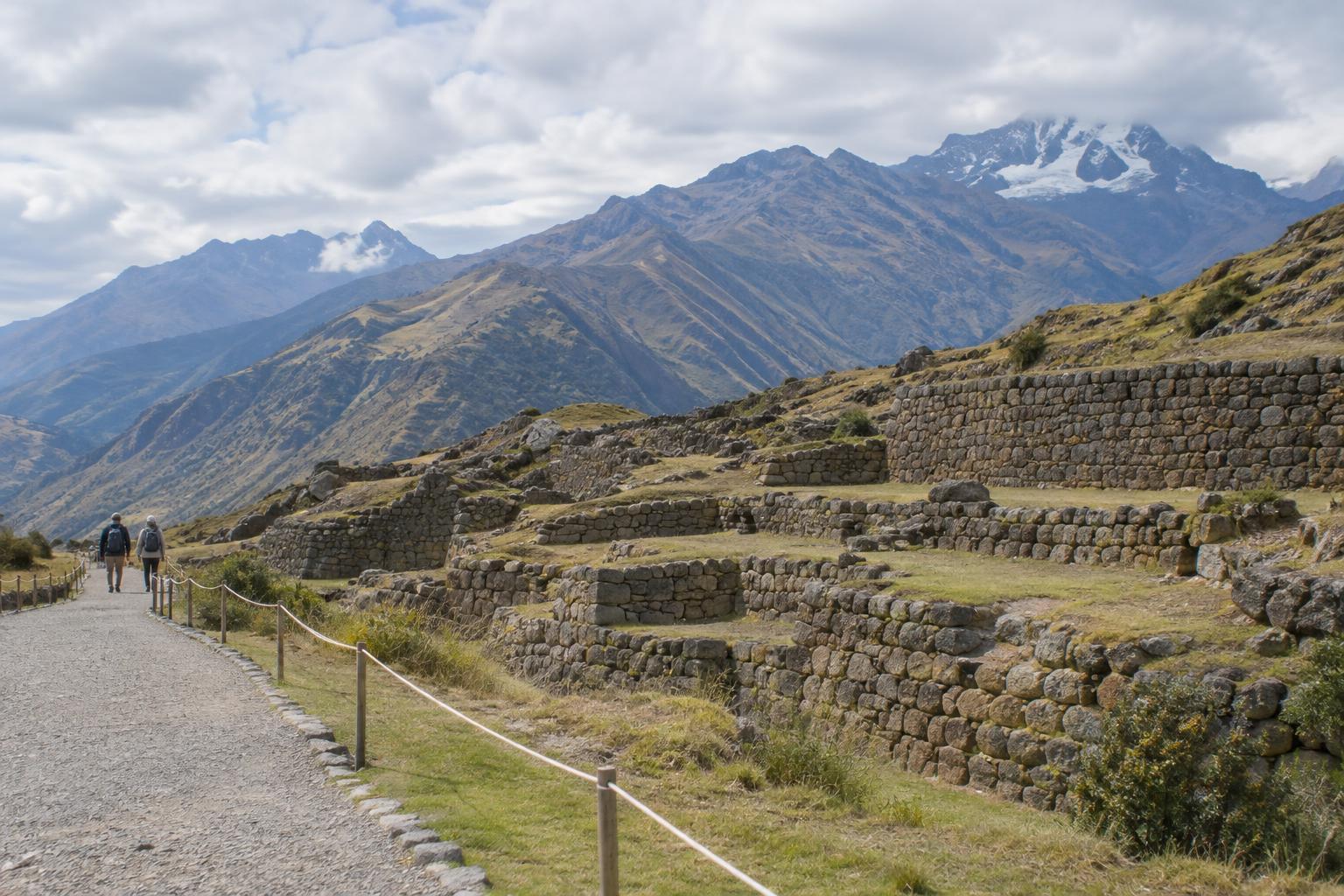
A barrier protects more than the ground behind it
Andean archaeological sites range from major visitor attractions to modest remains beside walking routes. Their rules and facilities vary, but a rope, low fence or line of stones usually marks a boundary worth respecting. It may keep feet away from unstable masonry, worn surfaces or areas being studied and maintained. A closed section may look sturdy from a distance; its condition is not always obvious to a visitor.
Stay on signed paths and use designated viewpoints, even when a shortcut seems harmless. Repeated footsteps can loosen soil, wear steps and gradually widen a trail. If the route is unclear, look for posted guidance or ask site staff rather than following someone across a barrier. A photograph is not worth adding another set of footprints to a fragile area.
Boundaries also help people share a place safely. Standing back gives other visitors room to move and reduces pressure on narrow paths and structures. Treat barriers as part of the visit, not as obstacles to getting a better view.
Stonework is not a seat or a climbing frame
Old stone structures can appear exceptionally solid. Yet a wall may contain loose stones, vulnerable joints or surfaces worn by weather and generations of use. Sitting on a ledge, leaning against a wall or climbing for a photograph can put pressure on places that were not meant to carry modern visitor traffic. Touching carved or painted surfaces may leave dirt and oils behind; even a small mark is difficult to undo.
Use paths, benches and viewing areas intended for visitors. Keep bags, walking poles and tripods from scraping masonry, and watch where you place your hands when negotiating uneven ground. If a path feels difficult, pause or turn back rather than using an ancient wall for support. These habits are useful whether a site has detailed signs or only a simple marked route.
Sites can also have cultural meaning beyond what a visitor can see or understand in a brief stop. Following local guidance about where to walk and what not to touch is a straightforward way to show respect without assuming that every community views a place in the same way.
Leave loose objects where they are
A small fragment of pottery, worked stone or other object might look like a harmless souvenir. Its position, however, can be part of what makes it informative. Moving an object can separate it from its surroundings and make it harder for those responsible for the site to understand or care for the area. Even when you cannot tell whether something is old, the safest choice is to leave it in place.
Do not pocket fragments, rearrange stones for a photograph or build a small pile to show where you found something. If an object seems significant or at risk of being disturbed, note its location without handling it and tell site staff or the appropriate local authority where possible. A photograph taken from the path may help you describe the spot. Avoid sharing the precise location of an unprotected find online, where it could draw unwanted attention.
The same principle applies to seemingly ordinary loose stones. They may be part of a structure or a carefully maintained path. Leaving them as they are avoids making a judgment that a brief visit cannot support.
Plan for a visit that leaves room for others
Before setting out, check what access arrangements you can verify for the specific site. Some places require a guide or ticket, while others have limited signage or changing routes. On arrival, give posted instructions and staff directions priority over advice from other visitors. If a path is closed, choose another view rather than treating the closure as optional.
Carry water and what you need so that you are not tempted to leave the route in search of facilities. Take litter with you, keep a comfortable distance from other groups and ask before photographing people. If visiting with children, explain the boundaries before reaching a tempting set of steps or stones.
Responsible travel here is less about knowing everything about an archaeological place than about recognising what you do not know. Staying on the path, keeping hands off stonework and leaving loose objects alone are simple decisions. Together, they help protect both the physical remains and the chance for future visitors to encounter them on their own terms.


