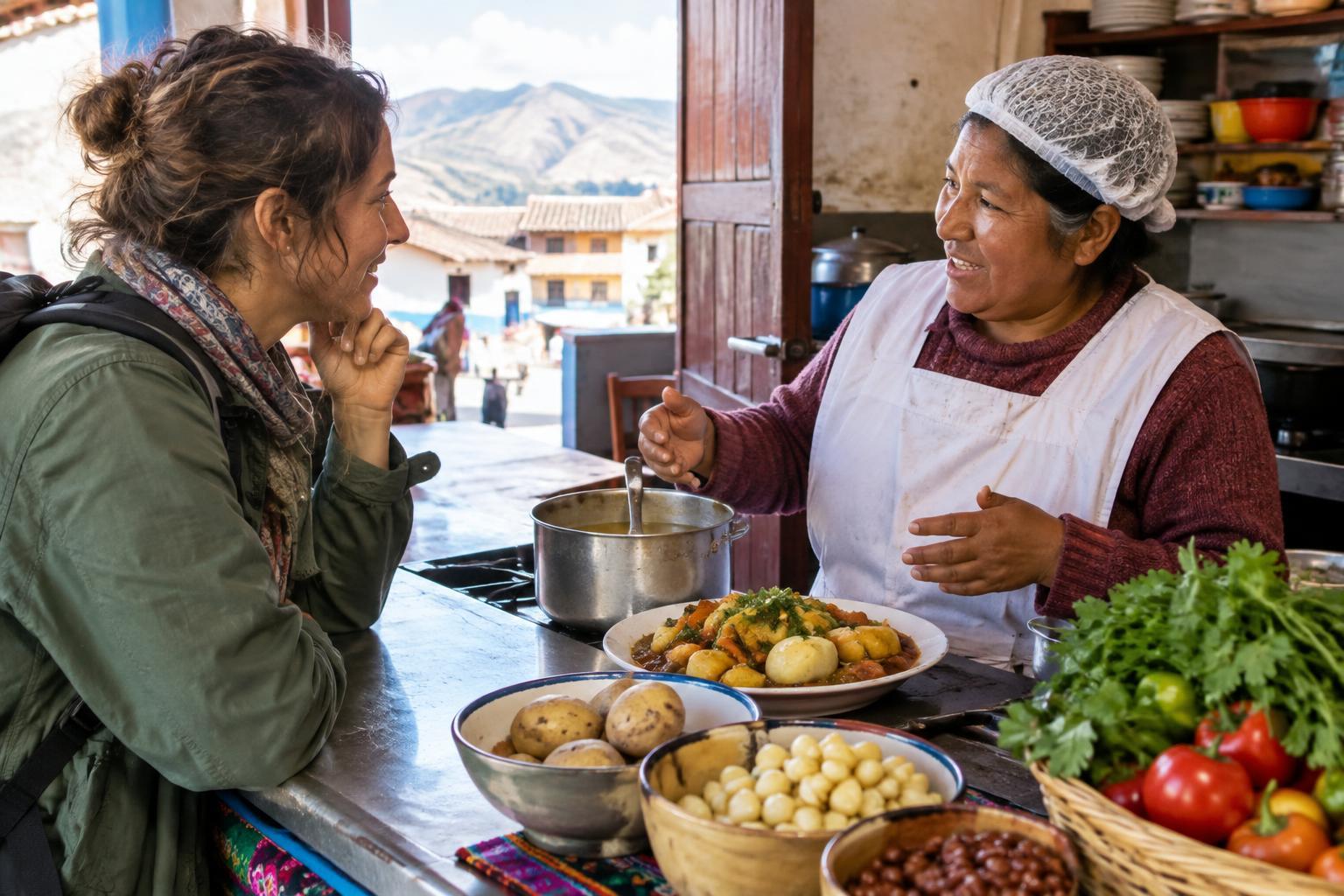
Explain what you do and do not eat
Vegetarian travellers can find plenty to enjoy in the Andes, from potatoes and maize to beans, grains, fruit and cheese. The challenge is often not spotting vegetables on a plate but finding out what went into the pot. A soup with no visible meat may use chicken stock; beans or rice may be cooked with animal fat. Recipes differ between countries, regions and households, so it is more useful to ask about a particular dish than to assume its ingredients from its name.
In Spanish-speaking areas, start with “Soy vegetariano” or “Soy vegetariana,” according to the form you prefer. Then spell out your limits: “No como carne, pollo ni pescado” means “I don’t eat meat, chicken or fish.” If broth and animal fat matter to you, add “Tampoco como caldo de carne ni grasa de cerdo” — “I don’t eat meat broth or pork fat either.” A specific explanation can be clearer than the word “vegetarian” alone. If you do not eat eggs or dairy, say that separately rather than expecting the same phrase to cover them.
Ask about the cooking liquid and fat
For soups, stews, sauces and rice, try “¿Lleva caldo de carne o de pollo?” — “Does it contain meat or chicken broth?” You can also ask “¿Está hecho con agua o con caldo?” — “Is it made with water or stock?” A vegetable-filled soup may still be prepared with stock made from meat or bones. Asking before ordering gives the cook a chance to tell you what is already in the dish, rather than trying to remove an ingredient that has cooked into it.
For dough, fried foods, beans and sautéed dishes, ask “¿Está hecho con manteca de cerdo o grasa de cerdo?” — “Is it made with lard or pork fat?” The word “manteca” does not always tell you enough on its own, so specifying “de cerdo” helps. Cooking oil may be an alternative, but do not assume a kitchen can change a batch that has already been prepared. A useful follow-up is “¿Se puede preparar con aceite?” — “Can it be made with oil?”
Check familiar-looking dishes one by one
Empanadas and other filled pastries need two questions: what is in the filling, and what is in the dough? A cheese filling does not, by itself, tell you which fat was used in the pastry. With soups, ask about the stock even when the listed ingredients are vegetables, potatoes or quinoa. With beans, rice and sauces, ask whether they were cooked with meat, broth or animal fat. These are possibilities to check, not rules about how every kitchen prepares a dish.
Simple plates can make the conversation easier. You might ask for potatoes, maize, vegetables or beans with ingredients served separately, where available. If a menu lists a dish you like but its preparation is unclear, ask “¿Qué ingredientes lleva?” — “What ingredients does it contain?” A written list of your limits on your phone can help in a busy market or dining room, especially when it includes broth and fat as well as meat.
Keep the exchange clear and courteous
Food words and cooking habits vary across the Andes, and Spanish may not be the first language of everyone you meet. Speak slowly, use short questions and allow time for someone to check with the cook. “¿Me puede ayudar a encontrar algo sin carne, caldo de carne ni grasa de cerdo?” asks, “Can you help me find something without meat, meat broth or pork fat?” Thanking someone for checking is more helpful than treating an unexpected ingredient as a mistake.
If you are invited to share a meal, explain your needs early when possible. A host may be able to set aside an ingredient before adding broth or fat, but they may not have another dish ready. Be prepared to eat what suits you, politely decline what does not, or bring a suitable snack for later. Vegetarian preferences and requirements differ; if an ingredient or preparation method is essential to you, ask directly rather than relying on a dish’s appearance or a brief menu description.


