Choosing a way into the mountains
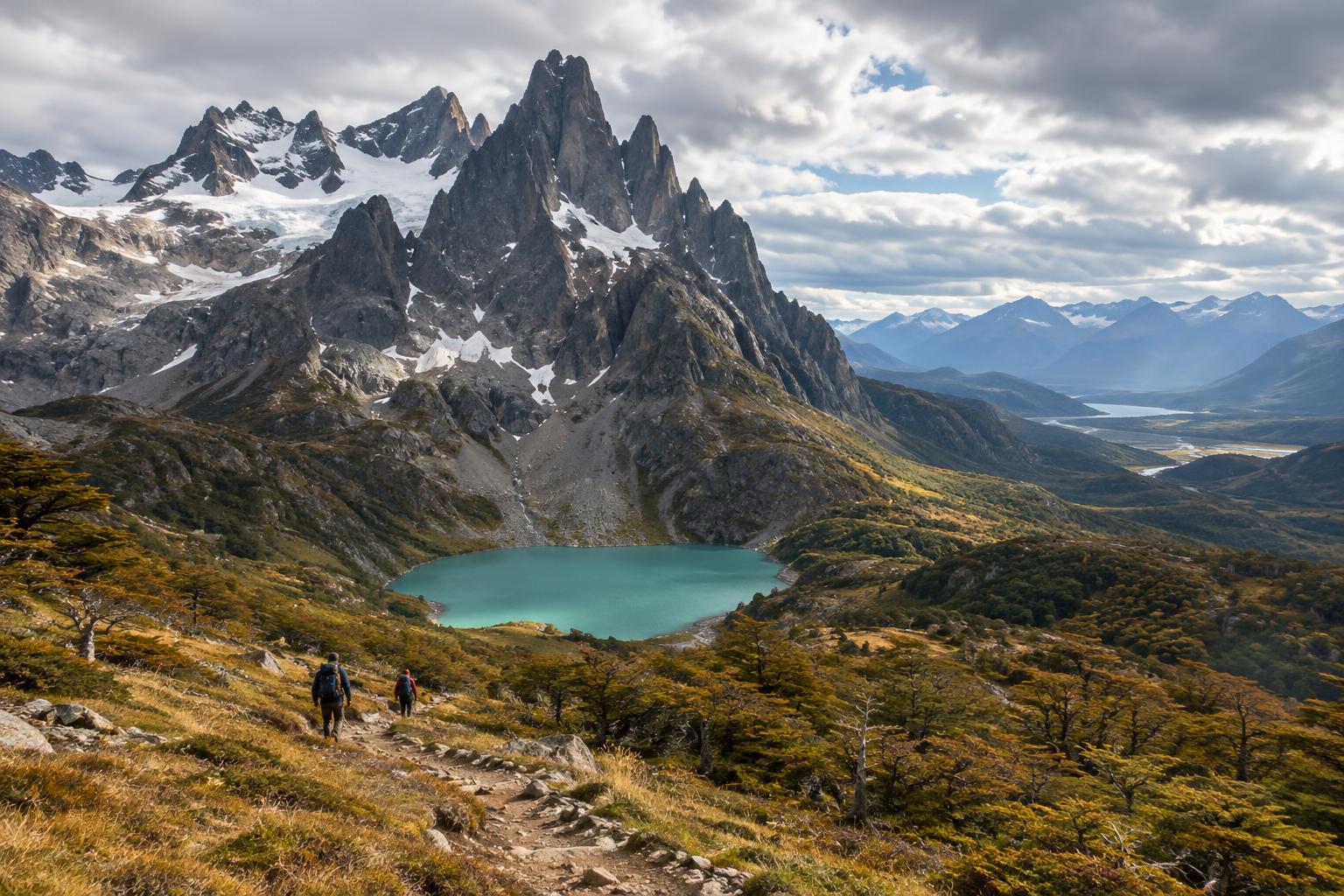
Cerro Castillo rises above the small settlement of Villa Cerro Castillo in Chilean Patagonia. Its jagged skyline, glacial lagoon and mix of forest and open slopes make it an appealing destination for walkers. The main decision is whether to take on a multi-day route through the mountains or make a shorter visit to Laguna Cerro Castillo from the village.
The multi-day traverse is the more immersive option. A common approach starts near Las Horquetas and finishes by Villa Cerro Castillo, crossing remote valleys and high ground along the way. It requires several days of food, camping equipment and enough flexibility to wait or turn back if conditions deteriorate. Paths, access arrangements and permitted campsites can change, so treat any published itinerary as a planning outline rather than a promise that every stage will be open.
A lagoon day hike gives walkers with less time a view of the mountain without committing to the traverse. It is still a demanding outing: the ascent is sustained, the upper slopes are exposed, and the descent can be tiring. Allow ample daylight and check the current access point and entry requirements locally before setting out.
What the passes ask of you
On the multi-day route, passes are not simply scenic milestones. Climbing out of a sheltered valley can bring a sudden change in wind, visibility and footing. The El Peñón pass is one of the best-known high sections, but the difficulty of any crossing depends on the conditions you meet, not just its height on a map. Loose ground, lingering snow or poor visibility can make route-finding slower than expected.
Plan each pass around the whole day, including the approach and the descent. A slope that seems manageable uphill may demand more care on the way down, particularly when wet or covered in loose stones. Carry an offline map and a means of navigation you know how to use; trail markers alone may be hard to follow in mist or after bad weather. If your group cannot identify a safe line, turning around is a sound decision.
Streams deserve the same attention. Water levels can rise after rain or during warmer periods, and a crossing shown on a route description may not be safe when you arrive. Never count on a particular stream being easy to ford. Build enough time into the trip to stop, reassess or retreat rather than forcing a crossing to keep to a schedule.
Preparing for Patagonian weather
Cerro Castillo’s weather can shift within a walking day. Sunshine in the village does not guarantee clear conditions at a pass, and wind can feel much stronger once the route leaves the trees. Pack layers that work together: clothing for walking, insulation for stops, and a waterproof outer layer. Keep spare warm items dry inside your pack, even if the morning looks settled.
Conditions underfoot can also change quickly. Rain may turn earth paths slippery, while snow can remain on higher ground when lower trails are clear. Check a relevant forecast and seek current trail information before departure, but keep making decisions from what you see on the route. A forecast is a planning aid, not permission to continue into terrain that feels unsafe.
Building a realistic itinerary
For a multi-day walk, choose daily stages that leave room for slow ascents, photographs and weather delays. Be clear about where you are allowed to camp and how you will reach the trailhead and return from the finish. Transport can shape the trip as much as walking distance does. Before leaving, confirm access rules, any fees or reservations, and whether particular trail sections are closed.
Carry enough food for the planned route plus a margin for delay. Bring a way to treat water rather than assuming every source is suitable to drink, and plan where you might refill without relying on a single stream. A first-aid kit, headlamp and a communication plan are especially useful away from the village. Tell someone your intended route and when they should expect to hear from you.
If the full traverse feels like too much, the lagoon hike is not a lesser experience. It offers a focused day in the landscape while avoiding the logistics of remote camping. Whichever option you choose, start with an honest assessment of your fitness, navigation skills and comfort on steep, exposed ground.
Walking with care
Stay on established routes where possible, use designated campsites, and carry out everything you bring in. Give other walkers space on narrow paths and avoid disturbing wildlife. These simple habits matter on both a popular lagoon trail and a quieter valley crossing.
Cerro Castillo rewards a flexible approach. The memorable part may be a clear view of the spires, but it may also be a patient walk through forest while clouds cover the peaks. Choose a route you can complete responsibly, leave room to change plans, and let the conditions set the pace.


