Check the rules for every country on your route
If your journey crosses several South American borders, do not assume that a medicine permitted in one country will be treated the same way in another. Entry rules may depend on the medicine’s active ingredient, the amount you carry and whether it is classified as a controlled substance. Rules can also differ for medicines bought without a prescription at home. Check the official customs, health or consular guidance for each destination and any country where you plan to enter during a stopover.
Start this check well before departure, particularly if you take a controlled medicine, use injections or need more than a short trip’s supply. Look for any requirement to obtain permission in advance, declare the medicine on arrival or limit the quantity carried. If the guidance is unclear, ask the relevant authority for clarification rather than relying on another traveler’s experience. Keep a copy of any approval you receive where you can find it during your journey.
Keep medicines identifiable and documents easy to find
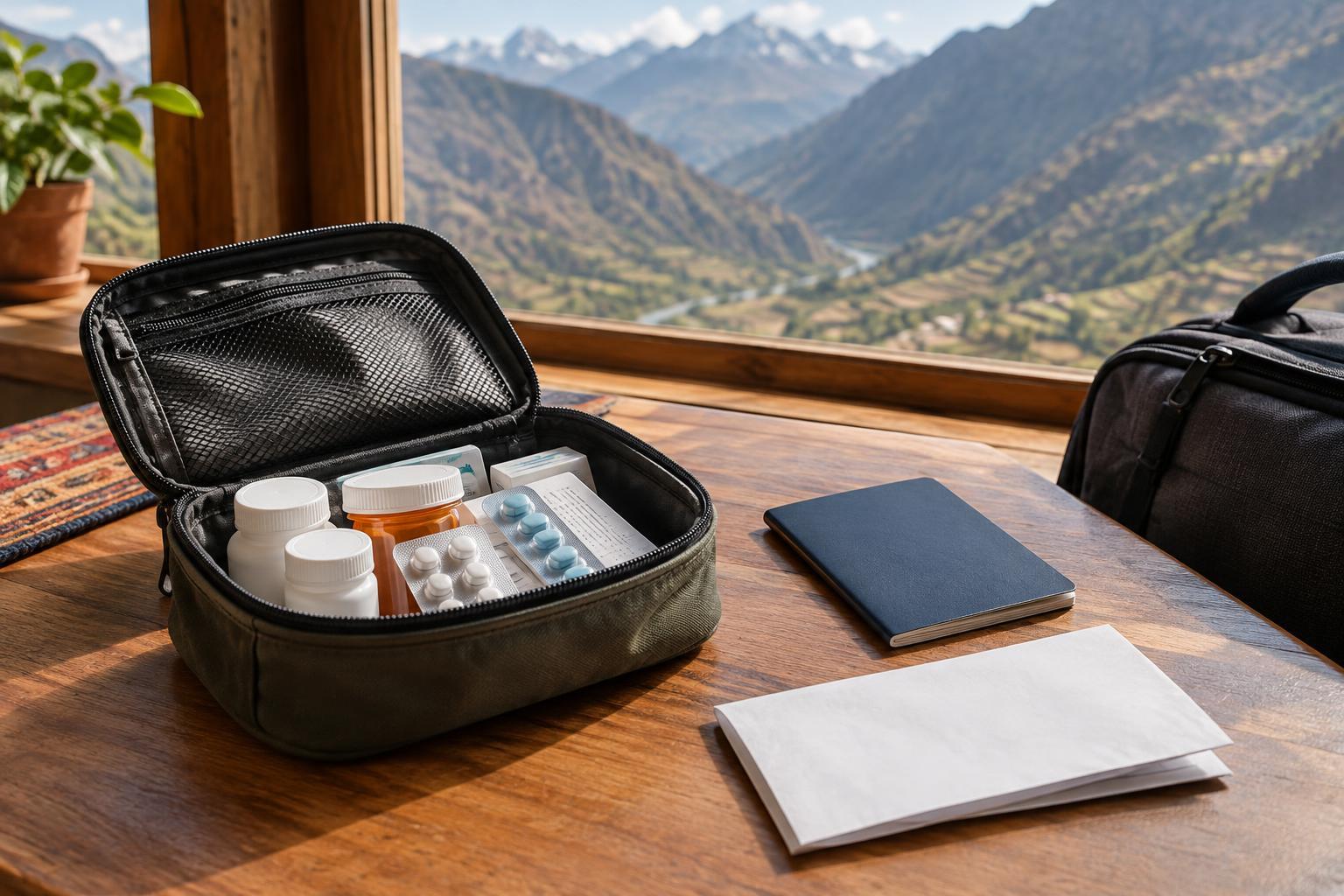
Original labeled packaging helps an officer connect a medicine to its prescription and reduces confusion about loose tablets or unmarked containers. Keep the pharmacy label legible, including your name where it appears. If you use a pill organizer, consider filling it after you arrive while retaining the original packs for travel days and border crossings.
Carry a copy of your prescription and ask your prescriber whether a brief letter would be useful. A helpful letter may identify you, list each medicine by its generic or active-ingredient name, state the dose and explain that it is for your personal use. Generic names matter because brand names vary between countries. Check that names and quantities across the letter, prescription and packaging are consistent. For a route where English documents may be difficult for officials to read, ask the relevant authority whether a translation is needed.
Store paper documents with your medicines and keep a separate digital copy for reference. A phone copy is convenient, but it may be inaccessible if your battery runs flat or an officer asks to see paper documentation. Protect your medical details as you would other personal documents.
Pack for the journey, not just the flight
Keep essential medicines in your hand luggage where airline and security rules allow, rather than relying entirely on a checked bag. Delays, missed connections and separated luggage are easier to manage when your regular supply remains with you. If a medicine needs refrigeration, special handling or needles, ask your pharmacist or care team about safe transport and check the airline’s requirements before you travel. Do not assume an ordinary cool bag will maintain the required temperature through a long journey.
Bring a reasonable supply for your itinerary, allowing for foreseeable travel disruption without exceeding any applicable entry limit. Keep medicines protected from heat, moisture and crushing, especially on long bus trips or walking routes where bags may sit in direct sun. Before leaving home, check expiry dates and make sure you understand when to take each dose across time-zone changes; your prescriber or pharmacist can help with a schedule if needed.
Approach border and security checks calmly
At an airport or land crossing, follow the instructions on arrival forms and from officials. If a form asks about medicines or controlled substances, answer accurately. Keep your medicines, packaging and supporting documents together so you can show what you are carrying without unpacking your whole bag. A short, factual explanation is usually more useful than a long account of your medical history.
Security screening and customs checks serve different purposes, so passing one does not guarantee that a medicine meets the rules for entry. Allow extra time when crossing a border, particularly if you carry liquids, sharps or medicines that required advance approval. If an officer raises a concern, ask what documentation or process is required and keep copies of any paperwork you are given. Avoid concealing medicines or repackaging them to make them less noticeable.
Plan for gaps in supply without counting on a local refill
A familiar medicine may be sold under a different name, require a local prescription or be unavailable at your destination. Before departure, discuss a realistic contingency plan with your prescriber or pharmacist, especially for medicines you cannot safely interrupt. Know the active-ingredient names and keep your prescription details accessible, but do not change doses or substitute products based only on a similar-looking label.
Preparation need not mean carrying a large folder. A compact set of clear documents, medicines in identifiable packaging and a route-specific check of entry rules can make travel days simpler. Recheck official requirements if your itinerary changes, and leave yourself time to resolve questions before reaching the next border.


