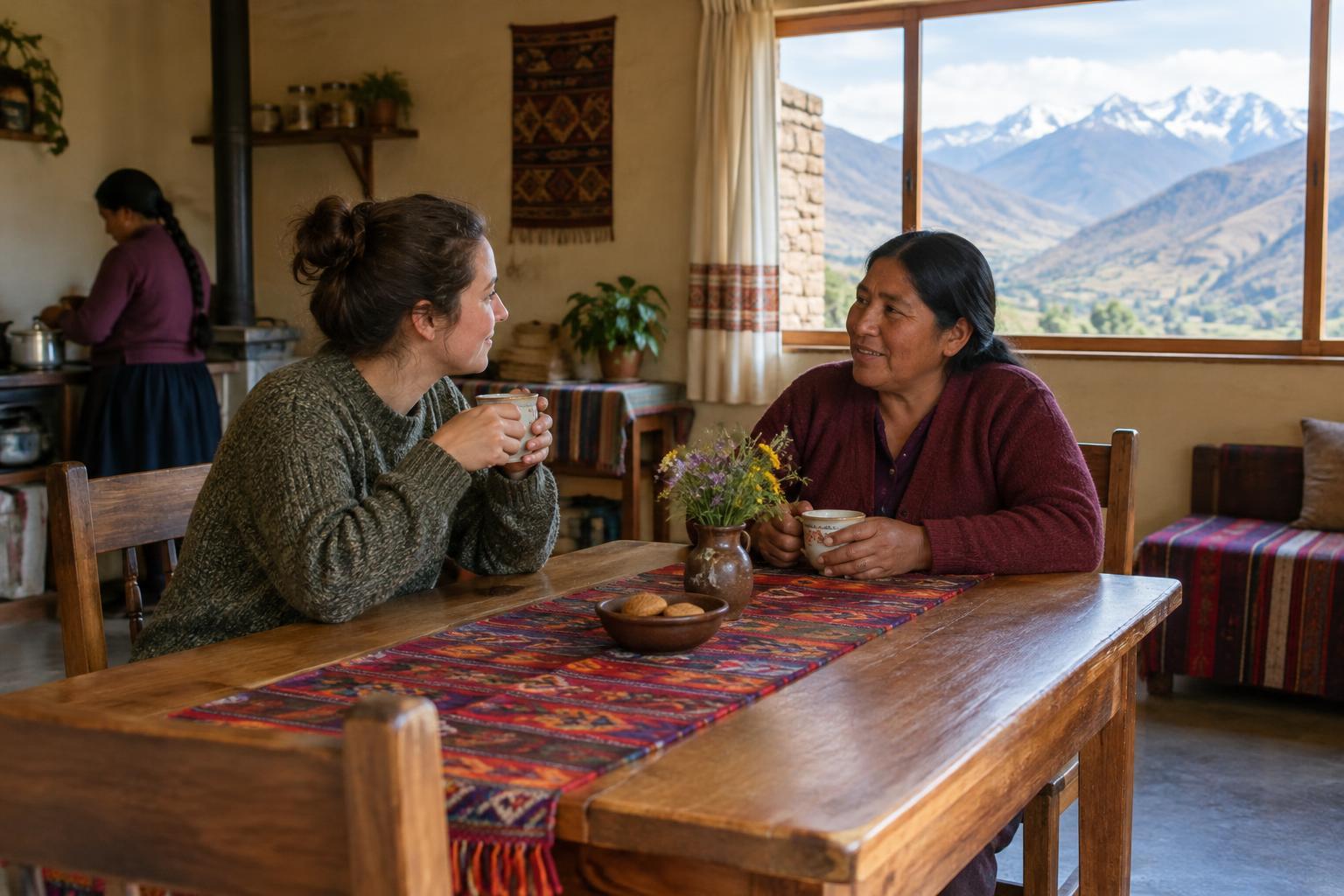
Arrive as a guest, not an observer
A stay with a host family offers a different rhythm from a hotel. You may share meals, pass through a family kitchen or wake to the sounds of a working household. Those moments can make a journey feel more personal, but they do not turn private life into a visitor attraction. Your hosts may enjoy conversation, or they may be busy with work, school and other commitments. Let their cues guide how much time you spend together.
Before arrival, check what your booking includes: meals, bathroom access, check-in times and any arranged activities. At the door, ask where to leave your shoes or bag and which rooms are for guests. A simple question is more useful than assuming that practices are the same across the Andes—or even between neighbouring households. If you do not share a language, short phrases, gestures and a translation tool can help, provided you allow time for your host to answer.
Fit around the household’s daily routine
Ask when meals are served and whether the household has quiet hours, a usual time for locking the door or limited hot water. If you plan to leave early for a walk or return late, say so in advance. This gives your hosts a chance to explain what is practical and prevents them from waiting for you unnecessarily. When plans change, send a message if you can.
At shared meals, accept what you can with thanks and explain dietary needs clearly and early, rather than expecting an immediate alternative. If you are offered more food than you want, a polite refusal is better than silently leaving it. Hosts vary in how they organise meals: some invite guests to join family conversation, while others provide food and return to their own tasks. Neither arrangement needs to be read as a measure of warmth.
Treat shared spaces and private moments with care
A shared bathroom, hallway or dining room still belongs to the household. Keep your belongings in the space assigned to you, leave facilities as you found them and ask before using appliances, laundry supplies or cooking equipment. In places where water, electricity or heating may require particular care, follow the host’s guidance rather than your habits from home. Small acts—closing a gate properly or keeping noise down at night—can matter more than grand gestures.
Ask before photographing anyone, especially children, and do not assume permission to photograph bedrooms, religious objects, documents or family gatherings. Consent to take a picture is not automatically consent to post it online. If you want to share an image or a story from the stay, explain where it might appear and accept a no without pressing. The same courtesy applies to questions: a host may be happy to discuss a recipe or local walk but may not want to explain their income, beliefs or family history.
Handle expectations and departures clearly
A homestay can involve both hospitality and paid work. Be clear about what you have booked, pay the agreed amount through the appropriate channel and ask before requesting extras such as an additional meal, transport or help arranging an outing. If something is not working—perhaps you cannot find the bathroom light or need a quieter place to sleep—raise it calmly and specifically. Giving your host a chance to help is usually kinder than letting frustration build.
Before leaving, check that you have returned keys, gathered your belongings and settled any agreed extras. Thank your hosts for the parts of the stay you appreciated without implying that they owed you constant company. If you write a review, focus on useful details of the guest experience and avoid disclosing private information. A considerate stay is not about mastering a fixed set of local rules; it is about asking, listening and remembering that the household’s everyday life continues after you go.


