Start with the geography, not the tour list
San Pedro de Atacama is a small town in northern Chile and a convenient base for exploring desert landscapes. The town sits at roughly 2,400 metres above sea level, but popular excursions can climb much higher. That difference matters: a place that looks close on a map may involve hours on the road, a sharp gain in altitude and very different weather from the streets where you began.
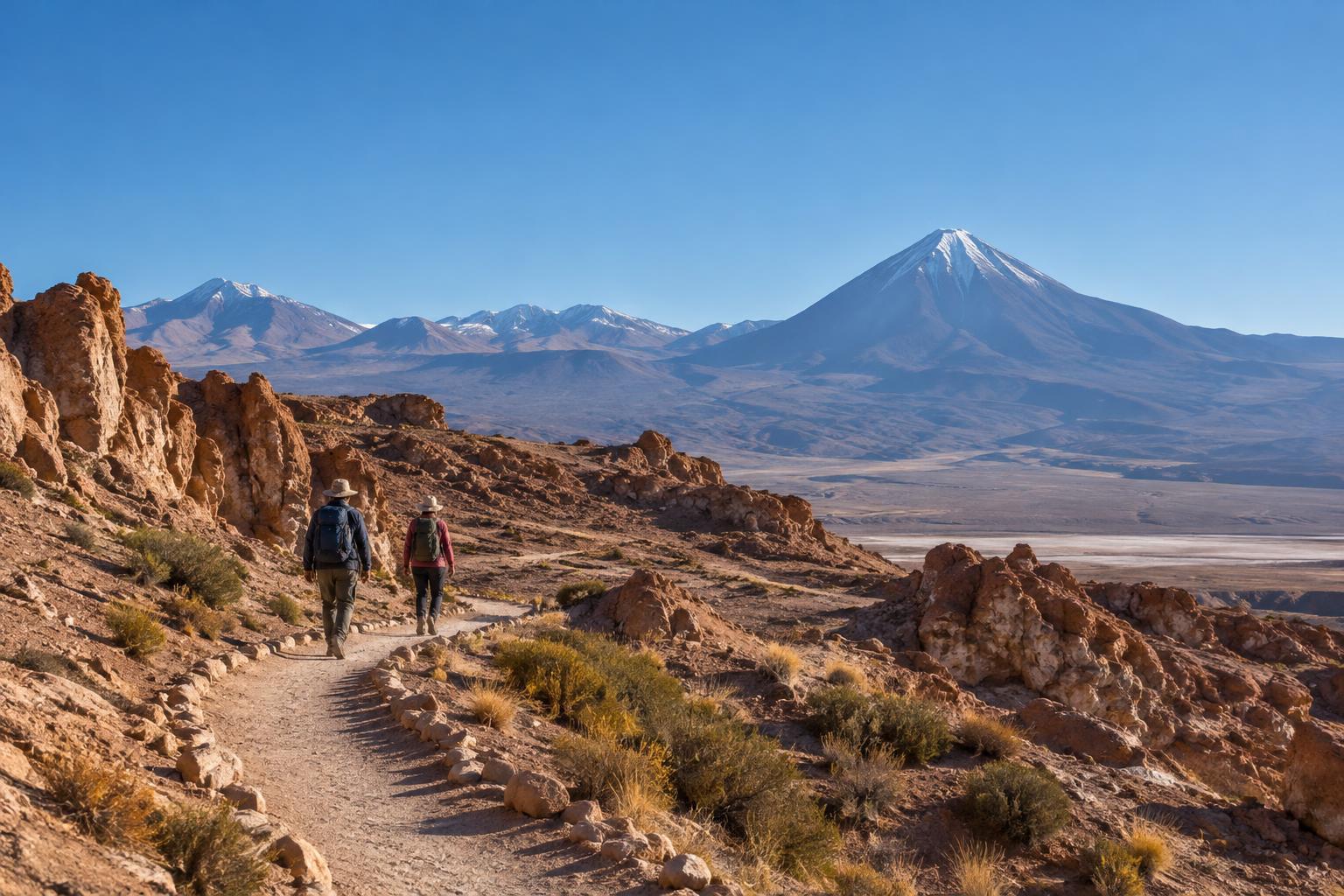
Before booking, group possible outings by elevation and effort rather than trying to fit every landmark into a short stay. Rocky valleys near town make a gentler introduction to the landscape. Salt flats and lagoons offer different views, while high-altitude excursions require more thought about timing and how you feel. Tour routes, access rules and departure arrangements can change, so check the details of a particular trip before committing.
Give yourself room to adjust
Arriving in San Pedro may feel easy, especially if you have already spent time at altitude, but that is not a reliable test of how you will feel on a higher excursion. If your schedule allows, spend your first day settling in and choose a lower-elevation outing before considering the Altiplano or the El Tatio geyser field. Avoid treating acclimatisation as a box you can tick after one comfortable afternoon.
Keep the first days flexible. Rest, drink water regularly, eat normally and notice whether exertion feels harder than expected. Cold mornings, dry air and strong sun can add to the fatigue of an early start. If you feel unwell at altitude, tell your guide or travel companions rather than pushing on to complete an itinerary. Serious or worsening symptoms need prompt medical attention; this guide cannot replace individual advice from a health professional, particularly if you have an existing condition.
Choose excursions for variety
Valle de la Luna is a useful first taste of the area’s eroded rock, dunes and broad desert views. It is often easier to fit around a quiet morning in town than a full-day journey. For a contrasting landscape, look at excursions that visit salt flats or lagoons, and check how much of the day is spent driving versus walking or observing wildlife.
High-altitude trips can be memorable, but they are not interchangeable. An early departure for El Tatio, for example, brings cold conditions as well as altitude; routes towards Altiplanic lagoons involve their own long stretches of travel. Ask an operator for the highest point reached, expected walking, road time, toilet stops and what is included. If photography or birdwatching is your priority, allow unhurried time at fewer places rather than choosing an itinerary solely by its number of stops.
Pack for contrasts and plan for change
Desert travel calls for layers. A warm outer layer can be welcome before sunrise, while a hat, sunglasses and sun protection are useful when the day brightens. Carry water, a snack, comfortable footwear and any essential personal items with you rather than leaving them in a larger bag. On excursions away from town, facilities may be limited, so use stops when they are available.
Build some slack into the itinerary. Wind, road conditions, site rules or how you feel may affect a planned outing. It helps to know an operator’s cancellation terms and whether a route can be changed. If you are travelling independently, be realistic about distances, fuel and navigation: a short-looking line across a wide landscape does not necessarily mean a simple drive. A slower day in town is a valid part of the trip, not a missed opportunity.
Visit with care
The desert is not empty scenery. Excursion routes pass through places with cultural significance, working communities and fragile habitats. Follow marked paths and local site rules, give wildlife space and leave stones, plants and other natural features where they are. At lagoons and salt flats, avoid stepping onto surfaces simply to get a photograph; what appears sturdy from a distance may be delicate or restricted.
In town, take time to learn how an excursion is organised instead of assuming every tour offers the same experience. Ask before photographing people, listen when a guide explains access restrictions and carry out what you bring in. San Pedro rewards curiosity, but the most satisfying first visit need not be the busiest one. A few well-chosen trips, paced around altitude and the conditions, leave more room to notice where you are.