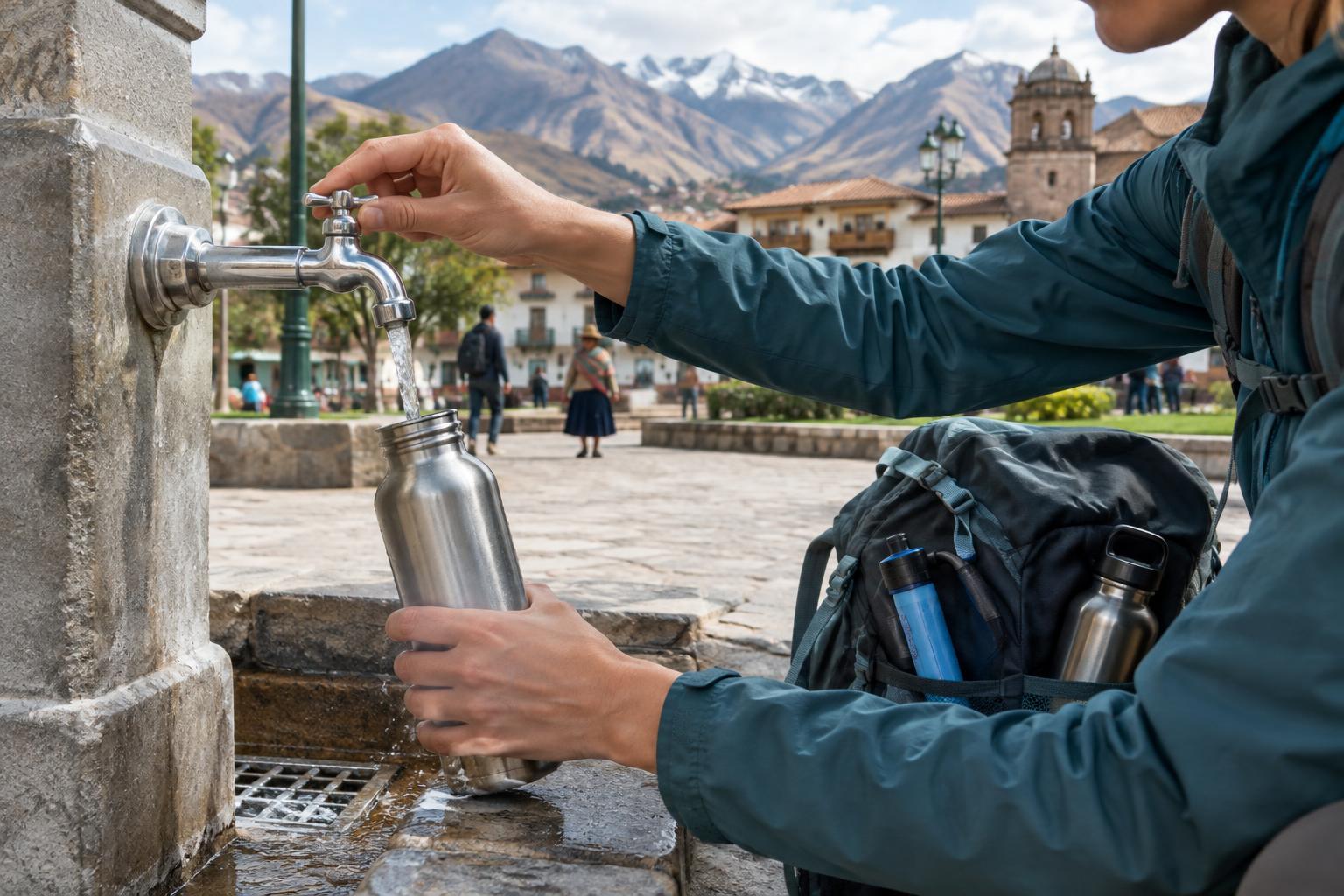
Make a refill plan before you need one
Carrying a reusable bottle can reduce the number of single-use bottles you buy, but it does not guarantee a safe refill. Water quality and access can change from one town, building or walking route to the next. Before setting out, identify where you can obtain drinking water, how much you need to carry and what you will do if your preferred refill point is unavailable.
Try to leave each stop with enough treated water to reach the next reliable source, plus a margin for delays. A second bottle or a collapsible container makes this easier without requiring you to carry the same amount all day. Keep drinking water separate from water awaiting treatment, especially when filling containers from a stream or an unfamiliar tap.
If you are staying with a family, in a small guesthouse or at a community-run lodging, do not assume their treated or stored water is available for unlimited refills. Ask what is provided and whether there is a charge. Where possible, arrange your own refill at a public drinking-water point, a café that offers refills or another source intended for travellers. Buying water may sometimes be the most sensible fallback.
Choose treatment for the source, not just the weight of your pack
No single portable method solves every water problem. A hiking filter can remove particles and, depending on its specifications, many microorganisms. Filters differ, however: a typical backpacking filter should not be assumed to remove viruses, dissolved chemicals or salt. Check the manufacturer’s stated capabilities and replacement schedule, and protect the clean side from contact with untreated water.
Chemical treatments are compact and useful as a backup, but they need the correct dose and contact time. Their effectiveness can depend on the product, water temperature and how cloudy the water is. Follow the product instructions rather than guessing. A UV device can be convenient for clear water, but it requires a working power source and does not remove sediment or chemical contaminants.
Boiling is another option when you have suitable equipment and fuel. At high elevations, water boils at a lower temperature, so follow altitude-specific guidance rather than assuming a brief boil is enough. Boiling also requires time for the water to cool and will not remove chemical pollution. For any method, consider the water source as well as what your equipment can treat.
Treat clear water with caution
A clear mountain stream may look inviting and still contain microorganisms. Animals, people and settlements can affect water upstream, out of sight. Collecting water away from obvious sources of contamination may reduce some risks, but it is not a substitute for treatment. Glacial or silty water can also be difficult for some filters and UV devices to handle.
Let cloudy water settle, then pour it carefully into another container or pre-filter it through a clean cloth before using your chosen treatment. This removes visible particles; it does not make the water safe to drink on its own. Avoid water with an unusual smell, visible pollution or a plausible industrial or agricultural source of contamination. Portable treatments designed for microbes may not address those hazards.
If you are uncertain about a tap or refill point, ask whether the water is intended for drinking and whether it has been treated. An answer can help you decide what to do, but a treated supply is not automatically available for visitors to take. When you cannot establish a suitable source or treat water appropriately, choose a dependable alternative rather than taking a chance.
Keep your containers and treatment gear clean
A good treatment method is less useful if treated water goes into a dirty bottle. Wash bottles, caps and drinking spouts regularly, and allow them to dry when practical. Mark or otherwise distinguish a container used for untreated water. If your filter has a clean-water outlet, keep that outlet away from stream water, wet hands and the mouth of a dirty container.
Learn how to clean and maintain your equipment before the trip. Some filters need backflushing; others have cartridges that must be replaced. Freezing can damage certain filters even when the damage is not visible, so check the manufacturer’s instructions for cold-weather storage. Carrying a small backup treatment option can help if a filter clogs, a battery runs out or a planned refill is closed.
Make lower-waste choices without shifting the burden
Responsible refilling is not a test of whether you can avoid every packaged drink. The aim is to reduce avoidable waste while respecting the people and places that make your journey possible. Ask before using a tap, stored supply or treatment equipment that belongs to someone else. If a business offers a refill, check the price or purchase policy rather than assuming it is free.
On walking routes, carry used treatment packaging and other rubbish out with you. Collect water without damaging banks or disturbing areas used by others, and follow any local restrictions on access. A practical routine—enough carrying capacity, a treatment method you understand and a backup source—lets you make thoughtful choices without depending on a host’s limited supply.


