Plan for the places you will visit
Reducing plastic waste in the Andes is less about packing a perfect collection of reusable products and more about anticipating everyday needs. A city stay, a long bus journey and a remote walk offer different chances to refill water or dispose of rubbish. Before leaving, think through where you expect to eat, how long you may be away from a bin and whether safe drinking water will be available.
Start by using what you already own. A sturdy bottle, a small food container and a lightweight bag may be more useful than buying specialist gear for every possible situation. If your plans include guided walks or accommodation in small settlements, ask your host or operator how drinking water and rubbish are handled. Their arrangements may differ from place to place.
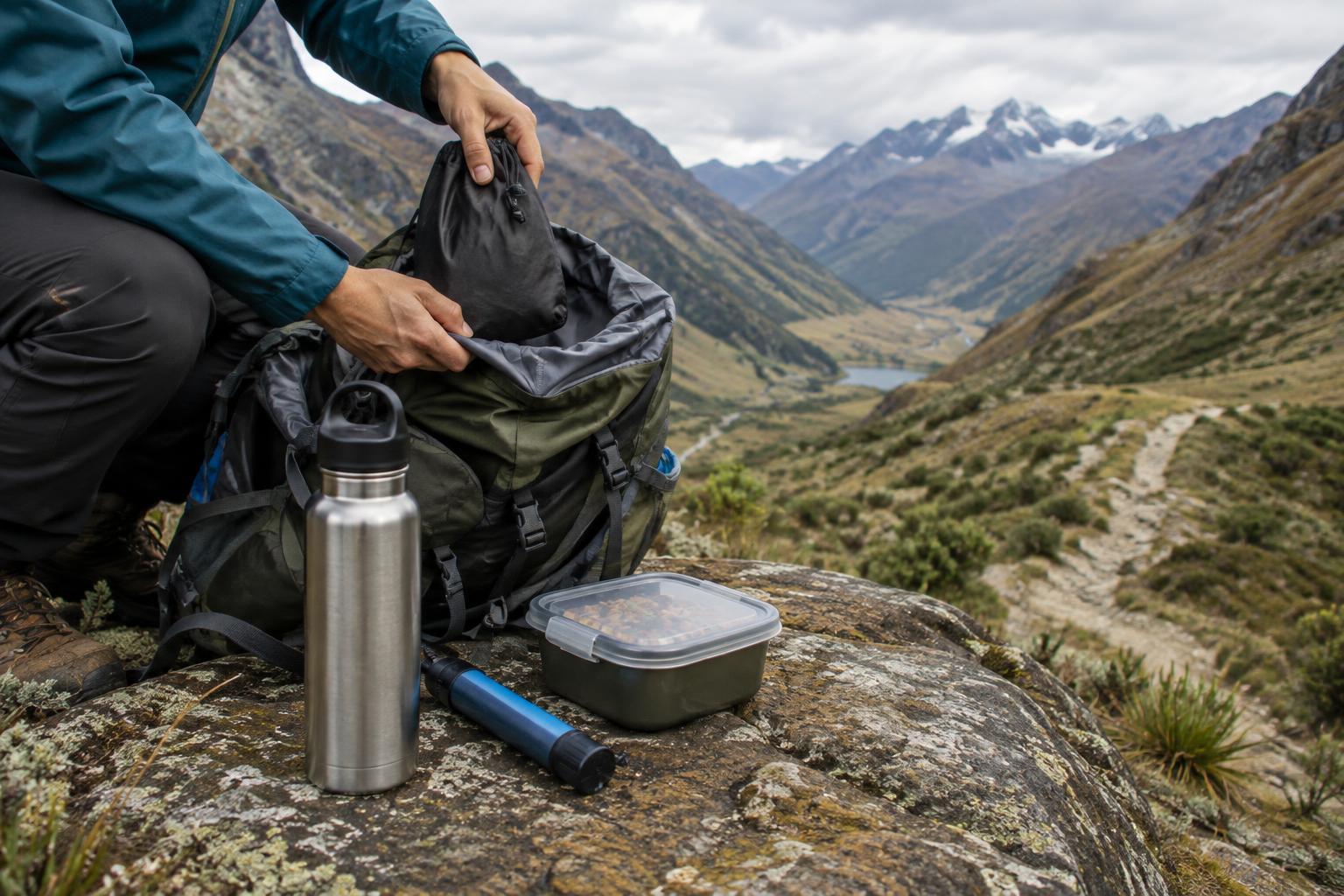
Pack a simple low-waste kit
Bring a durable water bottle or reservoir with enough capacity for the longest stretch between dependable refills. A cup and a spoon can help you avoid disposable versions when buying a drink or a simple meal. A washable bag is useful for snacks and market purchases, while a small container can hold food you will eat later. Choose items that are easy to clean and light enough that you will actually carry them.
Include a dedicated rubbish pouch: a sealable bag or washable, leak-resistant container that fits inside your daypack. Keep another bag for wet or messy items if needed. Packing a few spare bags is practical even when your aim is to use less plastic; reusing one to contain rubbish is better than leaving litter behind. Check toiletries before departure, too. Concentrated or refillable products can reduce packaging, but only pack quantities you are likely to use.
Make a safe water plan rather than guessing
A refillable bottle only reduces waste if you have a workable plan for filling it. Do not assume that clear stream water or every tap is safe to drink. Ask about drinking-water arrangements where you stay, and learn how to use your chosen treatment method before setting out. Depending on the trip, that might mean filling from a trusted treated-water supply, boiling water or using a treatment product suited to the water source. Follow the product’s instructions and seek local guidance when conditions are uncertain.
On travel days, fill your bottle when you have access to water you know is suitable. For longer walks, calculate how much you need between reliable sources and leave room to carry it. If buying packaged water is the safest available option at a particular moment, do so rather than taking an unnecessary health risk. You can still reduce waste elsewhere and keep the empty bottle until you find an appropriate place to dispose of it.
Keep rubbish contained until you can dispose of it
Set up your rubbish pouch before the first snack wrapper appears. Squeeze air from clean, dry packaging to save space, but avoid crushing sharp items that could puncture the bag. Keep food scraps separate from wrappers where practical, and secure everything inside your pack so wind and animals cannot reach it. If you have space on the way in, reserve that same space for carrying waste back out.
Carry out all the rubbish you bring onto a walking route, including tissues, wipes, hygiene products and small items such as bottle caps. Even products labelled biodegradable may persist or cause problems when left beside a path. Do not burn or bury packaging. Use toilets and waste facilities where provided, and follow local instructions for anything that needs special handling. A bin at a small trail stop may have limited capacity or no regular collection, so a larger town may be a better place to dispose of what you have carried.
Make low-waste choices without shifting the burden
Food is an easy place to be flexible. Choose unpackaged produce or a freshly prepared meal when it suits your plans, but do not expect every seller to accept your container or change their usual service. Politely decline an extra bag or straw when you do not need one. If packaging is unavoidable, keep it contained rather than leaving it with someone who may have few disposal options.
At the end of each day, check your pockets, pack and resting place for overlooked scraps. Sort waste only where a collection system accepts those materials; a recycling symbol alone does not guarantee that an item can be recycled locally. These small habits do not eliminate every piece of plastic from a trip. They do make it easier to leave walking routes, transport stops and shared spaces as you found them.


