Expect the route to change
Rainy-season walking in the Andes can be rewarding: clouds shift across the hills, plants look vivid and familiar paths feel different. It also calls for a more flexible plan. Conditions vary greatly by region, elevation and recent weather, so a trail described as straightforward in dry conditions may be slow, slippery or impassable after rain. A clear morning is not a guarantee that the rest of the walk will stay dry.
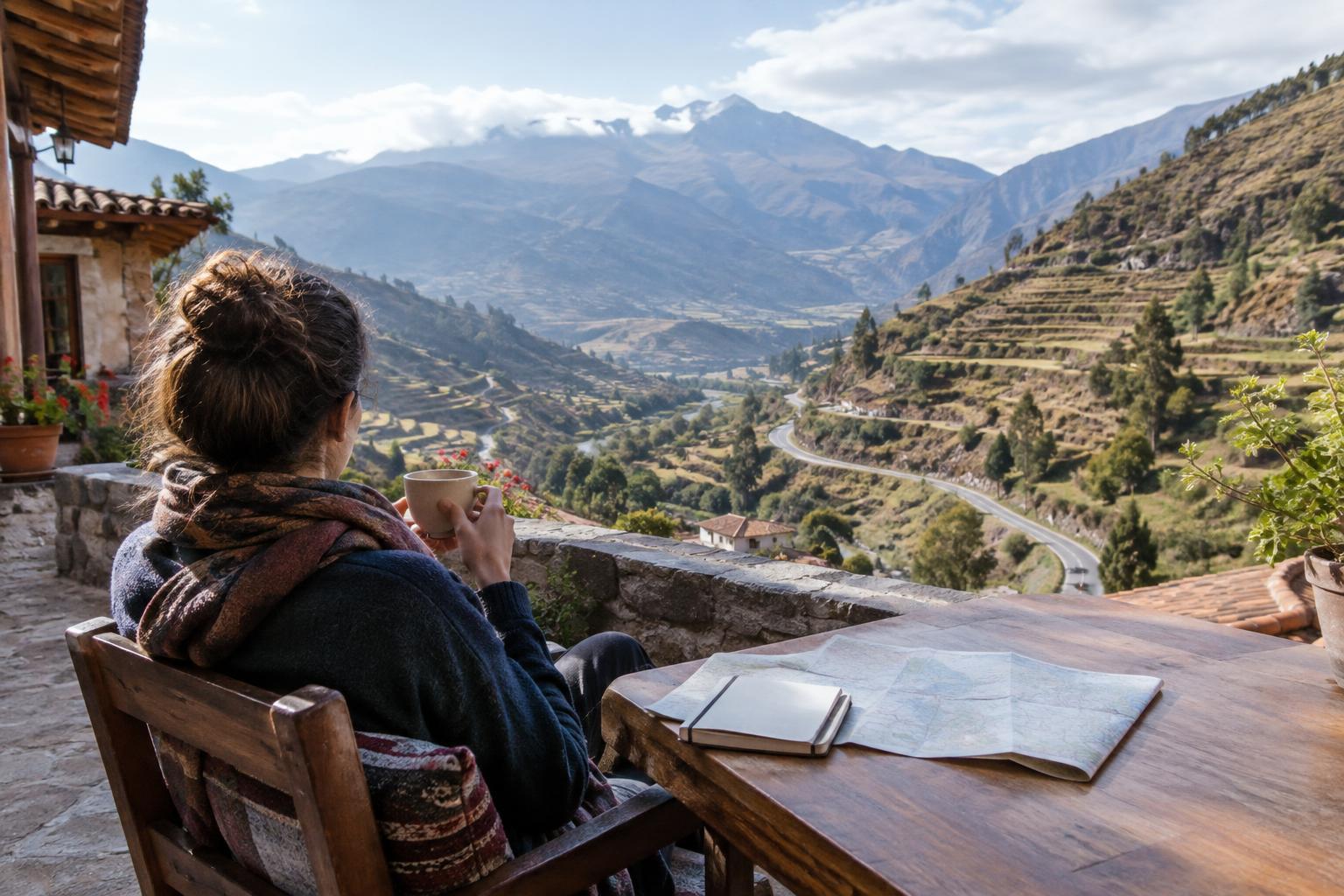
Before setting out, ask someone with recent local knowledge about the route, especially stream crossings, exposed slopes and any known closures. Check an available forecast, but treat it as one part of the decision rather than a promise. Carry a map you can use without a signal, tell someone your intended route and return time, and choose a walk with enough daylight to turn around without rushing.
Move carefully on muddy ground
Mud changes both your footing and your pace. Shorten your stride, test uncertain ground before committing your weight and give yourself extra time on steep descents. Footwear with a suitable grip helps, but no tread makes slick clay, wet rock or loose gravel reliably safe. Trekking poles may help with balance when placed on firm ground; they are less useful if their tips sink into soft mud.
Look beyond the muddy patch itself. A narrow trail above a drop, a slope with loose stones or a section where water is running down the path deserves more caution than a broad, level track. Avoid cutting around puddles through plants or creating a new line downhill. If staying on the established path means taking a risk you are not comfortable with, turning back is better than widening the trail or forcing a way through.
Treat swollen streams as a turning point
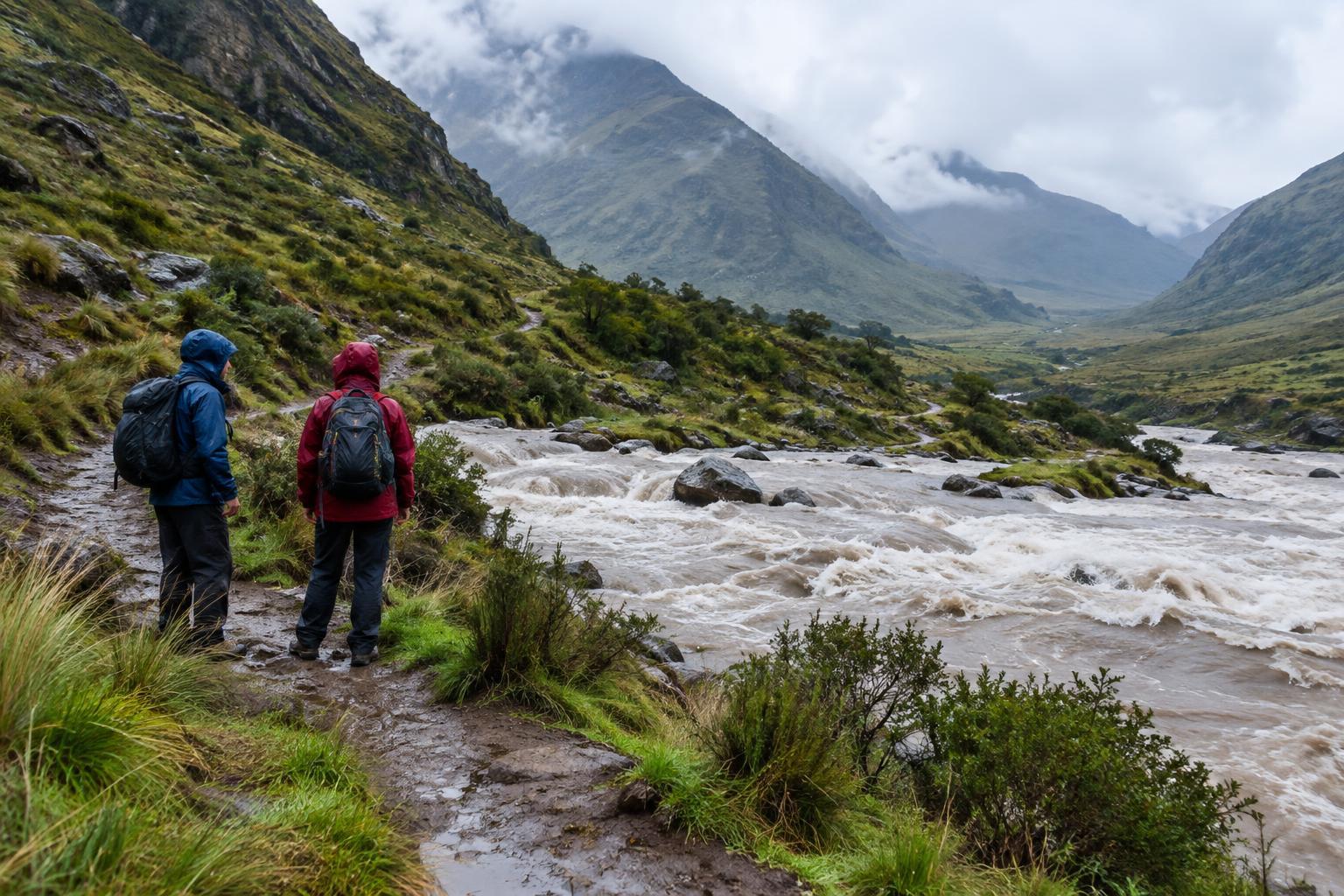
Rain upstream can affect a crossing even when it is not raining where you stand. A stream that looks shallow on a map or in a dry-season account may be deeper, faster or harder to read when swollen. Muddy water can hide uneven footing and moving debris. Do not assume a bridge, stepping stones or a familiar ford will be usable simply because the route normally crosses there.
Assess any crossing from a safe place, away from an unstable bank. If water is fast, rising, opaque or beyond your ability to judge, do not enter it. The same applies if the only apparent options are slippery logs, loose rocks or a damaged bridge. Crossing on the outward walk also commits you to a return crossing, when conditions may have changed. If a stream blocks the route, the sensible destination for that day may be the point where you turn back.
Decide early, not at the last minute
Set a turnaround time before you start and revise it when progress is slower than expected. Several small setbacks can add up: a muddy descent takes longer, a shower reduces visibility and a companion becomes cold or tired. Watch for worsening weather, an unclear trail, unstable ground or a crossing you would hesitate to use again on the return. You do not need to wait for an emergency to change plans.
Be especially cautious on exposed ground if thunder is nearby. Descending or seeking an appropriate sheltered route may be more important than reaching a viewpoint. If you are walking with others, check in honestly about pace and comfort; the group’s plan should account for the person finding conditions hardest. Reaching a summit or completing a circuit is optional. Getting everyone back with time and energy to spare is the more useful measure of a good decision.
Prepare for a shorter, more flexible day
Pack for getting wet and for stopping: a waterproof layer, warm clothing kept dry, food, drinking water and a way to navigate if your phone cannot connect. Protect essentials in waterproof bags and carry a light source in case the walk takes longer than planned. Choose a route that suits the group’s experience, and consider a lower or shorter alternative when the forecast or recent rain makes your first choice doubtful.
Where local access rules, guides or community arrangements apply, follow them and ask before entering private or managed land. Stay on open routes and leave gates as you find them. Rain does not make a walk a failure; it may simply change what is possible. A shorter outing, a different trail or a rest day can protect both walkers and the landscape, leaving the longer route for conditions that suit it better.