Get your bearings before choosing a base
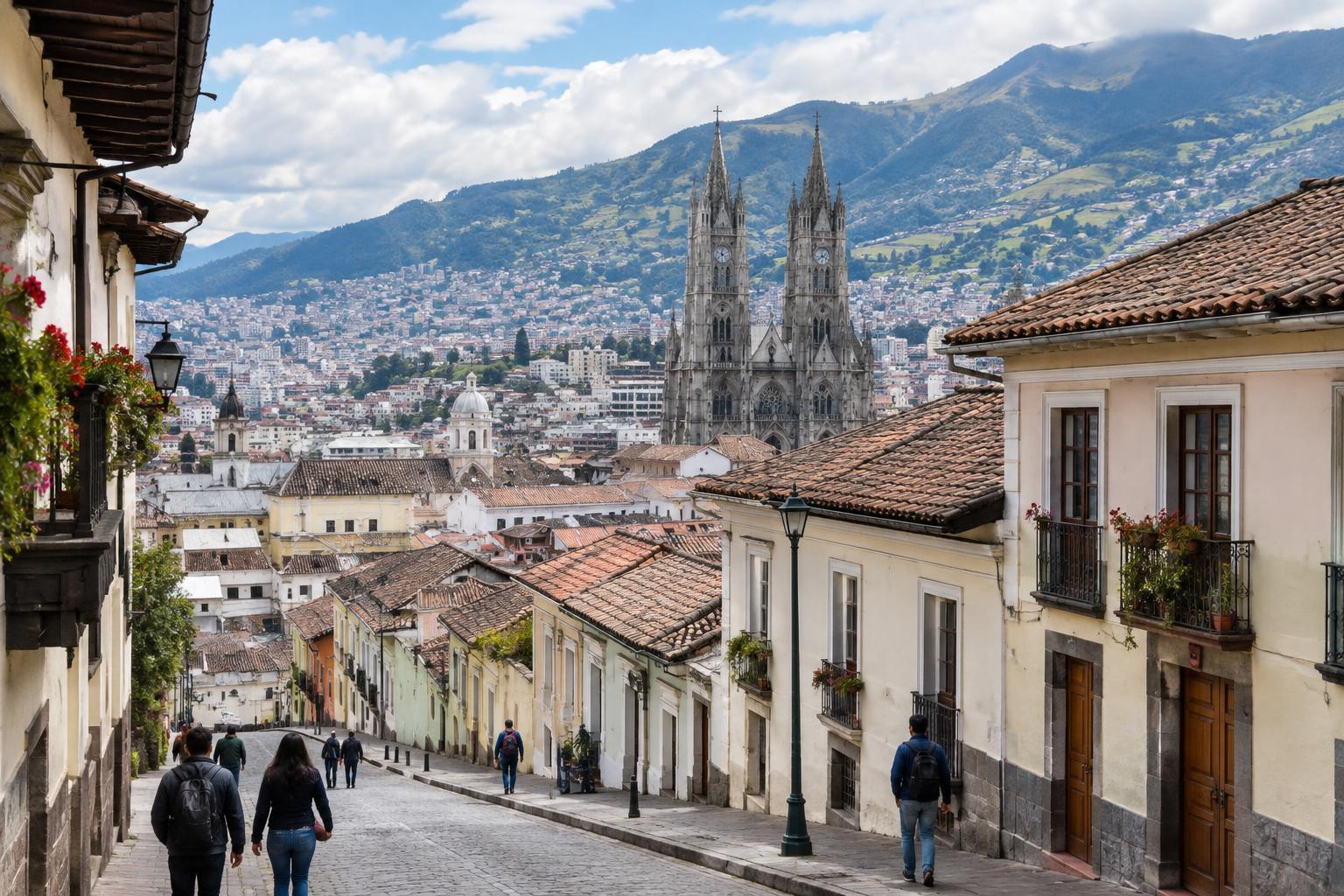
Quito stretches along a high Andean valley, so places that look close on a map may take longer to reach than expected. For a first visit, it helps to choose accommodation around the part of the city where you expect to spend most of your time. The historic centre offers colonial-era streets and major sights; neighbourhoods farther north tend to offer a different mix of restaurants, cafés and everyday city life. There is no single best base for everyone.
Before booking, look beyond the neighbourhood name. Check the exact street, recent guest feedback, how you will arrive after dark and whether you are comfortable with nearby slopes or stairs. If you have an early departure or a late arrival, ask your accommodation about airport transfers in advance. The airport is outside the central city, and journey times can vary with traffic.
Where to stay: three useful starting points
Stay in or near the historic centre if you want to step out early among plazas, churches and older streets. It is an appealing choice for visitors who plan to spend substantial time exploring on foot. Buildings vary widely, though: an atmospheric older property may have stairs, street noise or limited heating. Read the room details as carefully as the location description, and plan your return transport if you will be out late.
La Mariscal can be convenient for travellers who want a central base with accommodation and dining choices. Its feel changes from street to street, so choose a specific property rather than relying on the neighbourhood’s general reputation. If nightlife is not part of your plans, check whether your room faces a busy road or evening venue.
La Floresta is worth considering if you prefer cafés, small restaurants and a more residential-feeling base. Around La Carolina and nearby northern districts, larger hotels and broad avenues may suit travellers prioritising straightforward services. Neither option puts every historic-centre sight on your doorstep. Compare likely journey times and transport costs with the price of the room.
Explore the historic centre without rushing
Give the historic centre a generous part of a day rather than treating it as a quick photo stop. A simple approach is to begin at a central plaza, follow a few connecting streets and choose one or two interiors to visit. Look up at balconies and building details, but also make time to sit down and absorb the everyday rhythm of the area. Opening hours, entry arrangements and access to religious buildings can change, so check locally before making one site the focus of your day.
The streets can be steep or uneven, and Quito’s elevation may make an ambitious walking plan feel harder than it looks. Wear shoes with reliable grip, carry water and leave room for breaks. If you want to learn more about what you are seeing, a locally led walk can add context; ask about the route and accessibility before booking. Treat churches and community spaces as places with their own rules, not simply as backdrops for photographs.
Add neighbourhood time and a viewpoint
Once you have explored the historic centre, use another outing to see a different side of Quito. La Floresta makes an easy place to slow down over a meal and wander a few streets. The area around La Carolina offers a broader, more modern cityscape and space for a park walk. Rather than trying to cross Quito repeatedly in one day, group stops by area and build in time for traffic.
For a wider view of the valley and surrounding mountains, consider a viewpoint or the TelefériQo cable car if conditions and operations allow. Visibility can change quickly, and the cable car reaches a higher elevation than the city below. Bring a warm layer, check conditions before setting out and be willing to change plans. You do not need to tackle a strenuous walk to enjoy the setting.
Move around comfortably and respectfully
Quito has public transport, but the easiest choice depends on your route, luggage and confidence navigating an unfamiliar city. Ask your accommodation which nearby stop or pickup point is practical. For a taxi or ride booked by app, confirm the vehicle and destination before getting in, and use established booking channels rather than accepting an unsolicited offer. Keep a small bag close to you in crowded places and avoid displaying valuables unnecessarily, without assuming every unfamiliar street is unsafe.
Altitude affects people differently. On your first day, consider a gentle schedule, regular water breaks and a lighter walk before committing to longer outings. Be patient with the city, too: ask permission before photographing people, follow posted rules at sites and buy from businesses whose goods or services you value. A flexible plan leaves space for Quito to be more than a checklist of landmarks.


