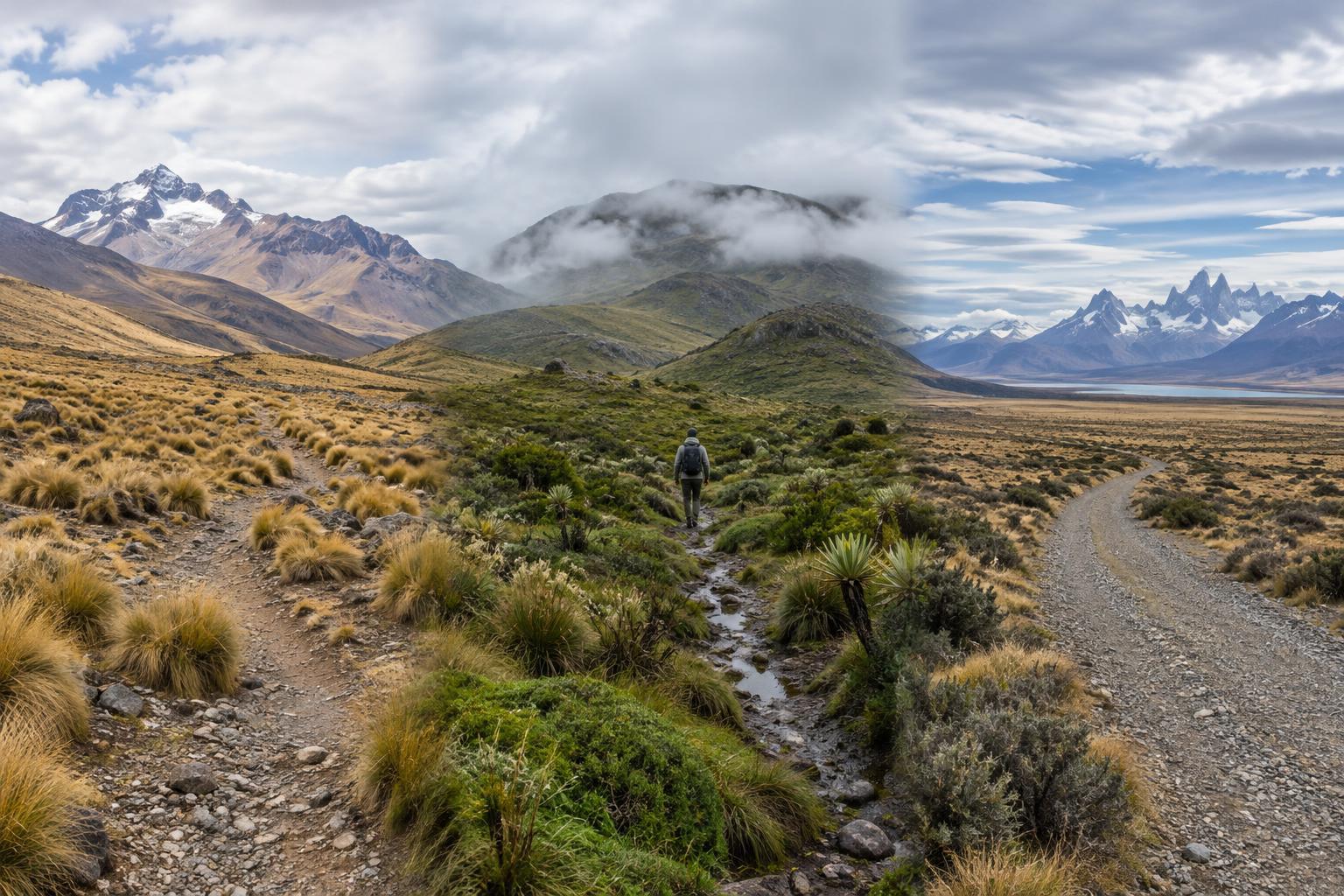
An open view does not mean an easy walk
The puna, páramo and Patagonian steppe can all give walkers a sense of enormous space. None is a single, uniform landscape, though. The puna is generally associated with high ground in the central Andes, the páramo with high, often damp country in the northern Andes, and the Patagonian steppe with the drier plains and plateaus east of the southern mountains. Local terrain, season and weather can make two walks within the same region feel remarkably different.
These distinctions matter when choosing a route. A clear horizon may hide a steep climb, a boggy crossing or a long stretch without shelter. Rather than packing for an idea of “the Andes,” look at the particular trail: its elevation, surface, exposure, access points and options for turning back.
Puna: altitude sets the pace
On the puna, broad grasslands and bare slopes can make a route appear straightforward from a distance. Walking at high elevation may still feel slow, particularly on climbs or when carrying a pack. Dry air, strong sun and cold conditions can occur on the same outing, so a warm layer and sun protection can both earn their place in a day bag.
Build a route around a comfortable pace rather than a distance that looks modest on a map. Check the elevation profile as well as the length, and leave time for rests and changes in weather. Water sources may be far apart or unsuitable to drink untreated; plan what you will carry and how you will make any collected water safe. If you are not used to the elevation, avoid treating an ambitious first day as a test to push through.
Páramo: moisture changes the ground beneath you
Páramo walks can move through grasses, shrubs, wetlands and exposed ridges. Conditions vary, but mist, rain and saturated ground can make a short route feel slower than expected. A visible destination does not always mean a direct path: detouring around soft ground may be necessary, while leaving an established trail can damage delicate vegetation.
For these walks, pay close attention to the route underfoot. Footwear with dependable grip and layers that keep you comfortable when damp are often more useful than an optimistic forecast. Protect your map or navigation device from moisture, and carry a backup way to find the trail if visibility drops. Before setting out, check local access guidance: some areas have designated paths or restrictions intended to protect water sources and sensitive ground.
Patagonian steppe: wind and distance become part of the route
East of Patagonia’s mountains, steppe routes may cross open ground with low vegetation and few places to get out of the wind. Even a relatively level walk can become tiring when the return leg faces a headwind. Loose surfaces, river crossings and long gaps between services can add to the effort, depending on the route.
Look beyond the outward distance when planning a day. Check how long the return is likely to take, where shelter or a safe exit might be available, and whether a route crosses private land or requires permission. A wind-resistant outer layer, secure hat and enough food and water for delays are sensible considerations. Do not assume that a track visible on a map is a public walking route or that a distant building is open to visitors.
Plan for the place you are in
Across all three landscapes, good preparation begins with specific local information rather than a single packing list. Confirm the route and access conditions, check the forecast close to departure, and tell someone your intended plan if you are walking independently. Where a local guide is appropriate for the terrain or access rules, ask what the walk involves and what equipment you need before booking.
Open country is also lived-in country. You may encounter grazing animals, working land or places with cultural significance. Follow marked routes and local guidance, give animals space, take litter away and avoid disturbing plants or water edges. The reward is not simply covering ground: walking at a pace suited to the landscape leaves more room to notice how each place changes around you.


