Start with your itinerary, not a generic checklist
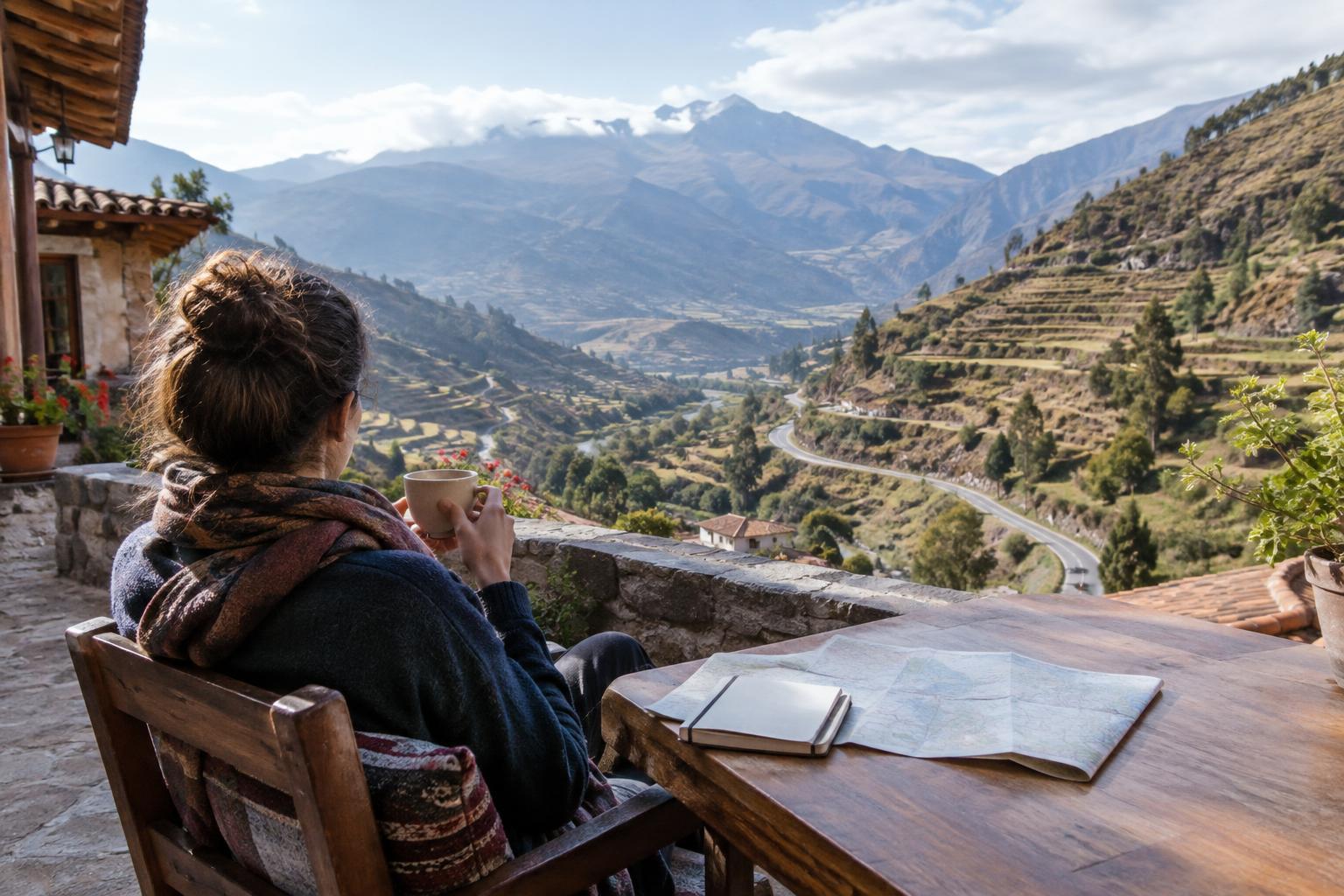
The Andes stretch across several countries and many kinds of terrain. A city stay, a high-altitude walking route and a visit to a lowland rainforest area can raise different health questions. Before seeking advice, write down where you expect to go, your approximate elevations, the length of your trip and any activities that may take you far from medical care. Include overnight stops and side trips, not just your arrival city.
Arrange a conversation with a qualified travel-health professional well before departure, especially if you have a complex itinerary or an ongoing health condition. Bring your vaccination record, a list of medicines and supplements, and details of relevant allergies. Advice should be tailored to your health and route; no single vaccination or medicine list fits every Andean journey.
Check vaccinations and destination-specific risks
A useful first step is to confirm that your routine vaccinations are up to date. Then ask which additional travel vaccines may be appropriate for the places you will visit and the way you will travel. Food and water exposure, time in rural areas, planned activities and access to healthcare can all affect that discussion. Some vaccines involve more than one dose, so leaving the appointment until the final days before a flight may limit your options.
Do not assume that health guidance for a country applies equally to every part of it. For example, a route confined to high-altitude cities may call for a different discussion from one that also enters tropical lowlands. Ask a clinician to assess whether mosquito-borne illness precautions or any entry-related vaccination documentation are relevant to your exact route. Check applicable entry requirements separately before travel, as they can depend on where you have recently been as well as where you are going.
Review prescriptions before you pack
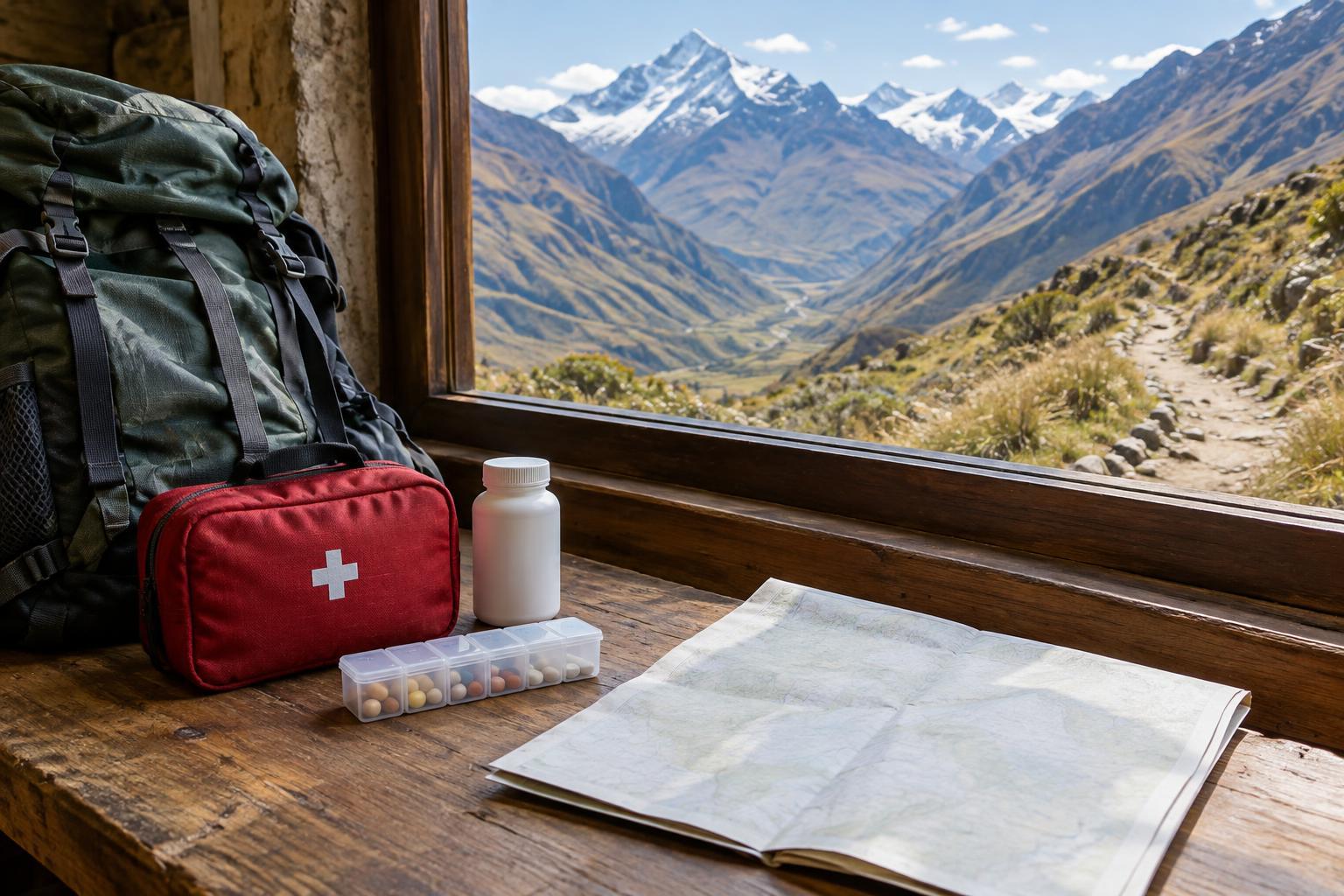
If you take regular medication, ask your prescribing clinician how to manage it across travel days, time-zone changes and physical activity. Check that you will have enough for the entire journey, allowing for plausible delays, and ask about safe storage if a medicine is sensitive to heat or cold. Keep essential medication in its original labelled packaging and in your hand luggage where permitted, rather than relying on a checked bag.
Rules for bringing medicines across borders vary. This is particularly worth checking for controlled medicines, injectables and supplies such as needles. Carry a copy of your prescription and, if useful, a clinician’s letter explaining what you need; confirm documentation requirements with the relevant official authorities before leaving. If you are considering medicines for altitude, motion sickness or other travel concerns, discuss suitability and possible interactions rather than adding them to your kit on your own.
Plan for altitude and distance from care
Many Andean itineraries involve a rapid change in elevation, sometimes before a walk has even begun. Altitude illness can affect travelers regardless of fitness. Share your proposed ascent and sleeping elevations with a clinician, and build time into your itinerary to adjust where possible. Learn to recognize symptoms and agree with your companions that you will not push onward if someone becomes unwell. Severe or worsening symptoms need prompt medical assessment and may require descent.
Remote travel adds practical questions. Find out how a walking route is accessed, where help might be available and whether phone coverage is likely to be unreliable. If you use a guide or operator, ask about their emergency procedures without assuming they can provide medical care. Review insurance wording for your intended activities, maximum elevations and emergency evacuation; a policy that suits a city break may not cover a mountain trek in the same way.
Make a simple health plan you can use on the road
Keep a compact record of important information: medication names and doses, allergies, relevant medical conditions, emergency contacts and insurance details. Store a copy somewhere accessible if your phone is lost or its battery runs out. Pack basic supplies appropriate to your activities, including anything you routinely need for minor injuries, but check that your kit complies with transport and border rules.
Everyday habits matter too. Take care with food and drinking water, protect yourself from sun exposure, and use suitable insect-bite precautions where your itinerary calls for them. These measures do not replace personalized medical advice, but they make that advice easier to put into practice. The goal is not to anticipate every possible problem: it is to leave with an informed plan, the supplies you need and enough flexibility to change course if your health requires it.