Check the outlet and the voltage
A plug adapter changes the shape of a plug so it fits a socket. It does not change the electricity supplied by that socket. This distinction matters on an Andean itinerary: outlet styles and household voltage differ between countries, and you may encounter more than one socket style within a country.
As a starting point, type A and B outlets, with flat pins, are common in Colombia and Ecuador. In Chile, expect type C or L sockets; in Argentina, type C or I. Peru and Bolivia can present a mix of outlet styles, including flat-pin and round-pin sockets. These are planning guides rather than guarantees for any particular room. Check the countries on your route and ask an accommodation provider about its sockets if charging is especially important to you.
Voltage deserves a separate check. Colombia and Ecuador generally use lower household voltage than Chile, Argentina, Peru and Bolivia. Before plugging in a device, read the small print on its charger or power supply. An input rating such as “100–240V” means that charger is designed to accept that range of voltages; it will usually need only a suitable plug adapter. If the rating does not cover the local supply, do not assume an adapter will make it safe.
Choose adapters for the whole route
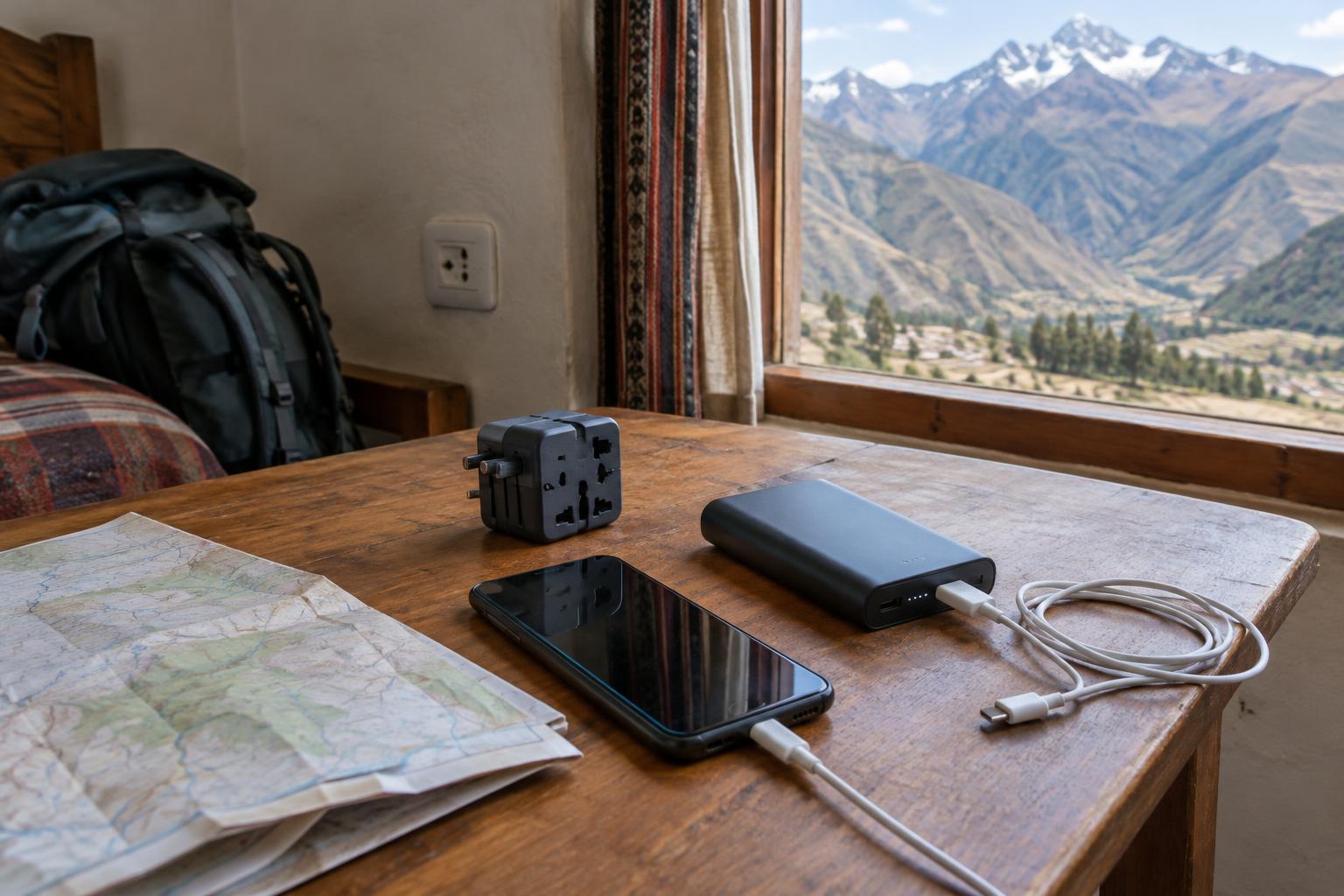
For a trip crossing several countries, a compact universal adapter can reduce the number of pieces to carry. Check that it supports the socket types you expect, however: “universal” does not mean it fits every outlet. A simple country-specific adapter can be sturdier and easier to use where sockets are recessed or space around them is tight.
Consider how many items you need to charge at once. One adapter may be enough if a phone, camera and headphones can take turns. If two travelers depend on their phones each morning, a second adapter offers useful flexibility. USB charging ports on an adapter are convenient, but check their output ratings against your devices; a small port may charge a power-hungry device slowly.
Grounded plugs need particular care. A two-pin adapter may physically accept a three-pin plug without providing a working earth connection. If a device requires grounding, use an appropriate grounded adapter and socket rather than treating a loose fit as good enough.
Know when a converter is needed
Most modern phone, tablet, camera and laptop chargers accept a broad input-voltage range, but the label on your own charger is the reliable guide. Check detachable power bricks as well as devices with built-in plugs. If a label is missing or unclear, look for the manufacturer’s specifications before departure instead of testing the device in an unfamiliar socket.
Heat-producing appliances such as hair dryers and straighteners are more likely to be limited to one voltage. A voltage converter is different from a plug adapter, and converters have power limits of their own. Rather than carrying a bulky converter for an appliance you may use only occasionally, consider leaving it at home or using an appliance supplied locally. Never connect a device through an adapter if its input rating is incompatible with the supply.
Keep essential devices usable between stops
Charging access is not always convenient on long bus journeys, multi-day walks or in rooms with only one reachable socket. Charge your phone and any other essential device when you have a dependable opportunity, and carry a power bank suited to your needs. If flying, check your airline’s rules for power banks and spare batteries before packing; they commonly need to travel in cabin baggage.
Put charging cables and at least one adapter in a place you can reach during travel rather than at the bottom of a large bag. A spare cable is small insurance against a damaged connector. Download maps, booking details and other information you may need without a connection, and use battery-saving settings when you expect a long day away from an outlet.
If you rely on a phone for navigation, avoid making it your only way to find an address or follow a route. Keeping key details available offline or on paper makes a flat battery an inconvenience rather than a major disruption.
Charge safely and courteously
Inspect outlets before use. Skip a socket that is loose, damaged or unusually hot, and do not force an adapter that does not sit securely. Keep chargers away from wet surfaces, and avoid piling multiple high-power appliances onto one adapter. A reputable, appropriately rated adapter is a better travel purchase than an unlabelled one that happens to fit.
In shared accommodation, charging is also a matter of consideration: use the outlets allocated to you, keep cables out of walkways and ask before unplugging someone else’s device. A little planning before departure—checking input labels, packing suitable adapters and allowing time to recharge—makes it easier to focus on the journey rather than the next socket.