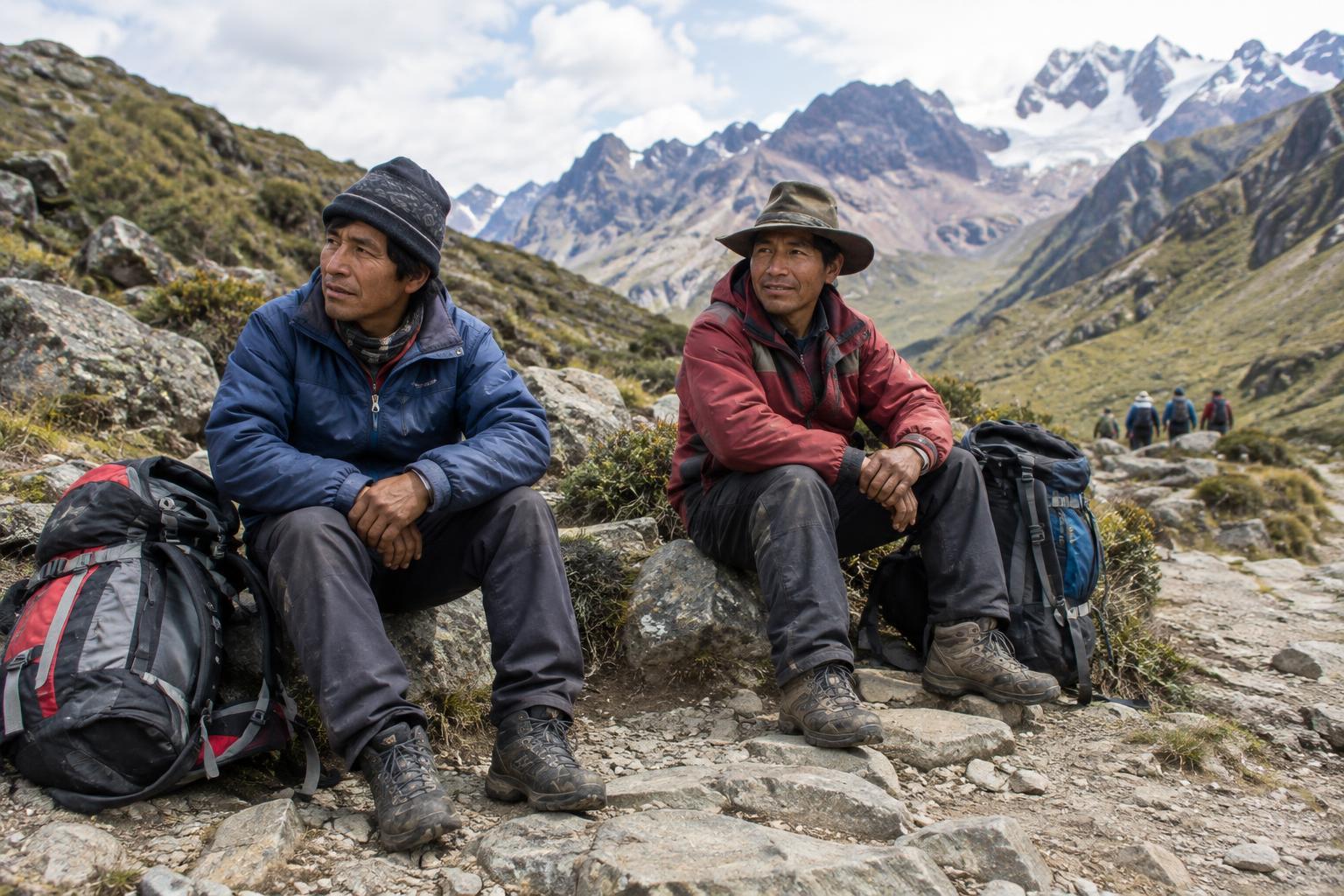
Start with how the trek is organised
On a supported trek, porters may carry food, tents, cooking supplies and travelers’ belongings across demanding terrain. Their work is easy to overlook when a trip description focuses on views and campsites. Asking about porter welfare is not about assuming every operator works the same way; it is about understanding how a particular trek is staffed and run.
Before booking, ask who employs the porters and whether they work directly for the operator or through another company. Ask who is responsible for setting loads, providing equipment and responding to problems on the route. A clear answer helps you understand where accountability sits. If a seller cannot answer, ask them to check with the team that runs the trek rather than treating a general assurance as enough.
Ask how loads are calculated and checked
A stated bag allowance does not tell you everything a porter carries. Ask what is included in each load: travelers’ duffels, tents, food, fuel and shared equipment may be allocated separately. Find out whether loads are weighed before departure, who checks them and what happens if supplies are added or redistributed during the trek. Rules and practices can vary by route, so ask how the operator meets any requirements that apply to your itinerary.
Your own packing choices matter too. Keep within the allowance you are given, and do not hand a porter extra items at the trailhead without checking how they will be carried. If you need to bring more, discuss it with the operator in advance. A well-planned trek should account for its equipment and supplies without relying on an overloaded team to make the itinerary work.
Look beyond boots and jackets
Ask what clothing and equipment porters are expected to bring, what the operator supplies, and whether items are suitable for the route and season. Useful questions cover footwear, rain protection, warm layers and a way to carry loads securely. Equipment is only part of the picture: porters also need appropriate food, drinking water and a place to sleep. Ask whether they have shelter and sleeping arrangements separate from gear storage or cooking space.
Then ask how the schedule works for the crew. When does their day begin and end? Are meal breaks and rest possible within the itinerary? What is the plan if someone becomes ill or injured, including how they can leave the route? The aim is not to demand a promise that nothing will go wrong. It is to see whether the operator has thought through ordinary needs and foreseeable difficulties.
Clarify pay, costs and tipping
Price alone is a poor guide to working conditions. Ask how porters are paid, when payment is made and whether they must cover job-related costs such as transport, food or equipment from their wages. You can also ask whether there is a process for crew members to raise concerns. An operator may not share an individual worker’s pay details, but it should be able to explain its general practices without expecting you to rely on vague claims.
Ask about tipping before you travel, including whether tips are optional, how they are shared and whether they reach porters as well as guides and cooks. Tips can be a welcome expression of thanks, but they should not be presented as a substitute for fair pay or basic provisions. Knowing the arrangements in advance also helps you avoid putting pressure on crew members to discuss money during the trek.
Pay attention to answers—and to your own conduct
Look for specific, consistent answers rather than a polished slogan. An operator that explains its procedures, acknowledges limits and is willing to follow up on unanswered questions gives you more to assess than one that simply says it treats staff well. If an itinerary is unusually rushed or a packing allowance seems generous, ask how the crew’s workload has been planned. Comparing operators on these details can be more useful than comparing headline prices alone.
On the trail, follow the agreed baggage limit, be ready when the group needs to move, and keep shared spaces tidy. Treat porters as colleagues in the journey, not as props for photographs or people obliged to tell you about their working lives. If you notice a concern, raise it respectfully with the guide or operator rather than confronting an individual worker. Thoughtful questions before departure, followed by consideration on the route, are practical ways to make porter welfare part of your travel decisions.


