What is a menú del día?
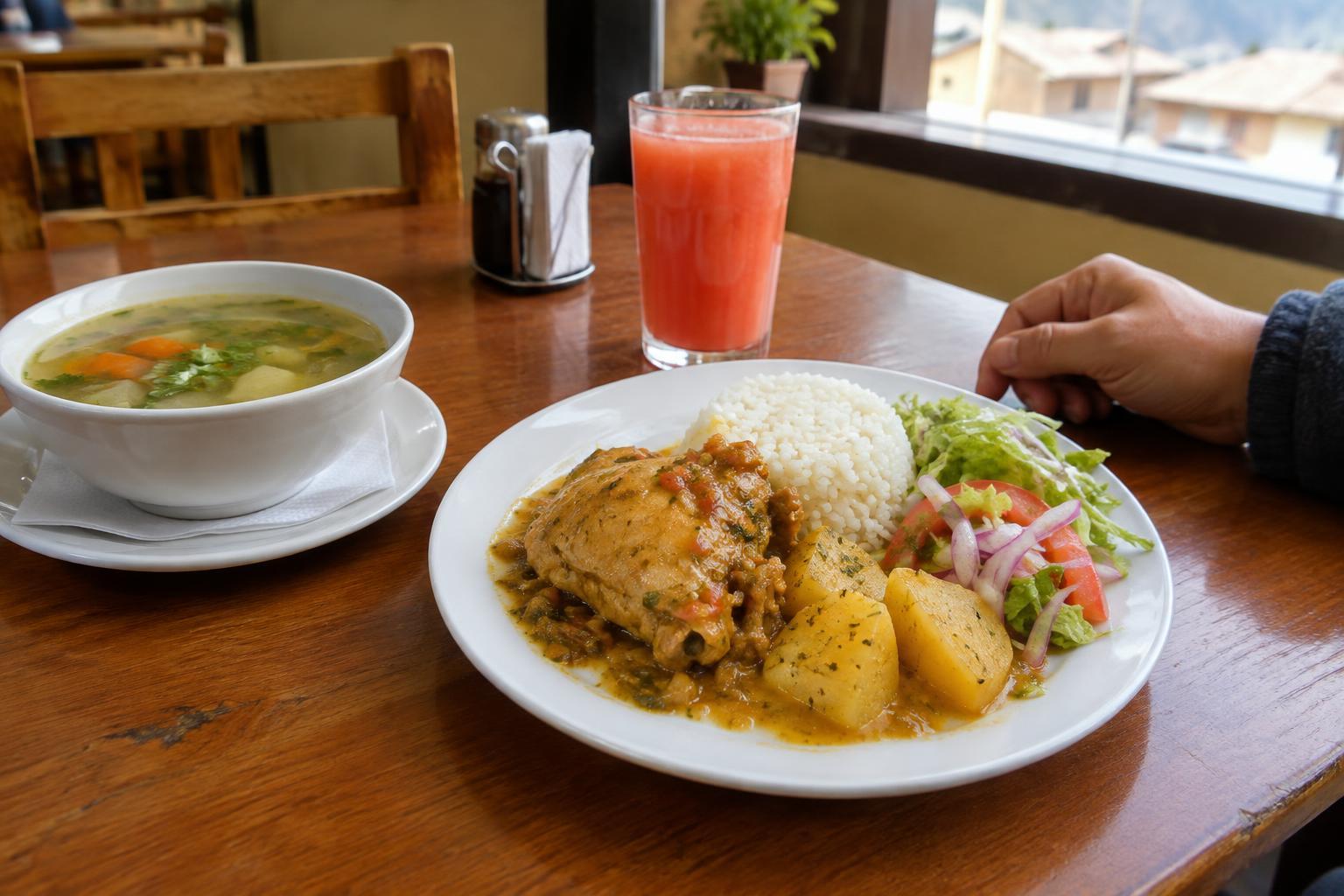
A menú del día, often shortened to menú, is a set lunch offered by many small restaurants in Peru. Rather than choosing every dish from a long à la carte menu, you select from a limited number of options prepared for that day. It can be a convenient choice when you want a sit-down meal without spending much time deciding what to order.
There is no single format used everywhere. A menú commonly includes an entrada, or starter, and a segundo, or main course. It may also come with a drink, and sometimes a small dessert. The choices, portion sizes and extras vary by restaurant, so treat any sign outside as a starting point rather than a complete description of the meal.
What might be on the plate?
For the entrada, you might be offered a soup or a simple prepared dish. The segundo is usually the heart of the lunch: perhaps chicken, fish, beef or a vegetable-based option served with rice, potatoes, noodles or beans. What appears depends on the kitchen, the region and the day's ingredients. Asking what is available is more useful than expecting a particular national dish.
A drink may be served at the table or brought with the meal. If it is included, ask what it is before ordering if you have a preference. Dessert is less predictable. Some places offer one as part of the set, while others charge separately. If the written menu is unclear, a quick question can prevent surprises when the bill arrives.
How to read the offer before you sit down
Look for a board, printed sheet or spoken list of the day's choices. Check the price and whether it applies to every main course; a particular dish may cost extra. You can ask, “¿Qué incluye el menú?” (“What does the set lunch include?”) and “¿Cuánto cuesta?” (“How much does it cost?”). If you want to compare the set lunch with individual dishes, ask for “la carta,” the à la carte menu.
Dietary requirements deserve a specific question. “Sin carne” means “without meat,” but a soup or sauce may still contain meat stock, and a dish without visible meat is not necessarily vegetarian. If an ingredient matters to you, name it and ask about the whole dish, including its broth and sauce. When the answer is uncertain, choosing somewhere that can explain its ingredients clearly is the simpler option.
Ordering in a few steps
Once you know the options, you can order by naming your choices: “De entrada, la sopa; de segundo, el pollo, por favor” (“For the starter, the soup; for the main, the chicken, please”). If there is only one starter, you may only need to choose your main. “¿Qué segundos hay?” asks which main courses are available, while “¿Tiene algo sin carne?” asks whether there is anything without meat.
Listen for follow-up questions about your drink, side dish or how you would like something served. It is fine to ask someone to repeat themselves: “¿Puede repetir, por favor?” If you need more time, “Un momento, por favor” works well. You do not need elaborate Spanish; a greeting, a clear choice and “gracias” go a long way toward a comfortable exchange.
Before paying, check whether your drink or any requested substitution was included in the set price. “La cuenta, por favor” is a simple way to ask for the bill. Keeping small notes or coins can be useful at modest eateries, though available payment methods differ from place to place.
Enjoying lunch with curiosity and care
A set lunch offers a glimpse of everyday cooking, but one meal cannot stand for all Peruvian food. Dishes and customs vary across the country, and each restaurant has its own approach. If you are unsure how something is eaten or what an ingredient is, ask politely rather than making assumptions.
Pay attention to what makes you comfortable when choosing where to eat: a clearly explained menu, food served at an appropriate temperature and drinking water you trust. If a place is busy, take time to order clearly and be patient with the staff. The aim is simple: understand what is offered, agree on the price and enjoy a meal prepared by the people serving you.