Start with your route, not a data package
Mobile data can make travel easier, but there is no single best option for every South American itinerary. A city break, a multi-country bus journey and a walking trip in the Andes place different demands on a connection. Before buying anything, note which countries you will visit, how long you will stay in each, and whether you mainly need messaging and maps or expect to make video calls and upload large files.
Check that your phone is unlocked and supports the type of SIM you intend to use. An eSIM requires a compatible device; a physical SIM requires an accessible SIM slot. Also check your home provider’s roaming terms. Roaming may be a convenient backup for an arrival day, but its charges and allowances can differ substantially from a local or travel plan. If you depend on receiving security codes by text, find out whether you can keep your home number active while using another line for data.
When a local SIM makes sense
A local prepaid SIM is often worth considering if you will spend a while in one country and want a domestic number as well as data. You may be able to buy one at a mobile operator’s shop or another authorised seller. The process varies by country and provider: you may need identification, and activation may take time. Buying from a staffed outlet gives you a chance to confirm that the SIM works before you leave.
Ask what the quoted price includes, when the plan expires, how to add more data and whether tethering is permitted. Check the coverage map for the places you intend to visit, while remembering that a map cannot promise reception on a particular trail or inside a building. A local SIM may stop being useful once you cross a border, so repeated purchases can be inconvenient on a fast-moving trip. Keep your original SIM somewhere secure if you remove it from your phone.
What an eSIM can simplify
An eSIM can be appealing when you want to arrange data before departure or avoid swapping a small physical card. Some plans cover one country; others cover several. Read the terms rather than relying on a regional label. Confirm the included countries, data allowance, validity period and whether the plan begins at purchase, installation or first connection. Many travel eSIMs provide data without a local phone number, so ordinary calls and texts may still depend on your other line or an internet-based app.
Install and label the eSIM while you have a dependable Wi-Fi connection, following the provider’s instructions. You can then set the intended line for mobile data and check your phone’s roaming settings for that line. If your phone supports two active lines, take care that it does not quietly use your home plan for data. An eSIM is convenient, not a guarantee of coverage: it still relies on partner mobile networks, whose reach may vary along your route.
Prepare for gaps in coverage
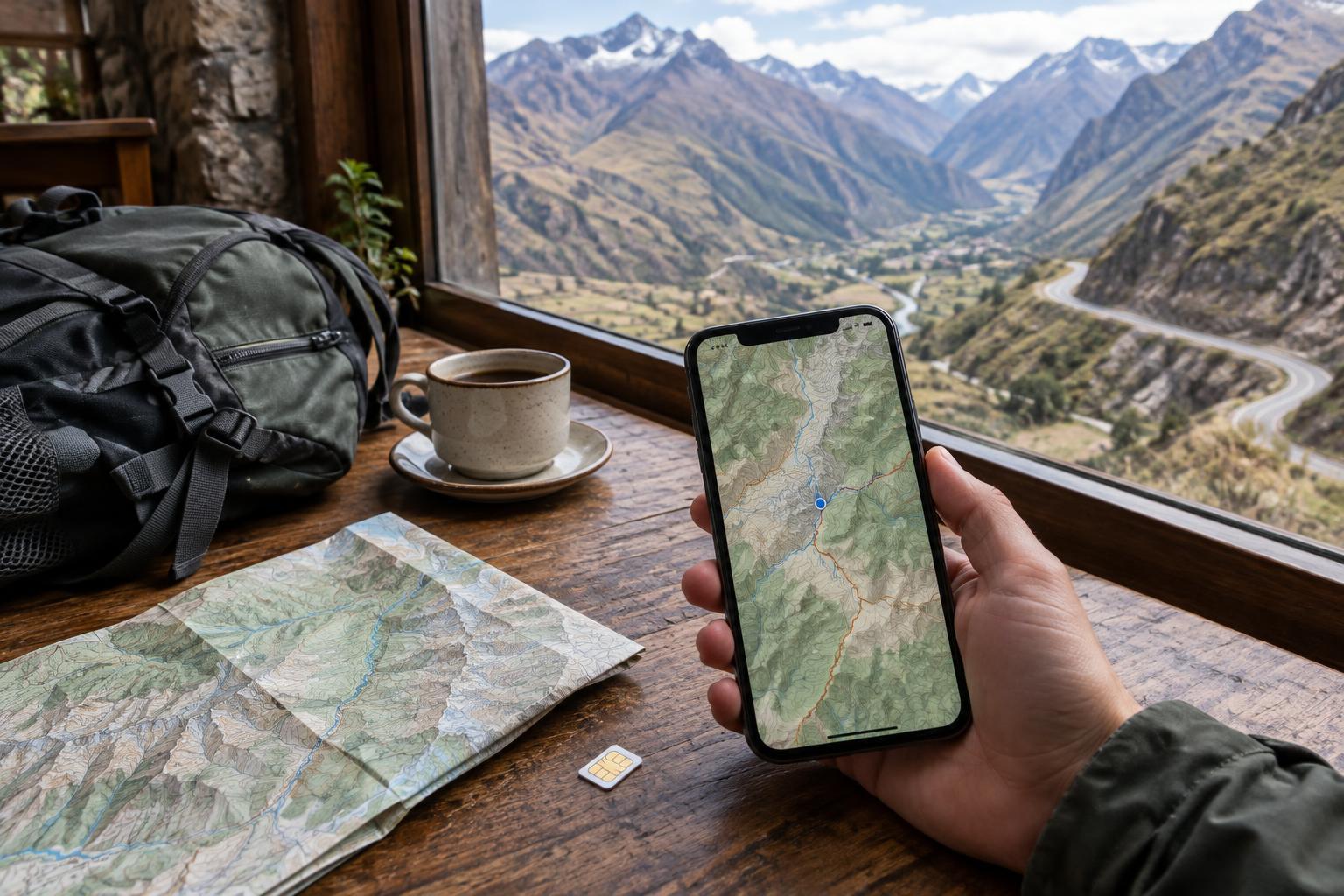
Mountain roads, remote villages and walking routes can have weak or no mobile signal, regardless of which plan you choose. Download maps of the areas you need before leaving reliable Wi-Fi, and test that you can open them in airplane mode. Save accommodation addresses, booking references, transport details and essential contact numbers somewhere you can access offline. A screenshot can help with a single ticket; a clearly named folder is easier to manage across a longer trip.
Offline maps are useful for orientation, but they do not replace local route information or sound judgment on a walk. Check the route and conditions before setting out, carry enough battery power for your plans, and avoid depending on a phone as your only navigation tool in isolated terrain. Translation downloads can also help with routine interactions when connectivity drops. Keep a written copy of a few essential details in case your phone is lost, damaged or out of charge.
Choose a setup you can manage
For a short visit to one country, a local SIM may offer a straightforward way to get a domestic number and data. For frequent border crossings, a suitable regional eSIM may reduce setup time, though its country list and allowances deserve close attention. You can also combine options: use a travel eSIM for initial connectivity, then decide whether a local SIM would better suit a longer stay. The right choice is the one you can activate, monitor and top up without disrupting your trip.
Whichever option you pick, protect your access to important accounts. Use a screen lock, keep backup sign-in methods available, and be cautious about handling sensitive information on shared or unfamiliar Wi-Fi. Downloading essentials in advance lets mobile data serve as a useful tool rather than a constant requirement. That is especially valuable in the Andes, where a change in terrain can be enough to turn a strong signal into none at all.