Start with the entry ticket, not the train
A Machu Picchu visit has two linked parts: reaching the entrance and holding a ticket for the route you want to walk once inside. Entry tickets are sold for specified dates, times and circuits. A circuit determines where you can go; it is not simply a suggested order for seeing the same places. Before buying transport, look at the official ticket descriptions and route maps for your travel date. Names, access rules and available routes can change, so an older itinerary may not match the ticket on sale.
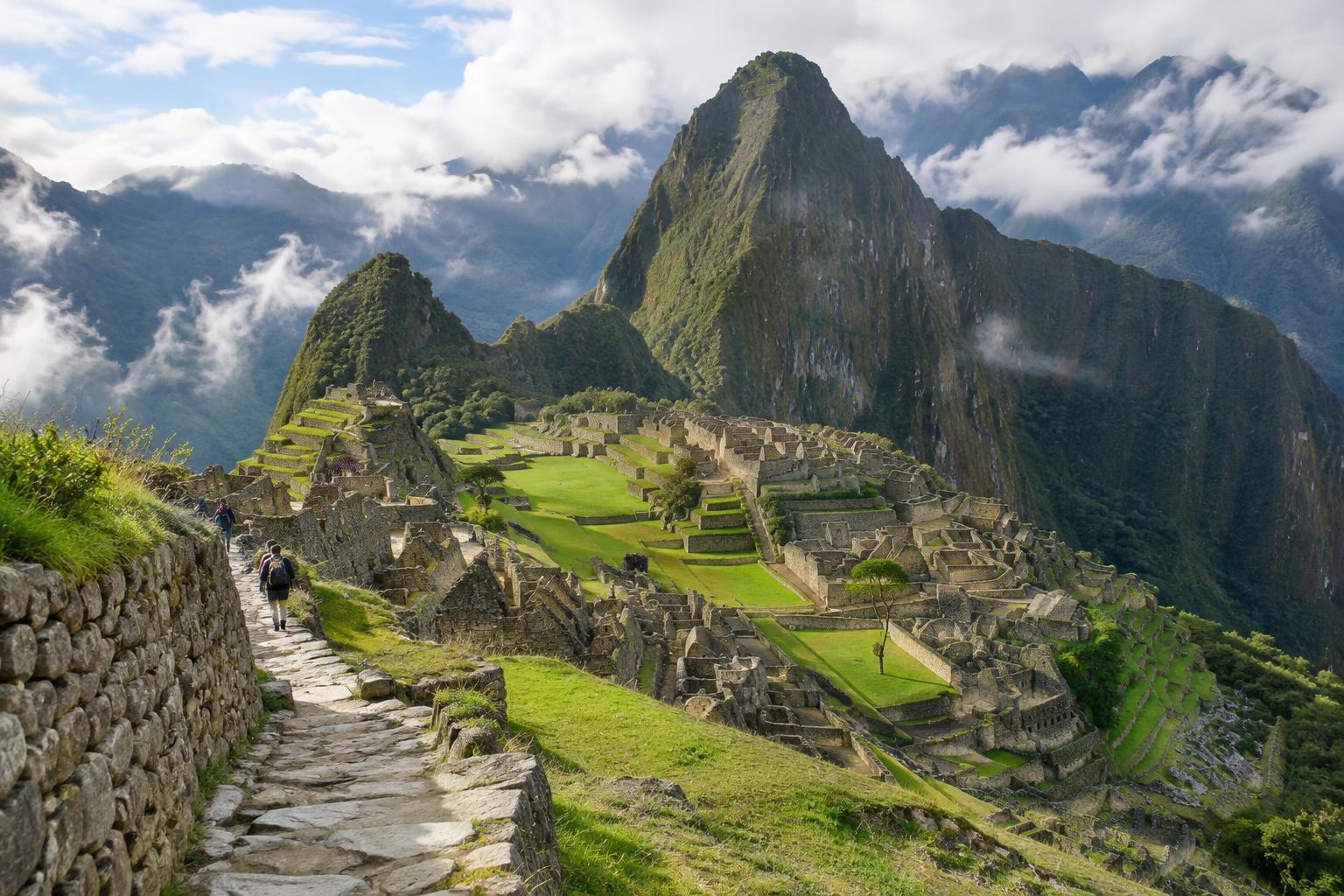
Choose by deciding what matters most to you. Some routes emphasise elevated viewpoints and broad views of the citadel; others take visitors closer to its built spaces. A ticket that includes an additional mountain walk calls for more time and effort. Do not assume that every ticket includes the same postcard viewpoint, access to every structure or permission to retrace your steps. Check the exact route shown for the ticket, along with any age, guide or other conditions listed at booking.
Match your circuit to your day
If photography is your priority, study which viewpoints your chosen route includes rather than selecting a circuit by its name alone. If you are more interested in walking among terraces and buildings, look for a route that covers those areas. Travellers with limited mobility or little appetite for steep paths should consider the route's terrain and length, not just its distance on a map. Machu Picchu has uneven stone surfaces, steps and exposed areas, and conditions may feel harder at altitude or in rain.
Entry time matters as much as circuit choice. Leave enough room for the journey to the gate and for possible queues, without counting on being admitted outside the time shown on your ticket. If you are travelling with companions, check that everyone has the same date, time and circuit before completing the purchase. Keep the booking details accessible and confirm what identification you must bring; the name and document on a ticket may need to match the traveller.
Understand the route from Cusco
The usual journey from Cusco follows the Sacred Valley to a train departure point, then continues by rail to Machupicchu Pueblo, also called Aguas Calientes. Ollantaytambo is a common place to board, reached from Cusco by road. Other departure points may be offered, but services and transfer arrangements vary. Compare the entire journey, including how you will reach the station, rather than comparing train times in isolation.
From Machupicchu Pueblo, visitors generally take a shuttle bus up the winding road to the entrance. Walking uphill is another option for people who are comfortable with a sustained climb, but it needs substantially more time and energy. Check the current shuttle arrangements and allow for a queue, particularly if your entry window is narrow. Whichever option you choose, plan a realistic return: you still need to get back down to town before a departing train.
Build a schedule with breathing room
It is possible to plan a long day from Cusco, but it involves several connections: road transfer, train, shuttle, entry, and the same sequence in reverse. Staying in Machupicchu Pueblo the night before can make an early entry less dependent on a pre-dawn transfer from Cusco. Staying afterward can make the return less rushed. Neither choice removes the need to check connection times and any luggage limits set by your transport provider.
Book in an order that protects the part of the trip you care about most. First check circuit and entry-time availability, then find trains and accommodation that fit, leaving a buffer between scheduled arrivals and admission. Travel times can vary with transfers, queues and conditions, so avoid a plan that only works if every stage runs exactly on time. If you want to spend time in the Sacred Valley, Ollantaytambo can also be a useful stop rather than merely a station on the way.
Prepare for the visit itself
Bring your ticket, required identification, water and clothing suited to changing sun and rain. Pack lightly enough to manage steps and crowds, and check the site's current rules on bags, food, walking poles and other items before setting out. Stay on your permitted route, follow staff directions and give other visitors space at narrow viewpoints. These habits help protect the site as well as making the visit calmer.
Finally, keep expectations flexible. The weather may hide a famous view, and your circuit may show you a different side of Machu Picchu than a photograph led you to expect. Understanding your ticket and the connections from Cusco gives you the best chance to focus on the landscape and the place, rather than on the next departure.