Understand the landscape first
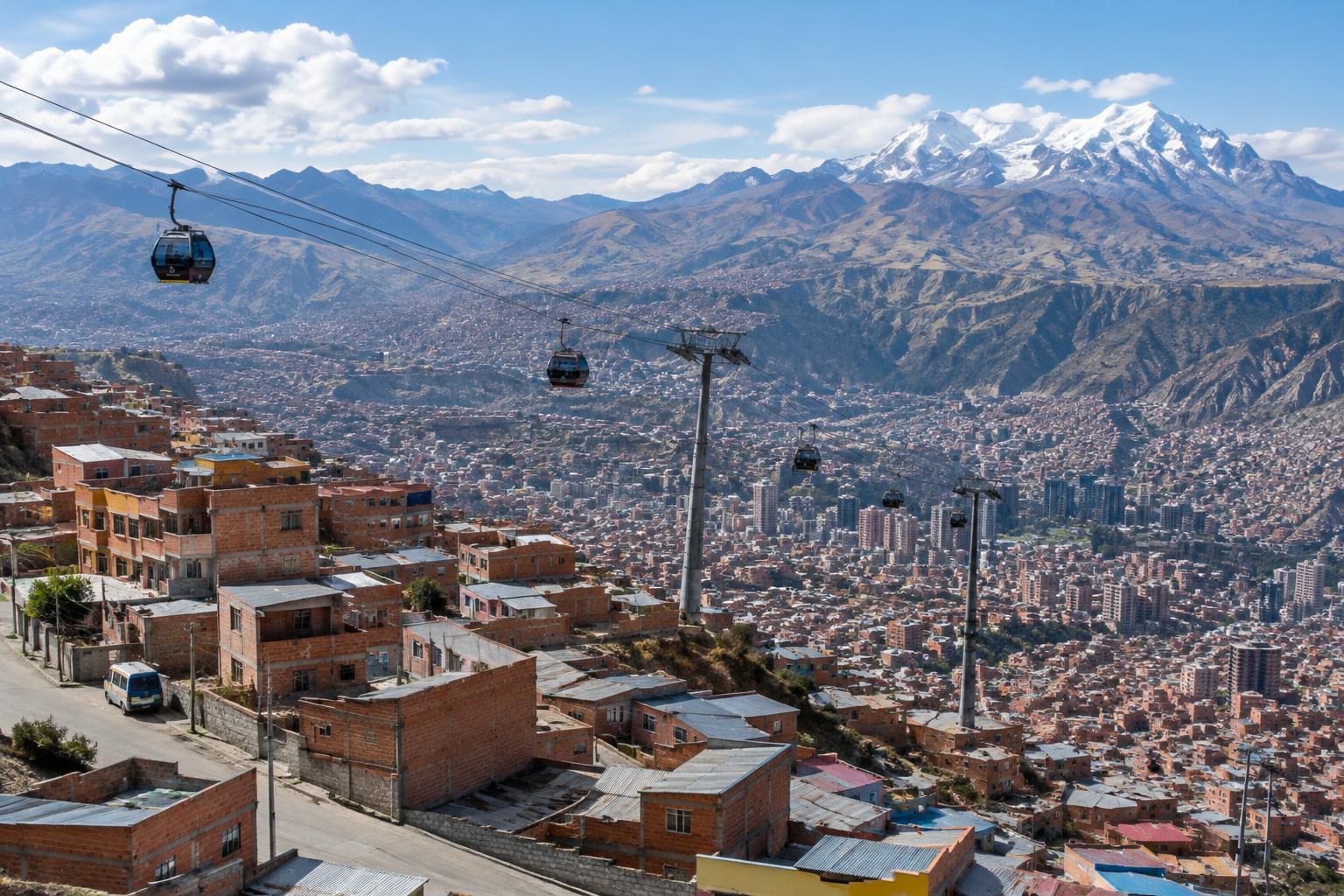
La Paz and El Alto are neighboring Bolivian cities that can feel like one continuous urban area from a visitor’s perspective. Their geography helps explain why they feel different. Much of La Paz spreads down a steep valley, with streets and buildings climbing its slopes. El Alto occupies the higher, flatter plateau above it. From many viewpoints, the contrast is striking: dense hillsides below and a broad urban horizon above, with Andean peaks visible when conditions are clear.
El Alto is a city in its own right, not simply a district of La Paz. It is also where the airport serving the area is located. La Paz is Bolivia’s seat of government, while Sucre is its constitutional capital. Knowing these distinctions makes maps, transport plans and conversations easier to follow.
Give yourself time to adjust
Altitude shapes a first visit. Central La Paz is roughly 3,600 metres above sea level, and El Alto is higher still, though elevation varies across both cities. A short uphill walk or a flight of stairs may feel harder than expected. If you have just arrived, consider a gentle first day: settle in, drink water regularly, eat as you normally can and leave demanding walks for later. If you feel unwell or have concerns about altitude, seek appropriate medical advice rather than trying to push through.
Temperatures can change noticeably between sun and shade, and conditions on the plateau may feel colder or windier than in the valley. Layers, sun protection and comfortable shoes are useful even when your plans are mostly urban. Steep pavements, steps and uneven surfaces can turn a short map distance into a longer outing, so build some flexibility into each day.
Use the cable cars to find your bearings
The Mi Teleférico cable-car network connects parts of La Paz and El Alto and offers an unusually clear way to see how the two cities fit together. A ride can be transport and orientation at once: watch the valley open beneath you, then notice how the streets change as you reach the plateau. Stations connect with street-level journeys, so check your route before setting out rather than assuming one line will take you directly to a particular sight.
For a first outing, choose a destination near a station and allow time to explore on foot after you arrive. Signs and staff can help with transfers; confirm fares, operating hours and any service changes locally. As on any urban transit system, keep belongings close, make room for other passengers and avoid blocking doors to take photographs.
Explore each city on its own terms
In La Paz, a manageable introduction is to wander through central streets and plazas, stopping when a market, building or view catches your attention. The city’s slopes reward slow exploration: even nearby neighborhoods can have different outlooks over the valley. Markets are working places as well as visitor attractions. If you are browsing, leave space for shoppers, ask before photographing people or stalls, and treat items with cultural or spiritual significance respectfully.
El Alto merits time beyond an airport transfer or a view from the cable car. Its broad streets, markets and distinctive buildings reflect a busy city with its own daily rhythms. Because markets and other gathering places vary by location and day, ask locally what is practical to visit during your stay. Go with the aim of observing and learning, not treating ordinary life as a spectacle. A local guide can be useful if you want more context or are unsure how to navigate a particular area.
Plan a comfortable, respectful visit
Choose a base that suits the pace you want. Staying near central La Paz can make museums, restaurants and walking routes convenient, while other neighborhoods may offer a quieter starting point. Wherever you stay, check the actual journey to places on your list: hills, traffic and transfers can matter more than distance. For street transport, agree on a fare when appropriate, use established services where possible and ask your accommodation for current local guidance.
Leave room for everyday pleasures rather than trying to cover both cities in a single checklist. Try a café or market meal, pause at a viewpoint and notice how people use the streets and public spaces. Basic courtesy travels well: learn a few Spanish greetings, ask permission before taking close-up photographs and buy something when you can if someone has spent time helping you. La Paz and El Alto become easier to appreciate when you allow each its own space in your itinerary.


