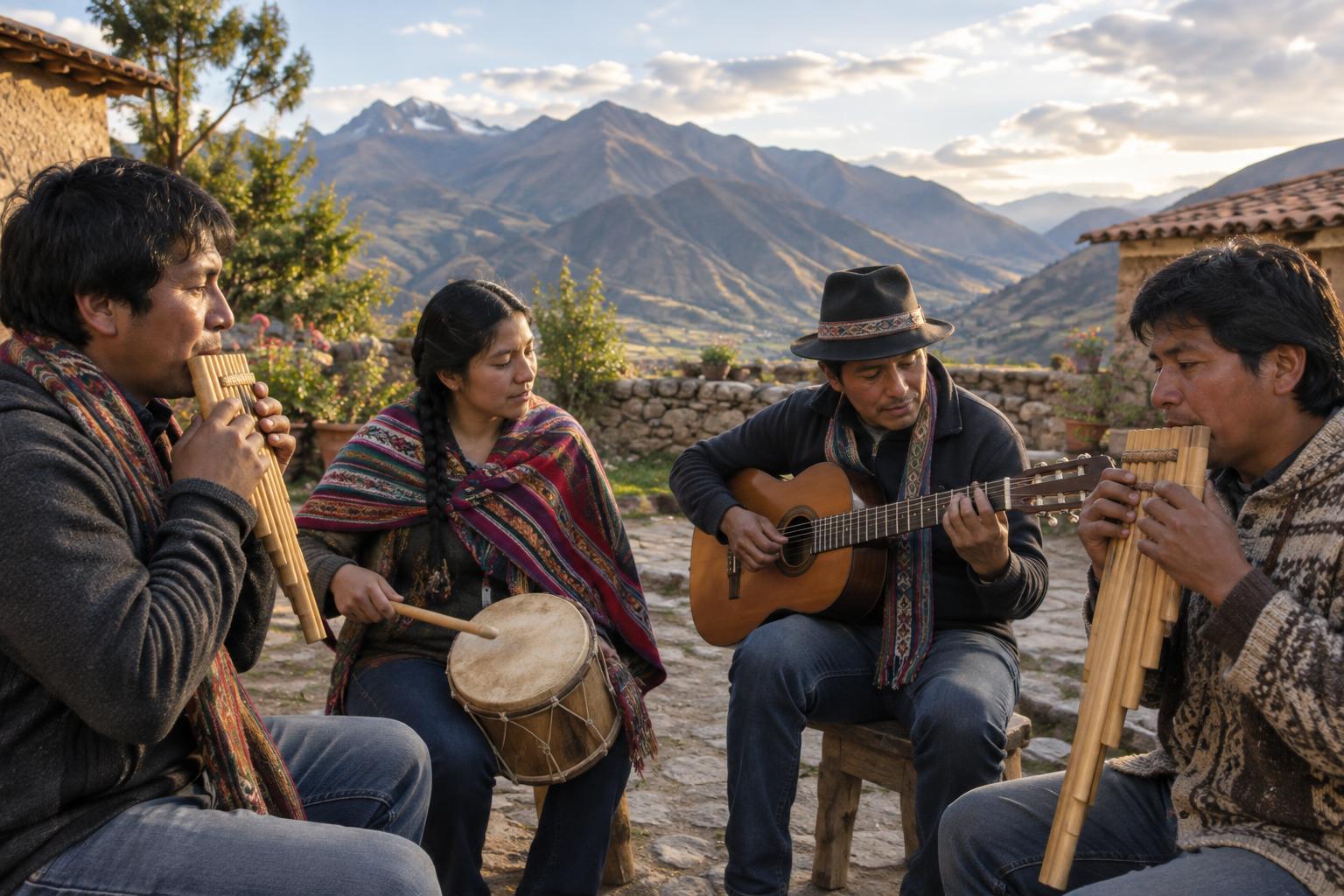
Start with place, not a single “Andean sound”
The Andes stretch across several countries, languages and musical histories. There is no single sound that can stand for the whole region. A song heard at a family gathering in the Peruvian highlands may have little in common with music performed at a festival in Ecuador or northern Argentina. Even a familiar style can change from one town to the next: the tempo, instruments, dance steps and occasion may all differ.
For a first listen, notice what the music is doing as well as how it sounds. Is it meant for dancing, a procession, quiet reflection or shared singing? Does one voice lead, or do instruments answer one another? These questions are more useful than trying to identify a style from a panpipe or drum alone. Recordings can offer an introduction, but the setting and the people making the music are part of its meaning.
Huayno: a broad family of songs and dances
Huayno is closely associated with the central Andes, especially Peru and Bolivia, but the word covers many regional approaches rather than one fixed beat. A huayno may bring together singing, a lively pulse and a dance that moves between partners and a wider group. Lyrics may address love, separation, home or everyday life. Depending on the performers and place, you might hear strings, flutes, percussion or electric instruments.
That range makes huayno a good style for comparing versions. Listen to how singers shape a phrase, where dancers might find the beat and how the accompaniment changes the mood. A recording with a small acoustic ensemble can feel very different from an amplified performance, yet both may be meaningful expressions of the style. If you hear a song introduced as huayno while travelling, its local name and context are worth asking about rather than assuming every version follows the same pattern.
Sanjuanito: rhythm and movement in Ecuador
Sanjuanito is an important part of Ecuador’s musical landscape, with strong associations in the highlands. Listeners often recognise its insistent, danceable rhythm, though performances vary across communities and settings. It may be played by groups using strings and wind instruments, and it also appears in contemporary arrangements. As with huayno, the name alone cannot tell you who is performing, what an occasion means or which traditions the musicians draw on.
Try listening for the relationship between repetition and change. A steady rhythmic pattern can make room for melodic turns, shifts in energy and the movement of dancers. At a public celebration, give people space to take part without treating their gathering as a performance arranged for visitors. If you want to photograph or record musicians or dancers, ask first and accept a refusal without pressing.
Other paths in: yaraví, panpipe ensembles and carnavalito
Not every Andean style is driven by dancing. Yaraví is often associated with a slower, expressive approach to song, offering a different listening experience from an energetic huayno. Meanwhile, panpipe ensemble traditions invite attention to how players contribute to a collective sound. In some ensembles, musical parts pass between performers; listening for that interplay can be more rewarding than following just one instrument.
Further south, carnavalito is among the styles you may encounter in parts of Bolivia and northern Argentina, particularly in festive contexts. Its sound and setting can vary, so it is best treated as another starting point for exploration, not a neat label for all music at a celebration. These examples are only a small selection. Brass bands, string ensembles, singing traditions and locally distinctive instruments also shape what you might hear across the Andes.
How to listen well while travelling
Before a trip, make a short listening list with more than one performer or arrangement for each style. Note the place a recording is associated with when that information is available, but avoid treating it as a definitive example of local tradition. Comparing versions helps you hear differences in language, instrumentation and pace. If a programme or performer explains a song’s background, let that explanation take precedence over assumptions formed from a playlist.
During a visit, look for events that welcome an audience and follow the hosts’ guidance about entry, payment, photography and participation. Buying a ticket, paying an appropriate fee or purchasing music through a channel offered by the artist can support the people whose work you enjoy. Most of all, stay curious. Learning a few style names opens a door; listening to the musicians and communities behind them keeps it open.


