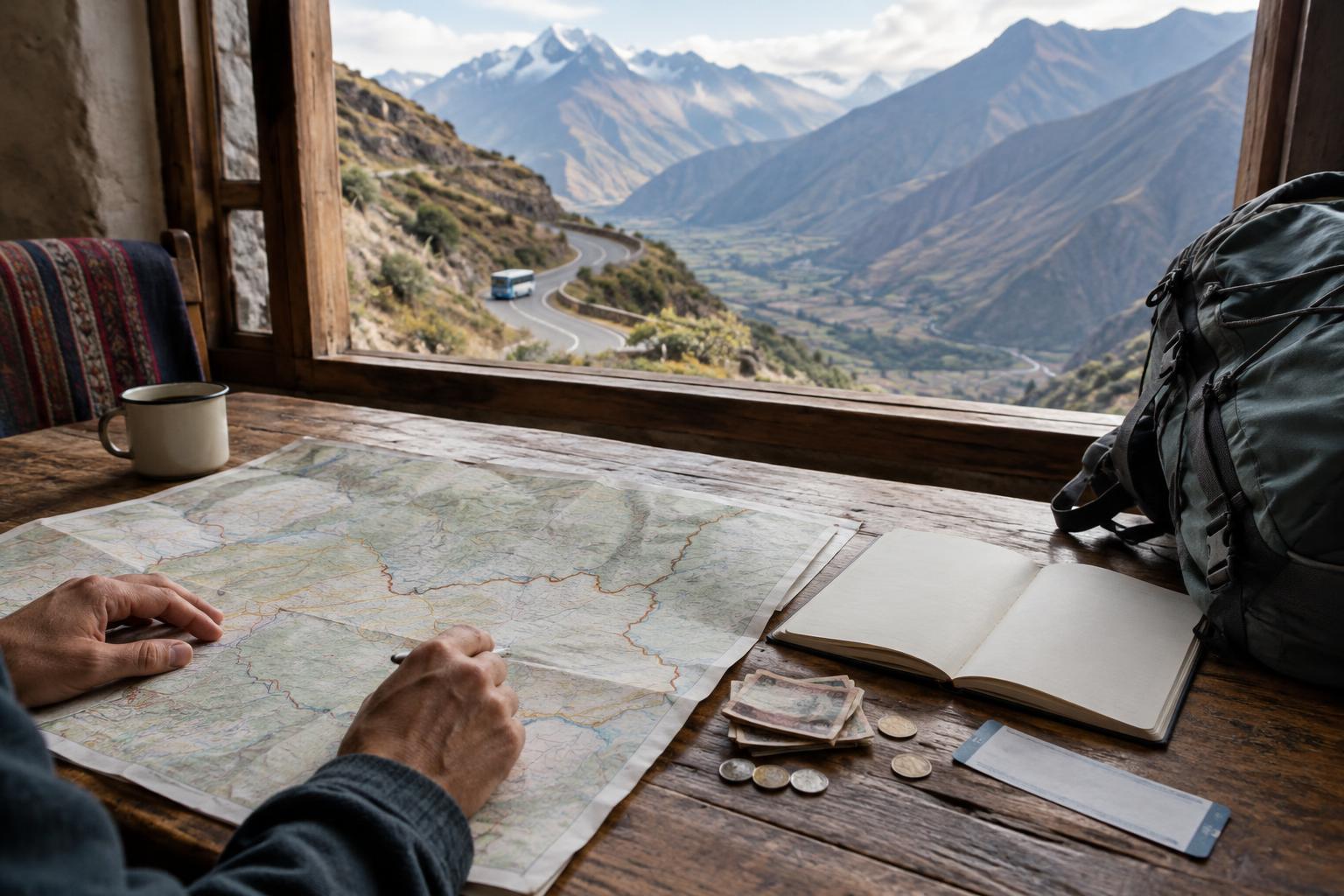
Start with the route, not a daily spending figure
A single daily average can be misleading on an Andes trip. A quiet day in a town, a long transfer and a guided walk may have very different costs. Before looking at prices, sketch a route with the number of nights in each place and the likely travel days between them. Note where you expect to use buses, shared transport, taxis or flights, and mark any activities that are central to the trip.
Build a simple budget with separate lines for transport, accommodation, food, activities and a reserve. For each line, write down your estimate, how you arrived at it and what is still uncertain. Prices can vary by country, season, booking method and level of comfort, so check current options for your actual route rather than copying someone else’s total. Keep estimates in one currency for easy comparison, but note the currency in which you will pay.
Count the full cost of getting around
List every journey between overnight stops, including the trip to and from your arrival point. A bus fare or flight ticket is only part of the cost: you may also need transport to a terminal, baggage fees, a taxi after a late arrival or an extra meal while waiting. If a journey takes most of a day, consider whether it changes your accommodation plans or leaves you needing a rest day.
For remote walking areas, ask how you will reach the trailhead and return from the finish. Shared vehicles may be economical but may not fit a tight schedule; private transfers offer more flexibility at a higher cost. Where you do not yet know the fare, use a clearly labelled estimate and check it again before departure. Avoid planning a route so tightly that one missed connection forces an expensive replacement.
Compare accommodation by the total stay
Work out lodging costs stop by stop: nightly rate multiplied by nights, plus any charges that are not included. Check whether breakfast, taxes, heating or payment fees are part of the quoted price. A cheaper room far from the bus station or the area you want to explore may increase local transport costs. If you want a private room after a multi-day walk, put it in the plan rather than treating it as an unexpected indulgence.
Your accommodation mix can do more to shape the budget than a small difference in everyday meal costs. Decide where a basic guesthouse or hostel suits you and where comfort, location or an early breakfast matters more. If booking ahead gives you peace of mind, note which stays are prepaid and which still need to be paid locally; otherwise, it is easy to count the same expense twice or overlook it entirely.
Separate everyday spending from special activities
Give food and routine spending their own daily estimate, then price major activities individually. A museum visit, a guided day walk and a multi-day trek should not disappear into the same vague allowance. For any organised activity, check what the price includes: transport, entry, equipment, meals and accommodation may be handled differently. Also allow for items you might need before setting out, such as suitable layers or rain protection.
Keep a small line for choices you may make on the road, such as an additional local guide or an extra day in a place you enjoy. This is not a reason to assume every activity will be available at short notice. It is a way to make your budget useful when plans evolve. If an activity is essential to your trip, verify its booking and payment terms before committing the rest of your route.
Plan a cash reserve without carrying everything at once
Cards can be convenient, but it is sensible to plan for cash payments, particularly for small purchases or journeys away from larger towns. Estimate what you may need between reliable opportunities to withdraw money: accommodation still to be paid, transport, meals and a modest extra amount. Check your bank’s withdrawal limits and fees, and remember that access to an ATM or a working card machine should not be assumed at every stop.
Keep your cash reserve separate from money already assigned to bookings. Your overall contingency should also cover plausible changes such as an additional night, a different transfer or replacing a necessary item. It need not be a precise percentage: choose an amount that fits your route and your ability to change plans. Before leaving, add up the category totals, compare them with the money available and revise the route if the margin feels too narrow. A budget works best when it helps you make choices before a problem becomes urgent.


