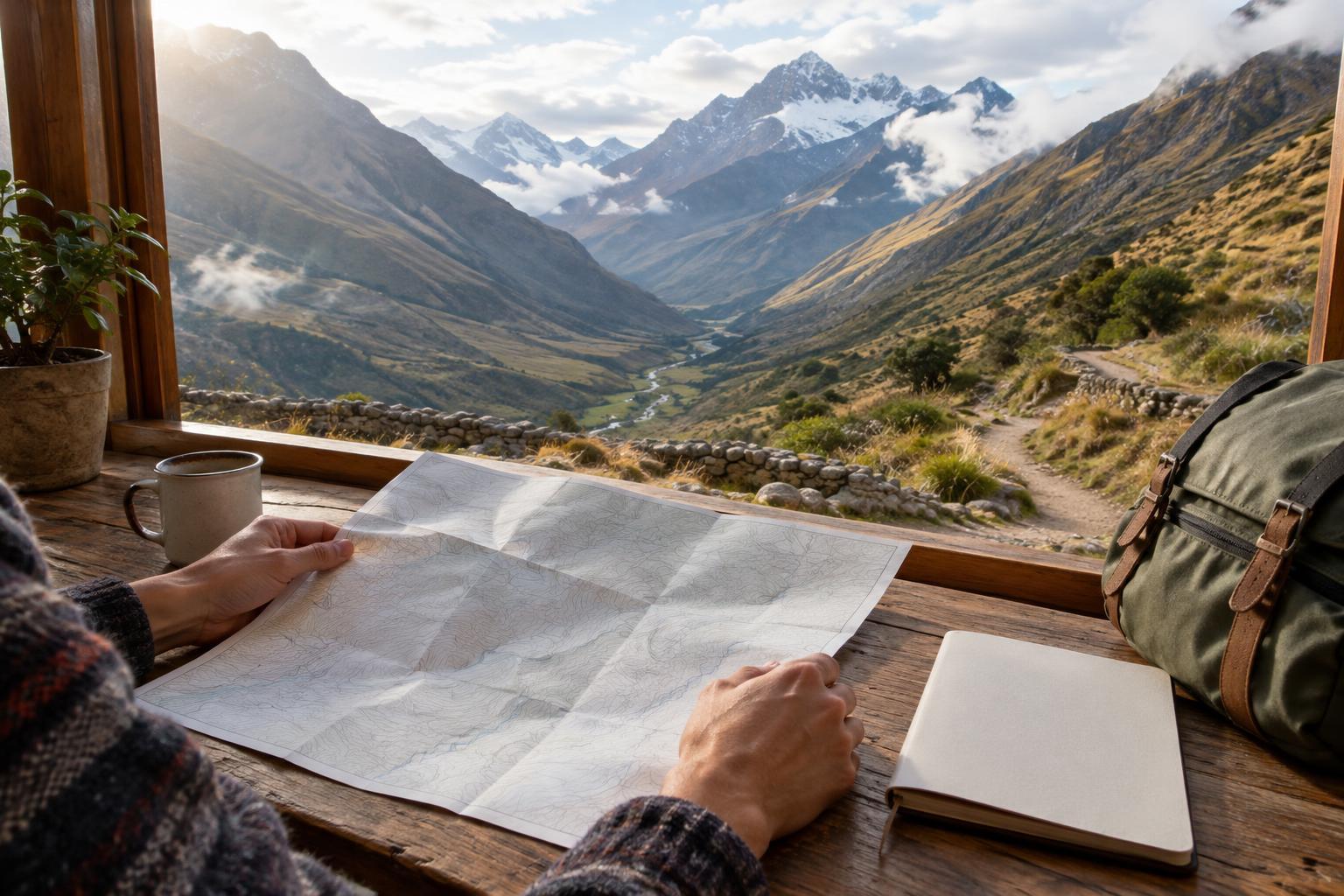
Start with the least flexible part of the trip
There is no single booking deadline for the Andes. A short visit built around a popular site or guided trek needs a different approach from a longer journey with several possible stops. Rather than reserving every night at once, identify the experience that would be hardest to replace. That might be an entry ticket, a trek with limited places, an international flight or a stay in a small town with few accommodation options.
Check the booking rules for that experience before committing to the rest of your route. Entry arrangements, transport schedules and cancellation terms can vary by place and provider, so use the relevant official or operator information when you are ready to book. Once the essential date is confirmed, build the itinerary outward from it. This avoids paying for a chain of reservations only to find that its central activity is unavailable.
Book the anchors, not the whole calendar
Think of an itinerary as a few fixed anchors connected by movable days. International flights often become an early decision, particularly if your travel dates are limited. Tickets or guided activities with restricted availability may also deserve early attention. If you are visiting during a major festival, a holiday period or a time when many people travel, accommodation near your key stop may be worth securing sooner.
Between those anchors, resist the urge to fill every date. A regional bus, an extra night in a city or a choice between two walking areas may be easier to decide once you know your pace. Availability varies, especially in smaller destinations, so flexibility does not have to mean arriving without any plan. Make a short list of acceptable places to stay and routes to take, then decide how much uncertainty you are comfortable carrying.
Read change and cancellation conditions before choosing a seemingly convenient reservation. A refundable room can protect an open day; a cheap but unchangeable journey can quietly turn it into another fixed point. Keep confirmation details together and note any deadlines for changing plans.
Give altitude and travel time some space
Many Andean routes involve substantial changes in elevation. People respond differently to altitude, so an itinerary that jumps straight from arrival into strenuous walking leaves little margin if you need a slower start. Allowing gentler days before a demanding hike is a planning choice, not wasted time. If you have health concerns about high-altitude travel, seek appropriate medical guidance before your trip.
Distances on a map can also be misleading. Mountain roads, transfers between terminals and connections through larger cities can make a journey take more of the day than expected. When a fixed ticket depends on reaching a destination, aim to arrive with time to spare rather than relying on a same-day connection. Keep that margin especially clear before an activity you cannot easily move.
A spare day has uses even when everything runs smoothly. It might become a rest day, a chance to explore a market at an unhurried pace or time for a shorter walk. Placing these open days near demanding travel legs makes them more useful than saving all your flexibility for the end.
Let weather shape the plan without dictating every detail
Conditions can differ sharply between Andean regions and elevations, and weather may affect a walk even when transport is running. Look at the usual conditions for the specific places and time of year you hope to visit, then make a backup plan for activities where visibility or trail conditions matter to you. A museum, food-focused day or lower-effort walk can be a satisfying alternative to forcing a route in poor conditions.
If a particular landscape is the main reason for your trip, consider giving it more than one possible day. That does not guarantee clear skies, but it reduces the pressure on a single morning. For guided activities, ask what happens if conditions prevent the planned outing: whether it can be moved, replaced or refunded will affect how much flexibility you really have.
Use a simple booking order
First, sketch your route and mark the experiences you would be disappointed to miss. Next, check their availability and rules, then reserve the least replaceable ones. Add the transport and accommodation needed to reach those bookings comfortably. Finally, leave selected nights and activities undecided, with a few realistic alternatives noted for each open stretch.
Review the plan as a whole before paying for more. If moving one bus or losing one day would unravel the trip, it may be overbooked. If an open stretch has no workable place to sleep or onward route, it may be too loose for your preferences. The aim is not maximum spontaneity: it is a trip with reliable foundations and enough room to respond to the place you find.


