Start with the animal, not the itinerary
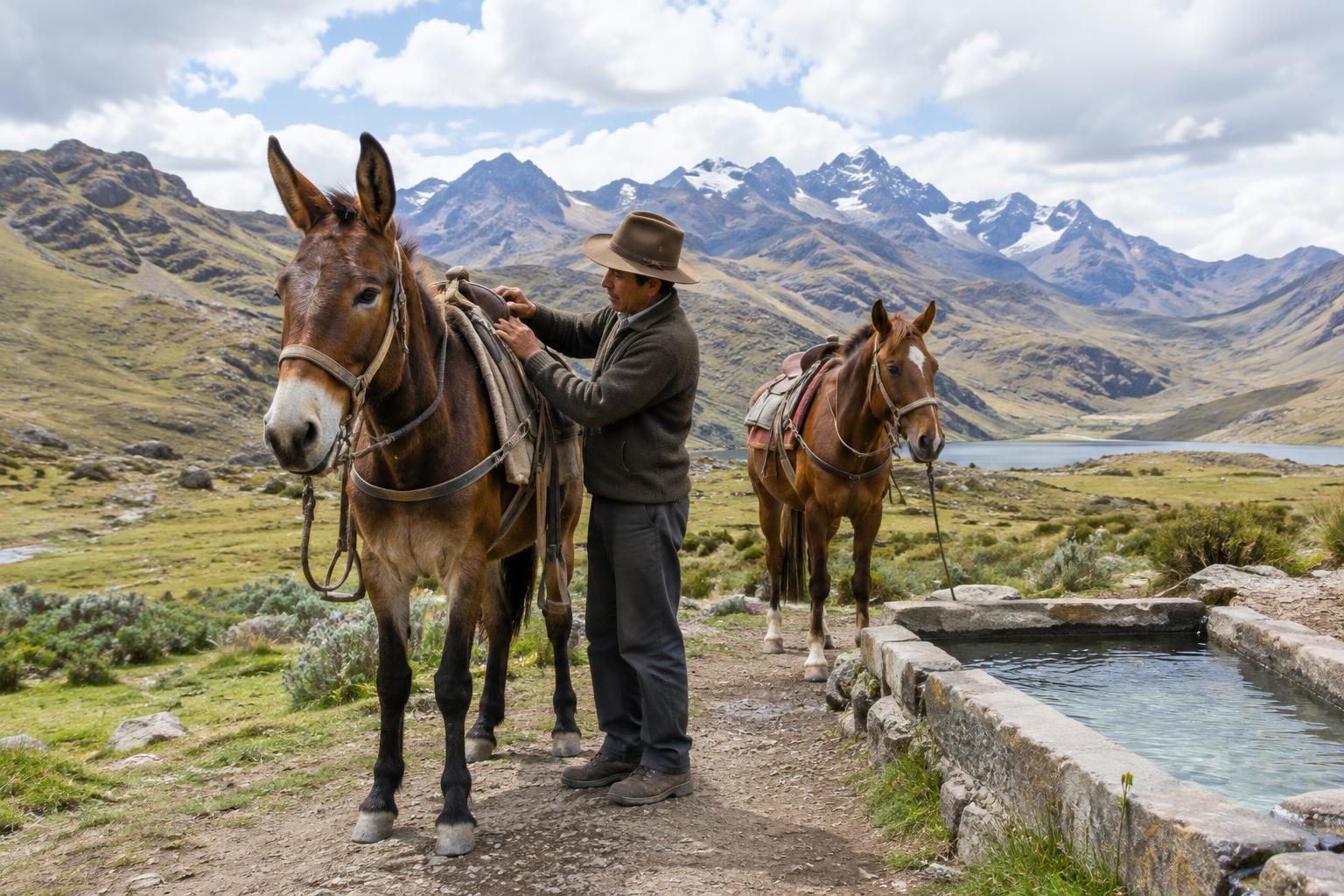
A horse or mule excursion can be a rewarding way to experience an Andean landscape, whether you are riding or hiring an animal to carry equipment. Good care is not always obvious from a brochure, though. Before booking, look for an operator who is willing to explain how animals are matched to the route, how their condition is checked, and what happens if one is unfit to work that day.
An animal should appear alert and able to move comfortably. Watch it walk on level ground if you can: repeated stumbling, marked stiffness or an obvious limp is a reason to pause. Look for open sores, especially where a saddle, pack frame or straps sit. A dusty coat alone tells you little, and a single observation cannot reveal an animal’s whole working life. What matters is whether the handler notices problems and responds rather than asking the animal to continue regardless.
Ask how the day’s work is managed
Distance is only part of the workload. Steep climbs, rough ground, altitude, heat and the combined weight of a rider or pack can make a short route demanding. Ask how the operator decides what each animal can carry and whether riders’ sizes and luggage weights are considered. A useful answer will address the individual animal and the terrain, not just offer a fixed weight limit without explanation.
Find out when animals can drink, eat and rest, and whether the itinerary allows time to stop if one is tired. Ask whether the same animal works consecutive long days and how the team handles a change in weather or route conditions. There is no need to expect a rehearsed speech; clear, practical answers and a willingness to adjust plans are more reassuring than a promise that every animal can manage every trip.
Pay attention to tack, handling and the route
Saddles and pack equipment should sit securely without obvious rubbing or painful pressure. Loads should be balanced and tied so they do not swing into the animal’s sides. Before departure, notice whether the team checks straps after loading and gives animals room to move without being crowded or pulled sharply. If you see a problem, ask the handler about it calmly; there may be a straightforward adjustment to make.
Handling matters as much as equipment. Look for patient loading and clear communication between guides and handlers, especially at narrow paths, crossings and busy departure points. On the trail, follow instructions about spacing and where to stand. Do not feed, untie or move an unfamiliar animal without permission. If an animal seems distressed or unable to continue, ask for the group to stop and discuss an alternative rather than pressing on to keep to schedule.
Questions to ask before you pay
A brief conversation can tell you more than a gallery of attractive trail photos. Ask: Who cares for the animals before and after an excursion? How are animals chosen for a particular rider or load? What food, water and rest are available along the route? How is a sore, lame or exhausted animal taken out of work, and is there another way to move the person or equipment?
Also ask what the price covers, including the work of handlers as well as guides. If you are booking through an intermediary, ask who runs the excursion on the ground and how to contact them with a concern. Vague answers do not automatically prove poor care, but pressure to book quickly, refusal to discuss animal welfare or a visible problem dismissed without checking are reasonable grounds to choose another option.
Make a choice that leaves room for care
Responsible travel is not a demand for a flawless photograph or a single universal way of working. Conditions and routes vary, and experienced local handlers may know their animals well. Approach questions respectfully while keeping your own boundaries clear: you can decline to ride an animal that appears unwell, ask for a load to be reconsidered, or leave a booking that does not give you confidence.
Consider whether you need an animal-assisted trip at all. On some routes, walking with lighter luggage may suit your plans better; on others, pack animals are an important practical part of the journey. If you do go, pack only what you need, be realistic about the pace, and allow the guide to change plans for the animals’ sake. A good excursion makes space for the welfare of the animals as well as the experience of the travelers.