Choose a guide for the trip you are taking
“Local guide” can describe several kinds of work. Someone leading a demanding mountain route needs different skills from someone showing you a market or explaining the history of a town. Start by describing your plans: where you want to go, how long you have, your walking experience, your preferred language and any accessibility needs. Ask whether the guide regularly works on that route or with that type of visit. A good match matters more than a long list of places they say they can cover.
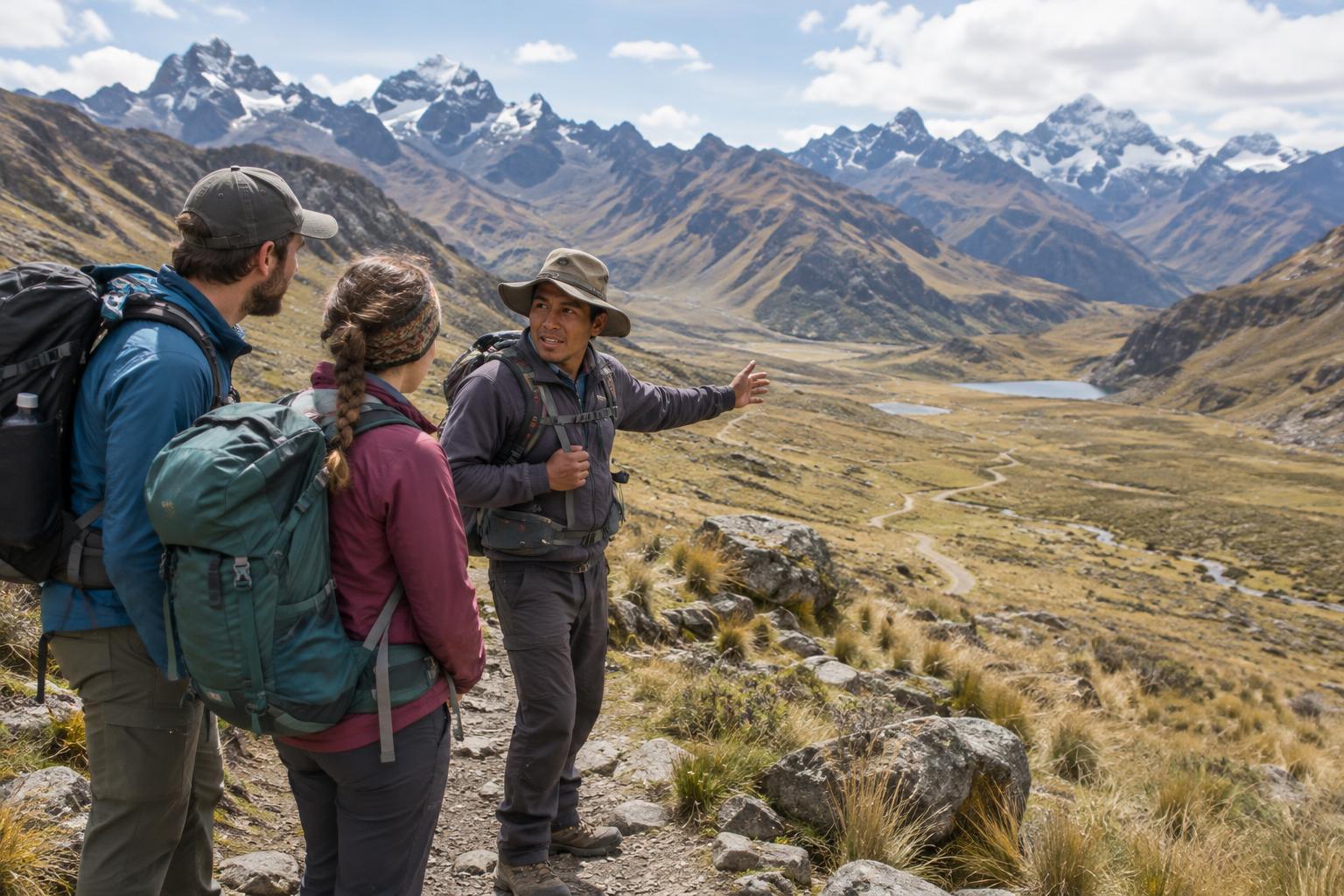
For a walk, ask about the expected terrain, pace, altitude and alternatives if a member of your group needs to stop. Find out who will make decisions if weather or trail conditions change. For a cultural visit, ask how the itinerary is arranged and whether any hosts or community spaces have agreed to receive visitors. A guide can help you approach a place thoughtfully, but hiring one does not automatically grant access to homes, ceremonies or areas where photography is unwelcome.
Check credentials that matter for the route
Rules for guiding can differ by country, destination and activity. Before booking, check whether your intended route, protected area or specialist activity requires a registered guide, a particular permit or another qualification. Ask a prospective guide what credentials they hold and how those relate to your plans. Where a registration or permit is required, request enough detail to check it with the relevant park office or authority. Do not assume that a general guiding credential covers technical climbing or every protected area.
Credentials are only part of the conversation. Ask about experience with the specific route, first-aid preparation, communication options and the plan if someone becomes ill or the group turns back. On a remote trek, clarify whether the guide works alone or with other staff and who carries safety equipment. You can also ask for recent client references if that feels useful. Clear, unhurried answers are more reassuring than promises that a trip is completely risk-free.
Agree on a rate without guessing what is fair
There is no single fair daily rate across the Andes. Pay can reflect the guide’s time, preparation, specialist skills, travel to the starting point and the length or difficulty of the day. Ask two or three comparable providers for a written quote based on the same itinerary and group size. Compare the work involved rather than choosing solely by the lowest figure. If a quote seems unusually low, it is reasonable to ask whether support staff, transport, equipment or time spent preparing the trip have been accounted for.
Discuss the currency, payment method, deposit and balance before confirming. Ask what happens if you change the group size or route, cancel, arrive late or need to finish early. Tips may be appreciated, but they should not replace an agreed fee. If you have a fixed budget, share it early and ask what itinerary is possible within it; that is clearer than expecting a guide to absorb extra hours or expenses once the day is under way.
Put the inclusions and the day’s plan in writing
A short written summary can prevent most misunderstandings. Record the meeting place and time, route or sites, expected finish time, group size, guiding language and total price. List what is included: entry fees, permits, transport, meals, drinking water, equipment and any accommodation. If drivers, porters or other staff are involved, ask who arranges and pays them. Confirm which costs you will pay directly and whether you need cash for places that may not accept cards.
Also agree on practical boundaries. Ask whether the guide expects to stop at shops or restaurants and whether those stops are optional. If you hope to take portraits or visit community spaces, talk about asking permission rather than treating access as part of the fee. Share relevant needs with your guide before departure, and leave room for them to recommend a safer or less disruptive plan. A clear agreement respects both your expectations and the guide’s work, while giving everyone a better basis for handling changes.