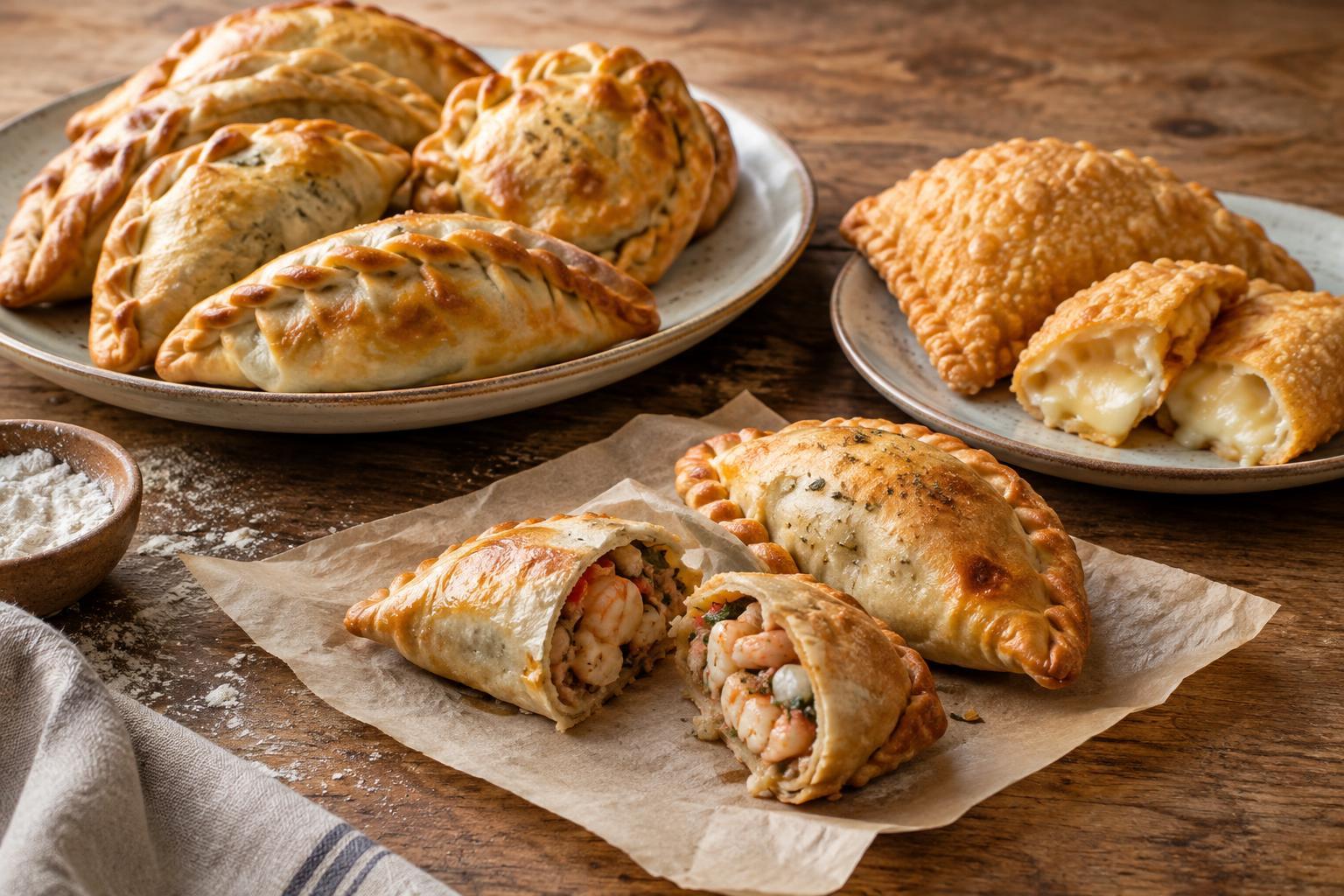
One familiar name, many different empanadas
An empanada is a filled pastry with its edges sealed around the filling, but that simple description leaves plenty of room for variation. In Argentina and Chile, you may encounter them at bakeries, markets, casual restaurants and family gatherings. Some are substantial enough for a light meal; others are small enough to eat as a snack. The dough, filling and method of cooking can change between regions—and between cooks on the same street.
Rather than looking for a single definitive version, start with a few useful distinctions. Is the empanada baked or fried? Is the filling based on meat, cheese, vegetables or seafood? And does the name on the menu describe an ingredient, such as pollo (chicken), or a particular style, such as the Chilean pino? Those questions will tell you more than the country name alone.
What goes inside in Argentina
Beef empanadas are widely available in Argentina, though recipes differ. The beef may be chopped by hand or minced, and it is often cooked with onion and seasonings before the pastry is filled. Depending on the cook or region, you might also find hard-boiled egg, olives, potato or raisins. A filling described as spicy is not necessarily intensely hot; ask if heat matters to you.
Regional names offer clues rather than guarantees. Empanadas associated with Salta are often small and juicy, with beef, potato and spices among their ingredients. Tucumán is also closely associated with empanadas, frequently made with hand-cut meat and a savoury, moist filling. Recipes within each province still vary, so it is worth reading the menu instead of assuming every bakery follows one formula.
Beyond beef, common options include chicken, ham and cheese, and humita, a corn-based filling that may include onion, cheese or herbs. You may also see modern combinations alongside older favourites. If you are avoiding meat, confirm what is in the filling rather than relying on its name: ingredients and preparation can differ from place to place.
Pino, cheese and coastal flavours in Chile
In Chile, empanada de pino is a well-known baked style. Pino usually refers to a seasoned mixture of beef and onion; the assembled empanada commonly includes hard-boiled egg and an olive. Raisins appear in some versions but not all. The balance of onion, meat and seasoning is part of what makes one cook’s empanada taste different from another’s.
Cheese-filled empanadas are another familiar choice, often fried and served hot while the cheese is soft. In coastal areas, you may come across seafood fillings, sometimes paired with cheese. Names and ingredients are not completely standardised, so check what a particular stall or restaurant is offering—especially if you have dietary restrictions or a seafood allergy.
Chilean baked empanadas can be larger than the small pastries you might expect from a snack counter, but size varies. If you are ordering several dishes, it is sensible to see one before deciding how many you need.
Baked or fried: how cooking changes the experience
Baked empanadas tend to have a firm, browned crust that holds a generous filling. Some are brushed before baking to give the pastry colour and sheen. Fried versions usually have a crisper surface and are particularly appealing straight from the pan. Neither method belongs exclusively to one country: both baked and fried empanadas can be found in Argentina and Chile.
The edges are often folded or crimped into a decorative seal, sometimes called a repulgue in Argentina. In a shop selling several fillings, different folds may help staff tell the varieties apart. They are not a universal code, however. If you cannot see a label, ask rather than guessing from the shape.
How to choose and enjoy them while travelling
A menu can be a useful introduction to local preferences. Try a familiar filling first, then compare it with a regional or seasonal option if one is available. Ordering one baked and one fried empanada is an easy way to notice how much the pastry affects the result. Let a freshly cooked empanada cool briefly before biting in: moist fillings and melted cheese can be very hot.
When buying from a small bakery or market stall, a few simple questions go a long way: “¿Qué lleva?” asks what it contains, while “¿Es al horno o frita?” asks whether it is baked or fried. If you have an allergy, explain it clearly and ask about preparation as well as ingredients; a casual description cannot establish whether a food is safe for you.
Empanadas reward curiosity without requiring a checklist of supposedly authentic examples. Notice the pastry, the seasoning and how the filling is prepared, then ask what the seller recommends. The pleasure of trying them in Argentina and Chile lies partly in finding that a familiar-looking parcel can hold a different local interpretation at the next stop.


