Find the prepared-food area
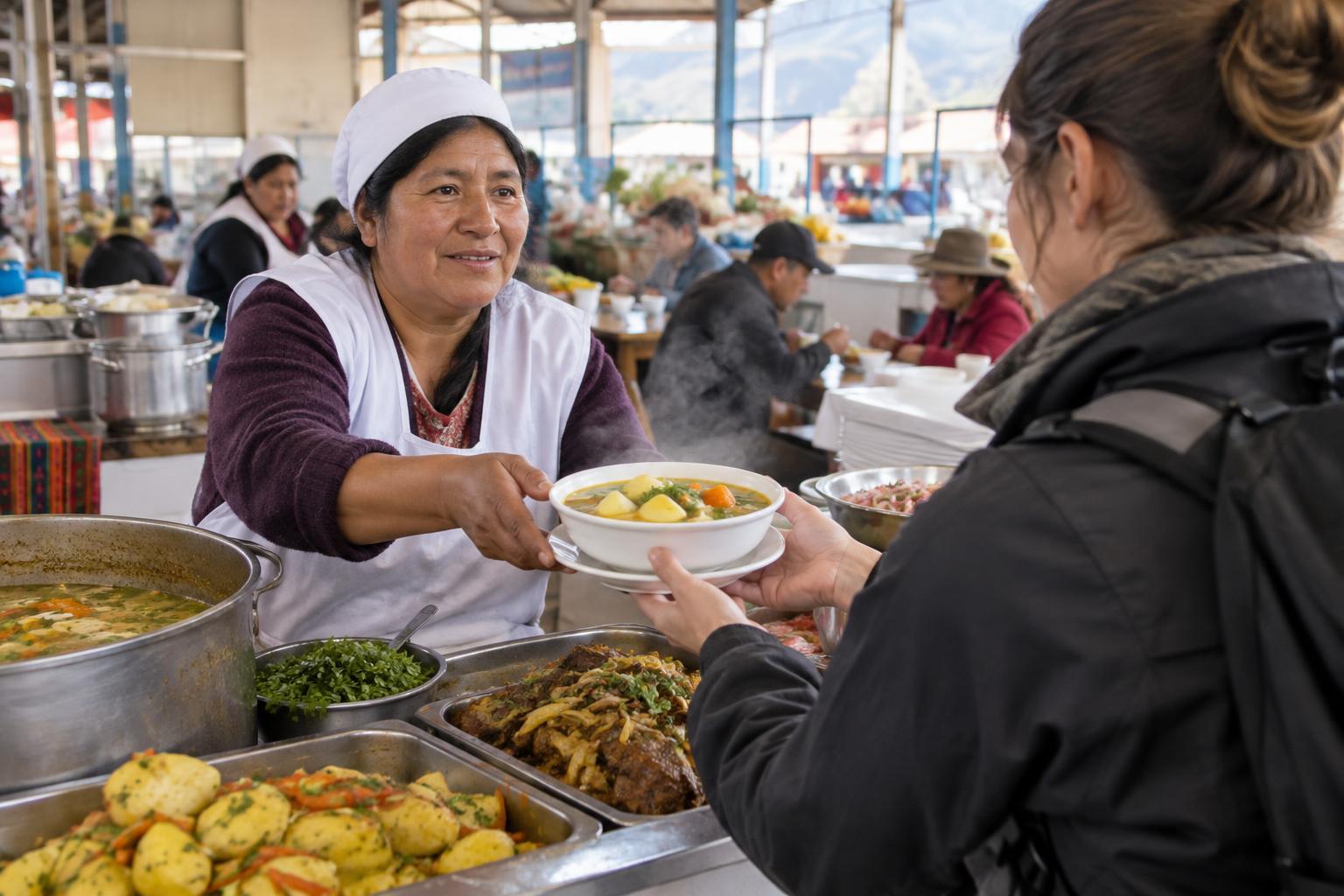
Andean markets vary from town to town. Some have a dedicated eating area, often called a comedor or patio de comidas; in others, cooks serve meals from a row of small stalls among produce and household goods. If you cannot see where people are eating, ask “¿Dónde están los puestos de comida?” (“Where are the food stalls?”). A market worker or vendor can usually point you in the right direction.
Take a slow walk past the stalls before choosing one. Look at the dishes being served, whether there is a written menu and whether a cook can tell you what is available. Many stalls prepare a small selection rather than every dish on a long menu, and popular choices may run out. If a stall is busy, you can wait to see how ordering and seating work. Customers may order at the counter, sit first or share a table, depending on the market.
Understand what the meal includes
A menu del día or almuerzo may refer to a set lunch, but its contents are not the same everywhere. It might include soup, a main course and a drink, or only some of those items. Ask “¿Qué incluye el menú?” (“What does the set meal include?”) before ordering. “¿Qué platos tiene hoy?” (“What dishes do you have today?”) is useful when nothing is written down.
Dish names and ingredients differ across the Andes, so avoid assuming that a familiar name guarantees the same recipe. Pointing to a prepared dish is reasonable if conversation is difficult, but ask what is in it if you have dietary restrictions. Useful questions include “¿Tiene carne?” (“Does it contain meat?”) and “¿Es picante?” (“Is it spicy?”). Sauces and garnishes may be served separately; you can ask before adding them. For a serious allergy, a busy stall may not be able to confirm ingredients or prevent cross-contact, so choose another meal if you cannot get a clear answer.
Check the price before ordering
A visible price board makes choosing easier, but not every stall displays one. Ask “¿Cuánto cuesta?” (“How much does it cost?”) and name or point to the dish you want. If you are considering a set meal, confirm both the price and what comes with it. Drinks, extra portions, takeaway packaging or a different main dish may be charged separately.
Listen to the answer and repeat the price if you are unsure: “¿Son quince?” (“Is it fifteen?”), for example. You can also ask the vendor to write or show the amount. Check what currency is being used when crossing borders; prices and payment customs differ between countries. Carrying some small-denomination local cash can make a simple purchase easier, though you should not assume a stall can change a large note or accept a card. Clarifying the total before eating is more comfortable for everyone than disputing a bill afterward.
Choose a stall that feels comfortable
No quick glance can guarantee that a meal will agree with you, but you can make a practical choice. Notice whether food that should be hot is served hot, whether cooked items are kept separate from raw ingredients and whether the stall has a way to clean utensils and hands. A steady flow of customers may mean dishes are prepared frequently, although it is not proof of food safety. If something looks or smells wrong to you, move on without making a scene.
Altitude, a change in routine and unfamiliar food can all affect appetite during a trip. You do not need to order the largest or most adventurous dish on your first market visit. A freshly prepared, straightforward meal and a drink you are comfortable with may be a better start. Water and ice arrangements vary, so ask what a drink contains if that matters to you.
Eat with curiosity and courtesy
A brief greeting—“Buenos días” or “Buenas tardes”—is a good way to begin. Speak directly to the person serving you, be patient if the stall is busy and make room for other diners when seating is limited. If you want to photograph a cook, customer or closely held dish, ask permission first. A market is a workplace and a place where residents eat, not a performance arranged for visitors.
When you finish, ask where to leave your plate if it is not obvious and pay the person who took your order or directs you to the cashier. Markets offer an opportunity to learn through ordinary exchanges: asking the name of a dish, trying something appealing and thanking the cook. Confirming the details you need while remaining open to local routines makes the meal easier to enjoy.