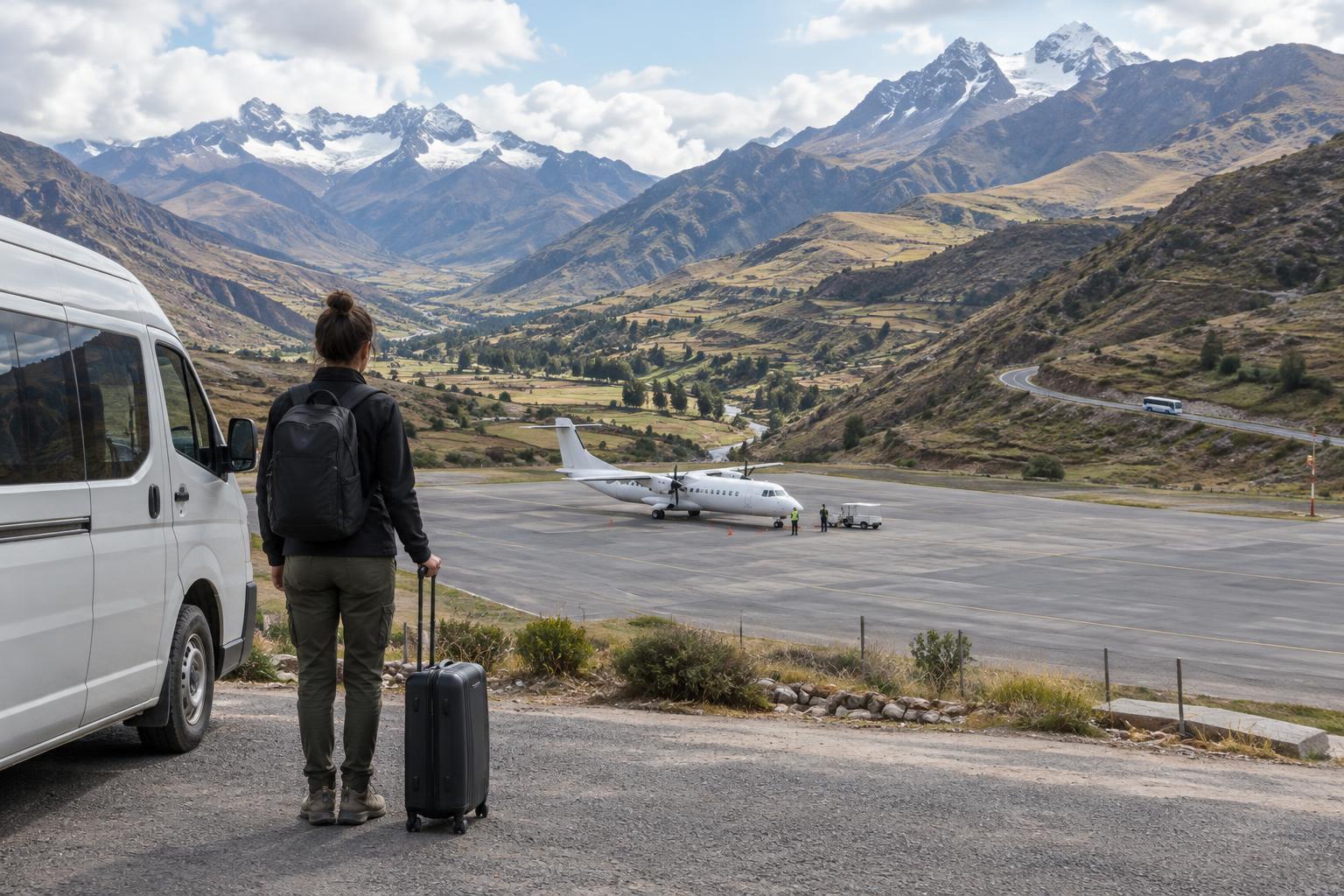
Compare door to door, not flight time to drive time
A flight that lasts an hour may look like the obvious alternative to a long mountain bus journey. For a useful comparison, start at your actual accommodation and end at your next one. Add the trip to the airport, time for check-in and security, the flight, baggage collection and the onward transfer. Then do the same for a bus or private vehicle, including the journey to its departure point and any stops or changes along the way.
The result depends on your route. An airport may be well outside the town you want to visit, while an overland service may arrive close to the centre. Conversely, a winding road across mountain passes can make a short flight valuable even after airport time is added. Compare the full day rather than assuming either option is faster.
Read the baggage allowance before comparing fares
The cheapest displayed fare is not always the cheapest journey for someone carrying trekking gear. Domestic carriers and fare types can differ in whether they include a checked bag, how much cabin baggage they allow, and what they charge for an additional or overweight bag. Check the terms for the specific flight before paying, particularly if you are combining tickets from different airlines.
Measure and weigh your packed bags rather than relying on how they look. Hiking poles, sharp items and some outdoor equipment may need to travel in checked baggage or be handled under special rules. Batteries and other restricted items can have separate requirements. If your trip includes several flights, use the most restrictive applicable allowance as a planning guide, then verify each carrier’s rules. A fare comparison is more meaningful once any necessary baggage charges are included.
Put airport transfers into the budget
Transfers have a cost as well as a time requirement. Look up where each airport sits in relation to your accommodation, how you expect to travel between them, and whether your arrival time makes that option practical. A late arrival may leave fewer convenient choices than a daytime one. If you are travelling with companions, compare the total transfer cost for the group rather than judging it only per person.
For an overland alternative, include the cost of getting to and from the bus terminal too. Where a flight replaces an overnight bus, consider what you gain or lose in usable daytime and whether you would need an extra night of accommodation. You do not need a perfect forecast of every expense; a simple list of fares, bags, transfers and likely overnight costs can reveal which option better fits your trip.
Leave room for connections and changing plans
In mountain regions, weather and operating conditions can affect both air and road travel. Build some flexibility into the itinerary, especially when moving between a domestic flight and a separately booked international flight, a fixed-start trek or another commitment that would be costly to miss. Separate tickets may offer less protection if the first leg is delayed, so check their conditions rather than treating the connection as guaranteed.
Think about what you would do if you arrived later than planned: whether accommodation allows late check-in, how you would reach it and which parts of the next day are flexible. If a route is central to your plans, an earlier departure or an extra night near the next starting point may be more useful than squeezing in one more activity. The aim is not to plan for every possible setback, but to avoid making one delay unravel the whole trip.
Choose the journey that serves your itinerary
Flying can make sense when it replaces a particularly long transfer and gives you more time in a place you want to explore. Going overland may suit you better when the route itself is part of the experience, you have flexible time, or the airport transfers and baggage charges erase much of the apparent advantage. A mixed itinerary often works well: fly across one long gap and take slower transport for a shorter, more rewarding stretch.
Before booking, make a door-to-door comparison for each realistic option. Note the departure and arrival points, total expected travel time, baggage terms, transfer costs and the amount of flexibility you would have if plans changed. That small exercise turns a tempting headline fare into a decision based on the journey you will actually take.


