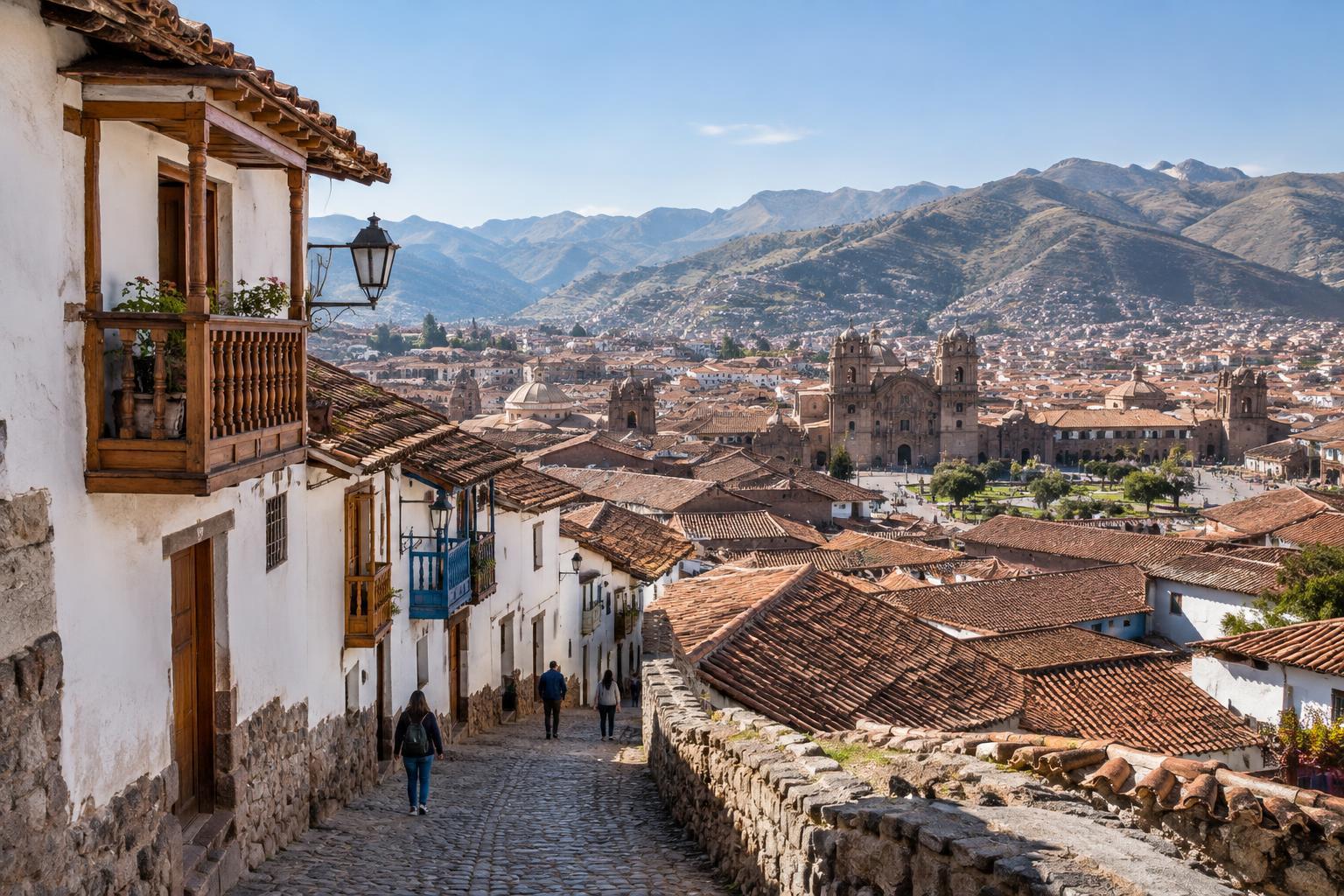
Start with the shape of the city
Cusco is often treated as a departure point for Machu Picchu and the Sacred Valley, but it deserves time of its own. Its historic centre brings together steep lanes, busy squares, markets and layers of Inca and colonial-era architecture. Walking is a rewarding way to get oriented, although a short distance on a map can feel longer when it involves steps or a climb uphill.
For a first visit, choose a base according to how you want to spend your evenings as well as your days. Staying centrally makes it easier to return to your room between outings. A quieter address farther from the main squares may suit you better if you prefer early nights, but check the walking route before booking: a hill that looks minor in a listing can matter after a full day out.
Which neighbourhood should you stay in?
The area around Plaza de Armas is convenient for visitors who want restaurants, tour meeting points and major sights within a short walk. It is also one of the busiest parts of town. If convenience is your priority, look closely at recent accommodation descriptions for details such as street noise, stairs and vehicle access rather than assuming every central property offers the same experience.
San Blas, above the historic centre, has narrow streets, small workshops, cafés and appealing views from some of its higher lanes. It can be a pleasant choice if you enjoy wandering on foot, but the climb back from the centre is worth factoring into your plans. Around San Pedro Market, you will be close to an everyday food-shopping hub and a lively mix of local commerce and visitor services. Be considerate when taking photographs: a market is a workplace, not simply a sightseeing stop.
Wanchaq and other areas beyond the tight historic core may offer a more residential feel and easier access to wider streets or transport links. They can be useful bases if you do not need to step straight into the old centre each morning. Wherever you stay, compare the actual location with the places you intend to visit; neighbourhood names cover more ground than a single square or street.
Give the altitude room in your plans
Cusco sits at roughly 3,400 metres above sea level. Visitors can respond differently to that elevation, and fitness alone does not reliably predict how someone will feel. For many people, the most sensible first-day plan is a modest one: settle in, eat, drink water regularly and explore nearby streets without making a strenuous hike or a tightly timed excursion your first commitment.
If you feel unwell, do not assume you simply need to push through a packed itinerary. Rest and seek appropriate medical help if symptoms are concerning, severe or do not improve. Before travel, anyone with questions about how altitude may affect a health condition can speak with a qualified clinician. The Sacred Valley is generally lower than Cusco, though elevations vary by town and route; some travellers build that difference into the order of their trip.
How many days do you need?
Three or four nights in Cusco gives many first-time visitors a workable balance: an easy arrival day, time to explore the city and room for a nearby outing without making every hour feel scheduled. If your itinerary allows only two nights, keep your priorities narrow. Pick a few places you genuinely want to see and leave space for meals, pauses and unexpected detours.
A longer stay makes sense if you want guided visits to archaeological sites, time in museums or markets, or day trips into the surrounding region. Count travel days separately from full days on the ground. An early arrival does not always translate into a full sightseeing day, and a tour with a dawn departure can make the previous evening feel shorter than expected. If Machu Picchu or a multi-day walk is part of your plans, check where its transport and overnight stays fit rather than treating it as a casual add-on to a city day.
Make space to explore respectfully
A good first stay need not be a checklist of landmarks. Walk one area at a time, notice how the streets change beyond the main squares and make use of local businesses in ways that suit your budget. Ask before photographing people or activities at close range, and follow site rules at historic and religious places.
Cusco is both a visitor destination and a lived-in city. Allowing time to find your bearings helps you enjoy it without rushing through spaces others use every day. Choose a neighbourhood that suits your pace, keep your first day flexible and leave at least one unscripted stretch to discover what interests you most.


