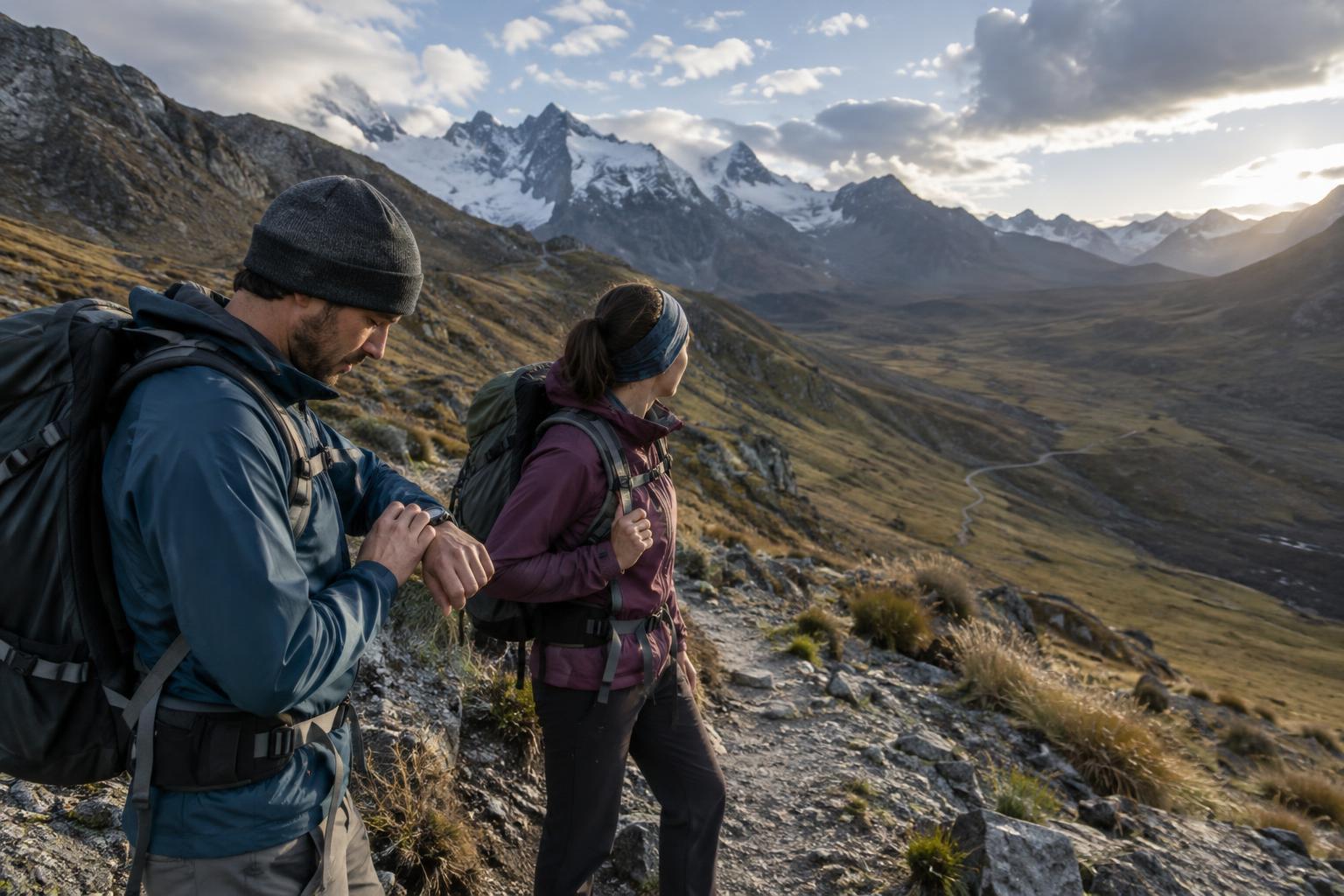
Why a short hike can take a long day
On an Andean day hike, distance alone is a poor guide to effort. A path may climb steeply, cross loose ground or become hard to follow. At higher elevations, some walkers also find that their usual pace feels less comfortable. Add stops for photographs, layers, food and route checks, and a walk that looks modest on a map can fill much of the available daylight.
The most useful question is not just “Can we reach the destination?” It is “Can everyone in the group get there and return with enough daylight and energy to spare?” Planning the return before the outward walk helps keep an appealing viewpoint or pass from becoming a commitment you cannot comfortably undo.
Mistake one: starting late without changing the plan
A late start is not necessarily a problem if the route is short enough. Trouble begins when a delayed departure leaves the original plan untouched. Transport may take longer than expected, breakfast may run late, or it may take time to find the trailhead. By the time you begin walking, the margin built into your plan may already be gone.
Work backwards from the time you want to be off the trail. Allow for the return walk, breaks and an extra buffer for slower ground or navigation. Check the local daylight window rather than relying on the season or on habits from home. Conditions can change over a day and vary greatly between valleys, elevations and regions, so look at a relevant forecast and follow any local access guidance before setting out.
If you start later than planned, shorten the route at the beginning rather than hoping to make up time uphill. A lower viewpoint or an earlier stopping place can still make a rewarding walk.
Mistake two: treating an estimated time as a promise
A guidebook or map estimate is a planning aid, not a schedule guaranteed for your group. It may assume a different pace, fewer stops or better trail conditions. An out-and-back route also invites a misleading calculation: if the climb took two hours, the descent might seem certain to take less. Rough steps, slippery surfaces and tired legs can make the return slow too.
Break the route into stages and estimate each one separately. Note sustained climbs, exposed stretches, stream crossings and junctions that may require attention. Include time for rests rather than treating them as a delay you will somehow avoid. When walking with others, plan around a pace everyone can maintain comfortably; splitting up to protect an ambitious schedule can create a different set of problems.
Compare the plan with your progress as you go. If the first stage takes much longer than expected, revise the rest of the day immediately. Faster walking later is not a reliable way to recover lost time.
Mistake three: naming a turnaround time but ignoring it
A turnaround point is a decision made in advance: if you have not reached a particular landmark by a set time, you head back. It can be a junction, a lake edge or simply the time shown on your watch. Set it using a conservative return estimate and the daylight you have available, with a margin for the unexpected.
The difficult part is keeping the agreement when the goal appears close. “Just one more bend” can become several, especially where the trail hides how much climbing remains. Before leaving, agree as a group that the turnaround applies even if the summit or viewpoint is in sight. During the walk, stop at planned checkpoints and ask whether the return still looks comfortable. Turning back on time is the plan working, not a failed hike.
Build a plan you can adjust
Carry enough water, food and layers for the route and its likely conditions, along with a way to navigate that does not depend entirely on mobile reception. Tell someone your intended route and expected return, and check whether the trail crosses land with access rules or requires a guide. If a route is unfamiliar, ask locally about its condition without assuming that any one person's estimate will match your pace.
Most importantly, make the shorter option appealing before you leave. Identify an early viewpoint, a useful loop or a natural place to stop for lunch. Then a late start, slower progress or a change in conditions becomes a reason to choose another good walk—not a reason to press on until turning back feels impossible.


