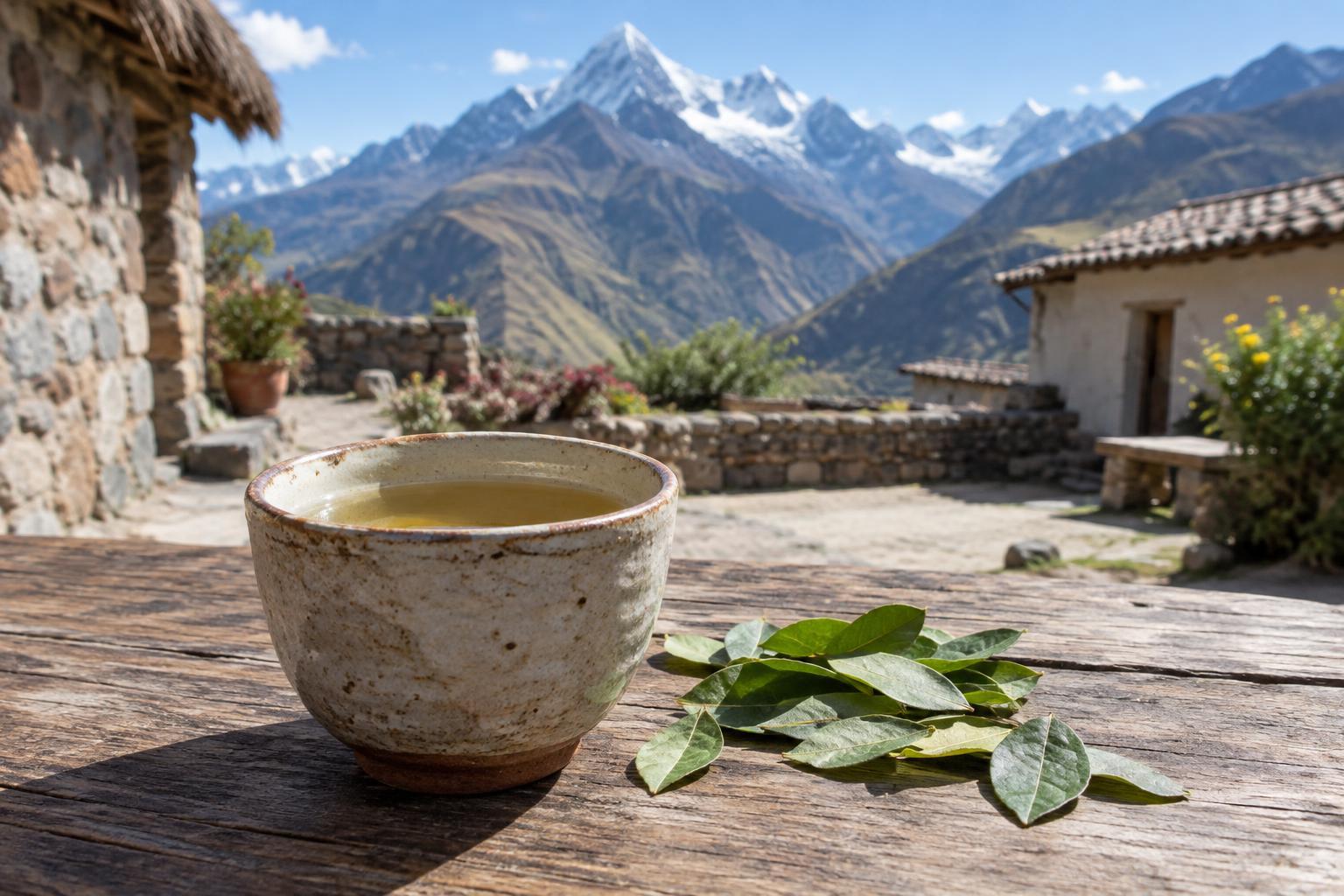
A cup of tea with a wider cultural story
For many travelers in the Andes, coca tea is an early introduction to the coca leaf. It may be offered at a guesthouse, served after a meal or sold as loose leaves and tea bags. The drink is usually made by steeping leaves in hot water. Its taste is often mild and herbal, although preparation and personal impressions vary.
Coca has a history in Andean communities that extends well beyond tourism. Depending on the place and the people involved, the leaves may be used in everyday social settings, shared as a gesture of hospitality or associated with particular traditions. Those practices are not identical across the Andes. Accept an offer with the same courtesy you would bring to any unfamiliar custom, and avoid treating the leaf as a novelty or assuming a host can explain every community’s relationship with it.
The coca leaf and cocaine should not be described as the same product. Cocaine is made through further processing. That distinction matters when discussing local use respectfully, but it does not mean coca leaves or tea products can be carried freely between countries.
Keep altitude expectations realistic
Visitors sometimes encounter coca tea alongside advice about adjusting to high elevation. People may choose to drink it because it is familiar, warming or part of a local welcome. It should not be treated as a reliable way to prevent or resolve altitude illness, and a cup of tea is no substitute for a sensible itinerary.
If your trip involves a rapid gain in elevation, allow time to adjust where possible, take strenuous activity gradually and pay attention to how you feel. If symptoms are concerning or worsening, seek appropriate help rather than relying on a drink to fix them. Travelers with questions about their health, medicines or whether coca products are suitable for them should consult a qualified clinician before travel.
Why border rules need a separate check
A product being served or sold openly in one country does not establish that it can be exported, brought into another country or carried through a transit point. Rules may differ by jurisdiction and by product: loose leaves, commercially packed tea bags and other items containing coca need not be treated alike. Packaging that says “tea” or “souvenir” is not proof that an item is permitted.
Before buying anything you intend to pack, check current guidance from the customs or border authorities for your departure country, every country where you will enter or transit, and your final destination. Look for rules that address coca specifically, rather than relying on general advice about bringing home food or herbal tea. If the guidance is unclear, ask the relevant authority directly. A seller or fellow traveler may know local practice but cannot confirm what another border will allow.
Do not assume that declaring an item makes it permissible. Declaration and permission are separate questions, and an item may still be refused or seized. Rules can change, so check again close to departure rather than relying on an old forum post or a previous trip.
A simple approach when packing
The lowest-uncertainty option is to enjoy coca tea where it is offered and leave leaves, tea bags and other coca-containing products behind unless you have confirmed that every relevant border permits them. Check the ingredients of herbal blends and gifts, too: a packet bought for its attractive label may still contain coca. Do not put it in checked luggage on the assumption that different bags face different rules.
There is no need to turn a shared cup into a border souvenir. You can remember the setting instead: the conversation, the pace of a mountain morning or the hospitality that came with it. If you want to support a local business, consider buying an item you can confidently carry home, or spending on a meal or service during your visit. Respect for a tradition includes understanding that its place in local life does not automatically translate into permission to transport it elsewhere.


