More than a way to keep potatoes
A potato served in the Andes might be freshly boiled, tucked into a stew or dried until it looks nothing like the tuber that came out of the ground. Chuño is one name for a preserved potato associated especially with highland areas of Bolivia and Peru. It can seem unfamiliar to a first-time visitor, but it is not simply an emergency substitute for a fresh potato. Its texture, flavor and ability to keep make it an ingredient in its own right.
There is no single Andean cuisine, and households do not all prepare or serve preserved potatoes in the same way. What unites many of these foods is a practical idea: turn a harvest into something that can be stored and used later. In places where growing conditions and access to markets can be demanding, that flexibility matters. It also gives cooks ingredients with qualities a fresh potato cannot provide.
How the highland climate becomes part of the process
Traditional chuño production makes use of cold nights and dry, sunny days at high elevation. Potatoes are left to freeze, thaw and dry; they are also pressed or trodden to remove moisture. The process takes time and depends on suitable weather. The resulting potatoes are light, firm and much less perishable than fresh ones when stored dry. Methods vary by place, producer and the kind of potato being used, so a brief description cannot capture every step.
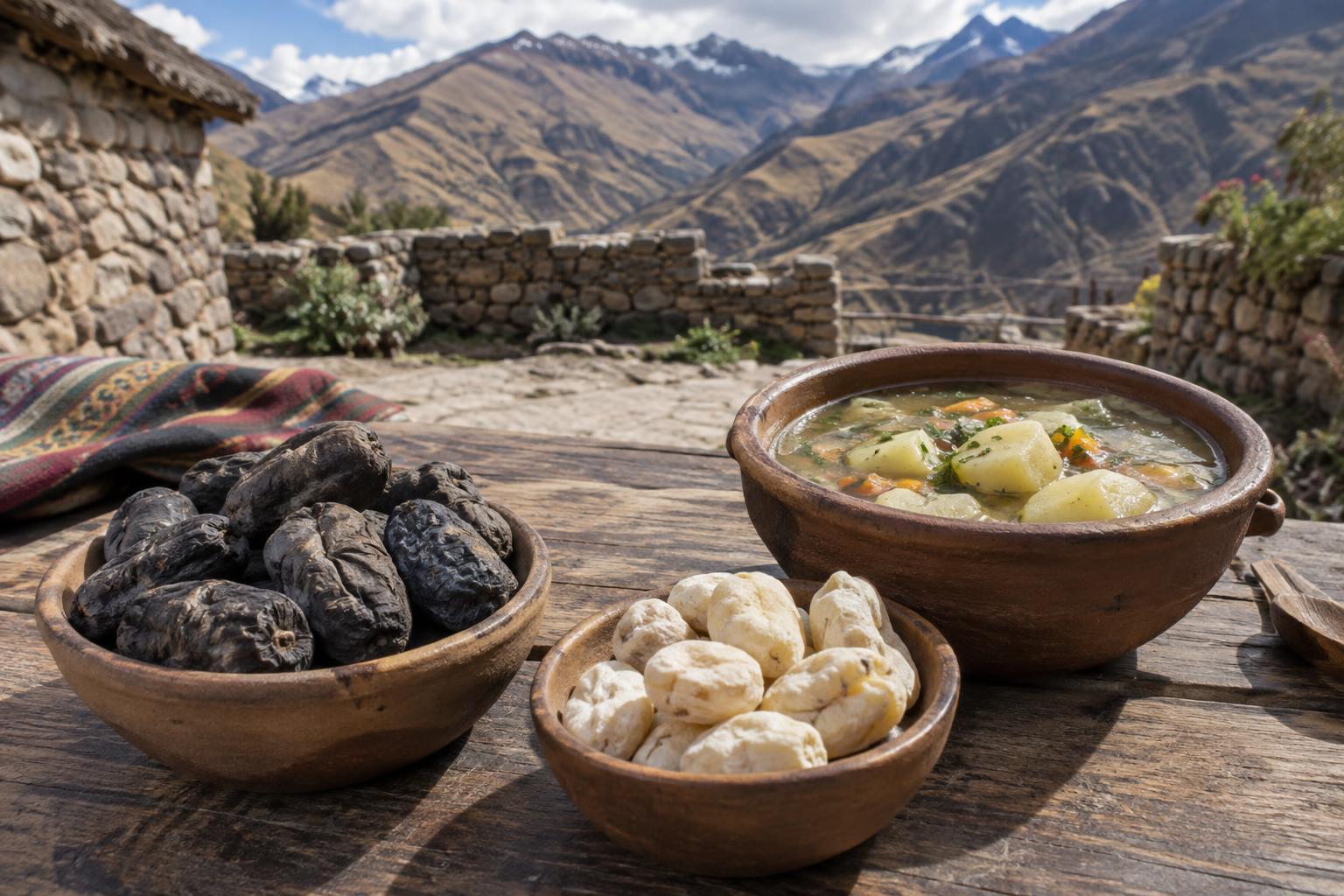
Travelers may hear about dark chuño and a pale preserved potato often called tunta or chuño blanco. Pale versions typically involve additional soaking and washing, which change their color and character. Names and methods vary across regions, and the two should not be treated as interchangeable. Other dried potato products also exist: papa seca, for example, commonly refers to potatoes that have been cooked, dried and cut into pieces. Asking what an ingredient is called locally is more useful than assuming every dried potato is chuño.
What preservation adds to a meal
Drying changes how a potato behaves in the pot. Depending on the preparation, preserved potatoes may be soaked before cooking or simmered until tender. Some become pleasantly chewy or spongy; others help give a soup or stew body. Dark chuño can bring an earthy, sometimes assertive flavor, while pale tunta is often milder. As with fresh potatoes, variety and cooking method affect the result.
Preserved potatoes appear in a range of home and restaurant dishes, often alongside broths, vegetables, grains or meat. Their value is not limited to their shelf life: they offer contrast in a bowl of soup and can carry the flavors of what they are cooked with. If you try them expecting the smoothness of a freshly boiled potato, you may miss the point. Notice instead how the ingredient absorbs liquid, how its texture changes as you eat, and why a cook might choose it for that particular dish.
Food knowledge beyond the recipe
Making preserved potatoes draws on decisions about varieties, weather, timing, handling and storage. That knowledge is learned and adapted by the people doing the work. Describing chuño only as an ingenious response to a harsh landscape can flatten that expertise. It is also a familiar food for many people, shaped by preference, family habits and regional styles—not merely by necessity.
Preservation can help a harvest stretch across seasons and give households choices about when to use or exchange food. That does not mean every highland household makes chuño, or that traditional methods are frozen in time. Fresh potatoes, preserved potatoes and purchased ingredients can all have a place in contemporary cooking. Looking at what is actually on the table tells a richer story than treating any one ingredient as a symbol for an entire region.
How to approach preserved potatoes while traveling
If a menu lists chuño, tunta or papa seca, ask how the kitchen uses it rather than assuming you know what will arrive. A server or host may be able to explain whether it is served in a soup, stew or another preparation. Keep in mind that names can shift between places, and not everyone will want to give a detailed lesson during a busy meal. A simple, interested question is enough.
In markets, preserved potatoes may be sold in different sizes, colors and forms. If you buy some to cook, ask the seller how that product is usually prepared, including whether it needs soaking and how long it should cook. Store it according to the seller’s guidance and keep it dry. Above all, approach these foods as ingredients people choose and enjoy, not as curiosities to collect. The best introduction is often an ordinary meal, eaten with attention to the skill behind it.