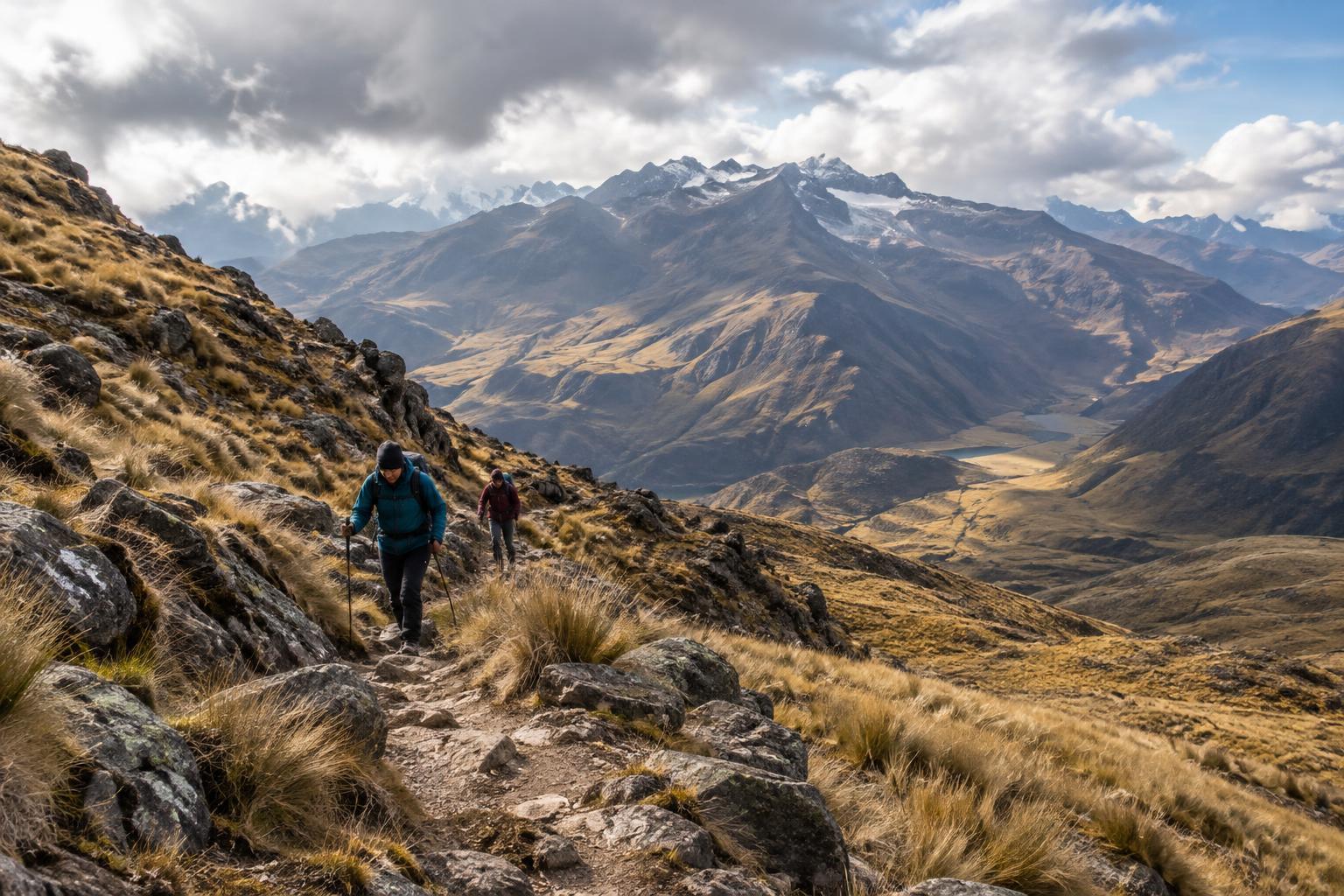
Start with the climb, not just the kilometres
Two Andean walks of the same length can demand very different amounts of energy. A route that follows a valley may be steady and comfortable, while one that climbs directly to a viewpoint can feel strenuous before you have covered much ground. When comparing hikes, look for the total elevation gain as well as the distance. A route profile is especially useful: it shows whether climbing is spread across the day or concentrated in a steep section.
Remember to check the descent, too. A long downhill on uneven steps or loose ground can be tiring, particularly after a demanding climb. If a description gives only a destination and a distance, find out whether the figure covers the full return walk and whether you must retrace your steps. A short one-way distance tells you little about the effort of the whole day.
Consider the altitude where you will walk
Elevation gain describes how much you climb; altitude describes how high the route is above sea level. Both matter. At higher elevations, the air contains less oxygen per breath, and an ordinary pace may feel harder to sustain. People respond differently, so fitness at home is not a reliable way to predict how a high Andean trail will feel.
Compare the trailhead, highest point and place where you have been staying. A modest climb may still be a significant outing if it begins well above your usual altitude. If you have only recently arrived in a highland area, consider a gentler walk before committing to an exposed ridge or remote pass. Leave room in your plans to slow down, turn back or choose another route if you feel unwell. Anyone with concerns about how altitude may affect a health condition should seek appropriate medical guidance before travelling.
Read the ground beneath the route
Distance is easier to judge on a clear, firm path than on a trail broken by rocks, mud or repeated stream crossings. Uneven surfaces can slow your pace and demand more attention with every step. Some routes also include steep steps, narrow traverses or sections where the path is faint. A map line may not show these details, so read route descriptions carefully and ask locally about conditions before setting out.
Think about your group’s comfort as well as its stamina. Someone who enjoys a long walk on a broad track may not enjoy a shorter route beside a steep drop. Footwear with dependable grip, layers that allow you to adjust to changing conditions and enough water and food for delays can make the day more manageable. None of these replaces choosing a route that fits the least confident walker.
Allow time for weather and logistics
Andean landscapes can change character during a single outing. Sun, wind, rain and cloud each affect how quickly and comfortably you move; wet ground may make a descent slower than expected. Check a suitable forecast, but do not treat it as a guarantee. Build a time buffer rather than planning to finish at the last possible moment, and be prepared to change plans if visibility or trail conditions deteriorate.
The walking time is only part of the day. Work out how you will reach the trailhead, when transport is available for the return, and whether the route has a practical early exit. Where access rules, permits or local guidance apply, confirm them before travelling to the start. A hike that looks easy on paper can become stressful if the return journey depends on a tight connection or an uncertain pickup.
Choose for the day you have, not the distance you want
A useful comparison brings several details together: full route distance, total ascent and descent, starting altitude, highest point, trail surface, exposure and expected time on foot. Then add the factors no map can settle for you: how recently your group arrived, its experience on uneven ground and how much time everyone wants for breaks. Treat published walking times as estimates rather than targets.
A good day hike leaves room to notice the landscape without rushing through it. Share your intended route and return plan with someone appropriate, carry out what you bring in, and stay on established paths where required to protect fragile ground. If a route asks more of your group than expected, turning back is a sensible choice. The best walk is not necessarily the longest or highest; it is one you can complete with care and enjoy along the way.


