Choose a location that fits the next day’s journey
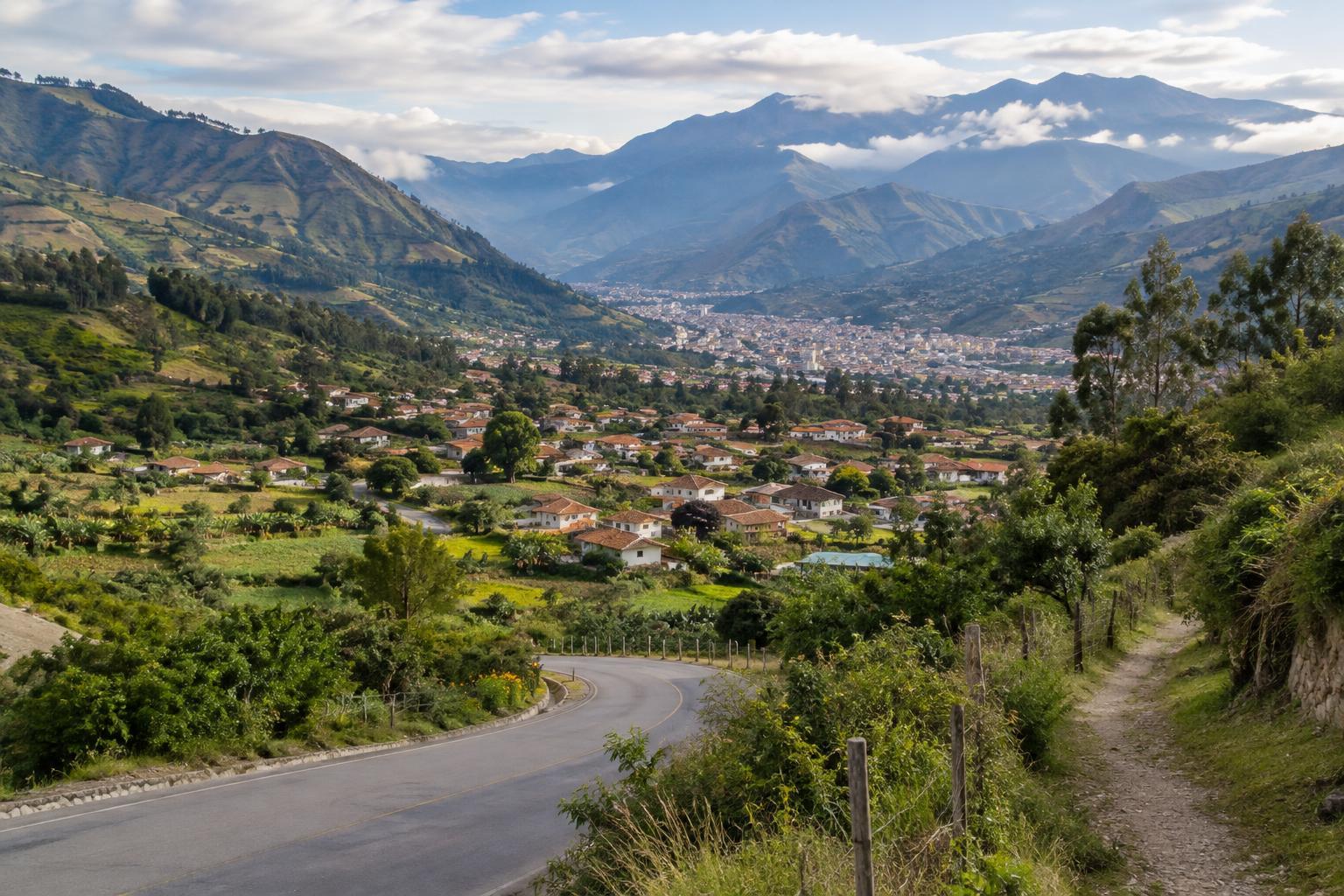
A room that looks convenient on a map may be less useful once you consider hills, luggage and an early start. Before booking, mark your arrival point, onward transport and the activities you expect to do on foot. A central location can make meals and errands simpler, while a quieter place outside town may offer more rest but require a reliable way back after dark. Check the actual route between the property and places you need to reach, rather than relying on a straight-line distance.
Think in terms of each stop on your itinerary. For a one-night stay before a bus departure, easy access to the terminal may matter more than a scenic outlook. For several nights in one place, being able to walk to food and supplies may be worth a higher room price. In smaller settlements or near trailheads, ask how guests usually arrive, whether a vehicle can reach the entrance and whether a late check-in is possible. If you are carrying a heavy bag, confirm whether the room involves stairs.
Ask what heating means in practice
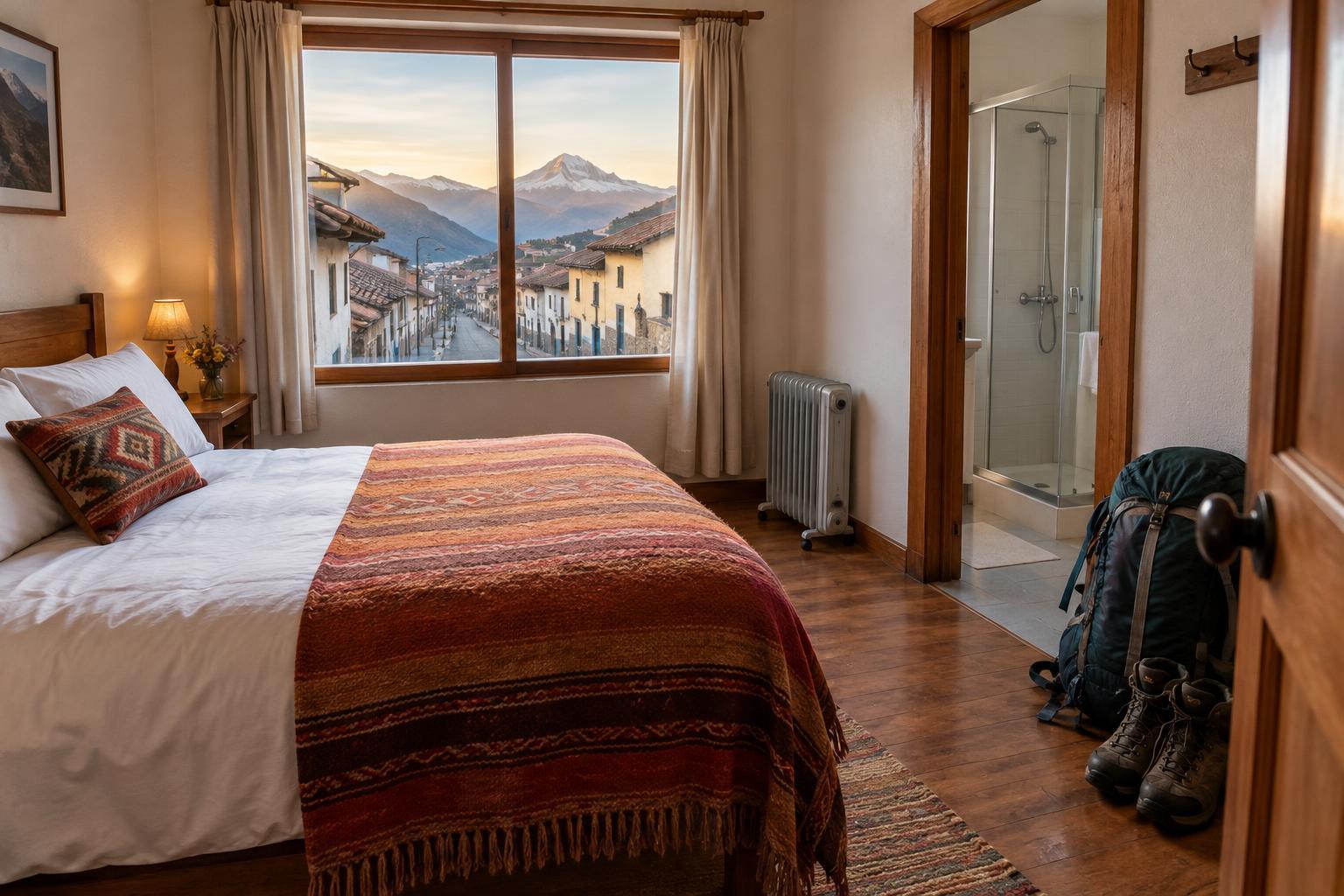
Conditions vary across the Andes, and a warm afternoon does not guarantee a warm room at night. Accommodation descriptions can also use the word “heating” for different arrangements: a heater in every room, a shared heated area or extra blankets on request. If warmth matters to you, ask whether your particular room has a working heat source and whether it is available overnight. Avoid assuming that a more expensive or newly furnished room will be warmer.
Consider the whole sleep setup as well as the heater. Drafts, bedding and the time you return to the room can all affect comfort. Ask whether extra blankets are provided and, if you rely on an electric heater, whether its use is included in the rate. Pack sleepwear and layers you can adjust; they are useful even when a property expects its rooms to be comfortable. When reading guest comments, look for descriptions of the specific room type or season rather than treating one person’s experience as a guarantee.
Check how hot water is supplied
“Hot water available” does not always tell you when or how much you can expect. Some properties may have a shared supply, a tank that needs time to reheat or a system whose performance depends on local conditions. Before you book, ask whether hot water is available in your private bathroom or in a shared facility, and whether there are recommended shower times. If several people will be getting ready for an early departure, that detail may shape your morning.
It also helps to separate essentials from preferences. You may be happy with a simple room and a brief warm shower after a walk, or you may want a more predictable setup for a longer stay. If the listing is unclear, send a short, specific question rather than relying on a general amenities icon. Keep the reply with your booking details so you can refer to what was described if you need to follow up.
Read cancellation terms alongside the price
An itinerary with several transport connections can change even when it has been planned carefully. Compare the total cost of a room with its flexibility: the cheapest rate may be non-refundable, while a slightly higher one may allow changes until a stated deadline. Check when payment is taken, what happens if you shorten the stay and whether a no-show is treated differently from a cancellation. Note the property’s local deadline and time zone if the policy gives a precise cutoff.
For stays tied to a walk, tour or onward journey, consider whether a flexible first or last night would reduce pressure if plans shift. That does not mean every booking needs free cancellation; a firm booking can suit a settled itinerary. The important point is to know the trade-off before you pay. Save a copy of the terms shown at checkout and any direct messages confirming arrangements, including arrival time and transport.
Make a short checklist before committing
Once you have narrowed the options, compare them against the same few questions: Can I reach the property comfortably? Is the room likely to suit the temperatures I expect? Is the hot-water arrangement clear? Could I manage the cost if my plans change? Add any personal essentials, such as step-free access, a quiet room or space to store luggage. A simple checklist keeps attractive photographs from crowding out practical needs.
Clear, polite questions are usually more useful than a long list of assumptions. Give the property your likely arrival time and ask only about details the listing has not answered. If a small, locally run place is a good fit, booking with accurate dates and communicating changes promptly can make planning easier for both you and your host. The best accommodation choice is not necessarily the most elaborate one; it is the place whose location, comforts and terms fit the journey you are actually taking.