One name, many ways of serving it
Ceviche is often described as seafood dressed in citrus, but that simple description leaves out much of what makes eating it memorable. The seafood, seasoning, liquid and accompaniments can change from one region or kitchen to another. Rather than looking for a single definitive version, treat each menu as a chance to learn how that place prepares it.
In both Peru and Ecuador, you may find fish, shrimp and mixed-seafood ceviches. A menu name alone will not always tell you whether the seafood was cooked with heat before being dressed, or whether it is served in a little citrus juice or a generous amount of sauce. If that matters to you, ask before ordering. It is an ordinary question, not a challenge to the cook.
What you might find in Peru
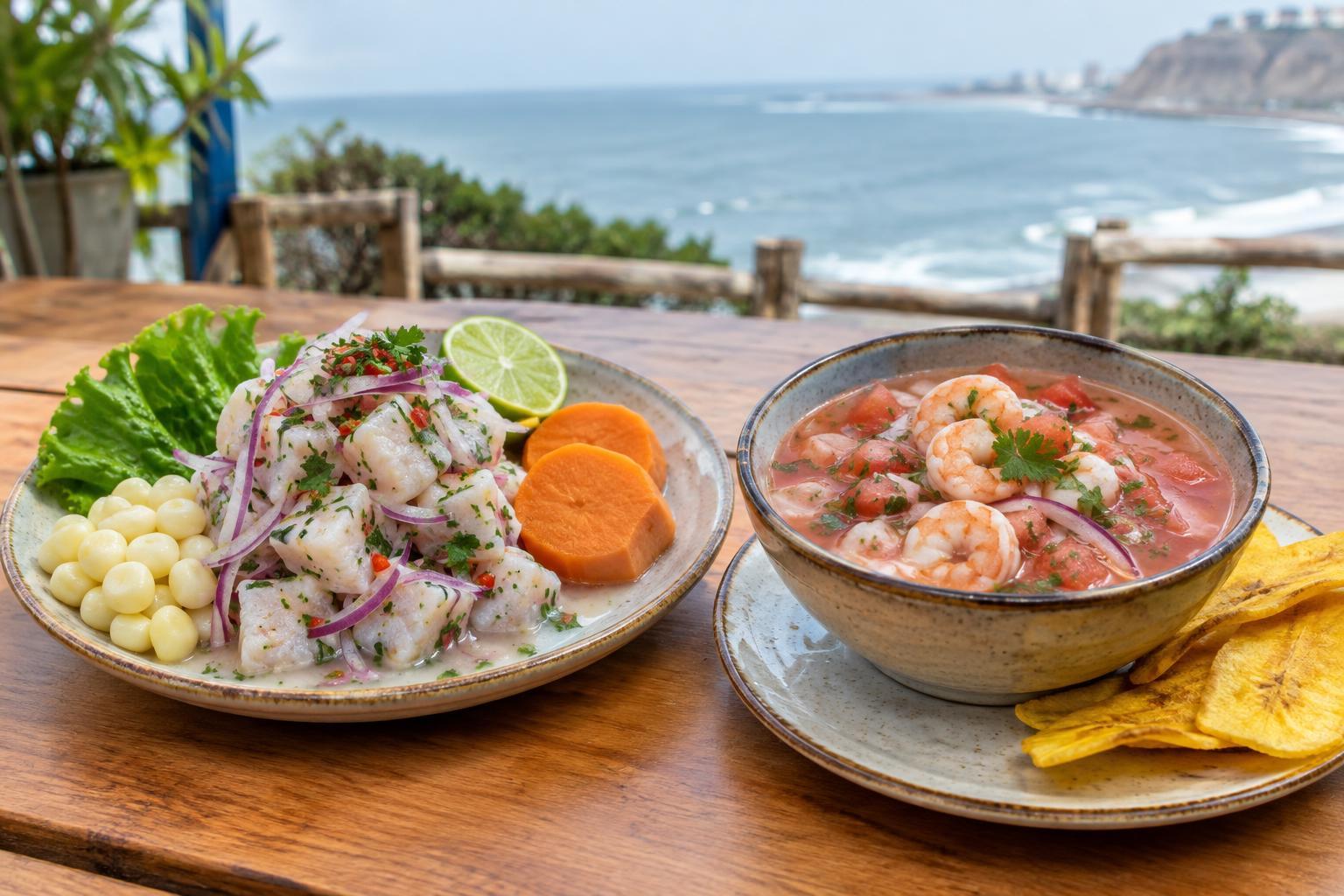
A familiar Peruvian fish ceviche brings together pieces of fish, citrus juice, onion, chilli and salt. It is commonly made to order and served soon after it is mixed, leaving the fish tender rather than steeped for a long time. The seasoned citrus liquid is often called leche de tigre. Heat levels vary, so it is worth asking if you prefer a milder plate.
The accompaniments are part of the experience. Sweet potato can balance the sharp citrus and chilli; large-kernel corn and crunchy toasted corn add contrasting textures. You may encounter other seafood, different chillies or a preparation specific to the restaurant. A short menu description can make two plates sound identical when they are quite different, so notice what the kitchen chooses to serve alongside the seafood.
What you might find in Ecuador
Ecuadorian ceviches often arrive with more liquid, making them particularly good for eating with a spoon. Shrimp ceviche is a common choice, and the shrimp is typically cooked before it is combined with the dressing. Depending on the kitchen, that dressing might include citrus, tomato, onion and herbs. Fish and other seafood versions exist too, and their preparation may differ from the shrimp version.
Crunchy sides such as chifles, made from plantain, or popcorn may be served with the bowl or offered separately. Add a little at a time if you want them to stay crisp. These are useful expectations, not rules: Ecuador has varied coastal food traditions, and a family-run café and a larger restaurant may each have their own approach.
Choosing a place to eat
Start with the menu and the way the place handles food, rather than assuming that a seaside address guarantees a better plate. A focused seafood menu, clear answers about what is in the ceviche and visible care with chilled ingredients are encouraging signs. A busy service can mean dishes are being prepared regularly, but popularity alone cannot tell you how seafood has been stored.
Because citrus changes the texture of raw fish without reliably making it safe in the way thorough cooking does, temperature and handling matter. If seafood appears to be sitting unchilled, or you cannot get a clear answer about a preparation you are unsure of, choose something else. If you prefer to avoid raw seafood, ask specifically whether the fish or shrimp was cooked with heat before it was mixed with the dressing. A cooked ingredient still needs careful storage and handling.
Ordering with curiosity and care
A few simple questions can help you find a ceviche you will enjoy: Which seafood is in it? Is it cooked first? Is the dressing spicy? What comes on the side? If you have an allergy or another dietary restriction, explain it clearly rather than relying on the dish name; mixed preparations and garnishes can contain ingredients that are not obvious from a brief description.
You can also ask what seafood the kitchen is serving that day and whether they know where it came from. Staff may not have every answer, but a respectful question makes room for a conversation without assuming one species or preparation is always the responsible choice. Order a style that appeals to you, taste the dressing before adding extra chilli or citrus, and let the differences between plates be part of the journey.