Start with the route, not the seat
Long-distance buses are useful for reaching places that are awkward to connect by air, including smaller cities and towns near walking routes. Before choosing a departure, check where the bus actually starts and finishes. A city may have several terminals, and a listing that names a destination may refer to a stop outside the centre. Look at the arrival location as carefully as the departure point, especially if you expect to arrive before dawn.
Compare the full journey rather than the advertised travel time alone. Some services make frequent stops; others are more direct. Mountain roads, weather, traffic and border formalities can all affect arrival times, so leave breathing room before a flight, a guided walk or a booking that cannot be changed. If a route crosses a national border, check what documents you need and how that particular service handles the crossing.
Understand what seat labels do—and do not—promise
You may see terms such as semi-cama and cama when comparing buses. They generally describe seats that recline to different degrees, but the labels are not a universal specification. Seat width, legroom, recline and layout can vary between operators and even between vehicles used on the same route. If sleep matters to you, look for an actual seat diagram or photographs from the operator rather than relying on the label alone.
Check whether your booking assigns a specific seat. On a double-deck bus, the view and sense of movement may differ upstairs, while seats near a toilet or stairway may have more passing foot traffic. Think about your own priorities: a window to lean against, an aisle for easier movement, or a seat away from busy areas. Amenities such as charging points, Wi-Fi, blankets and meals are best treated as possible extras, not essentials to depend on.
Book carefully and keep the details accessible
Depending on the route, you may be able to book through an operator’s website, a ticket platform or a counter at the terminal. Compare the final price and conditions before paying: baggage allowances, change and cancellation rules, the departure address and any instructions about collecting or validating the ticket. If an online payment fails, avoid repeated attempts until you have checked whether the first one was charged.
Enter passenger details exactly as requested and keep your identification available for boarding. Save an offline copy of the ticket or confirmation, along with the operator’s name, departure time and terminal address. A screenshot can be helpful when mobile service is poor, but check whether the operator requires a printed ticket or a visit to its counter. For popular departures or periods when many people travel, booking ahead can give you more choice of seats.
Give yourself time at the terminal
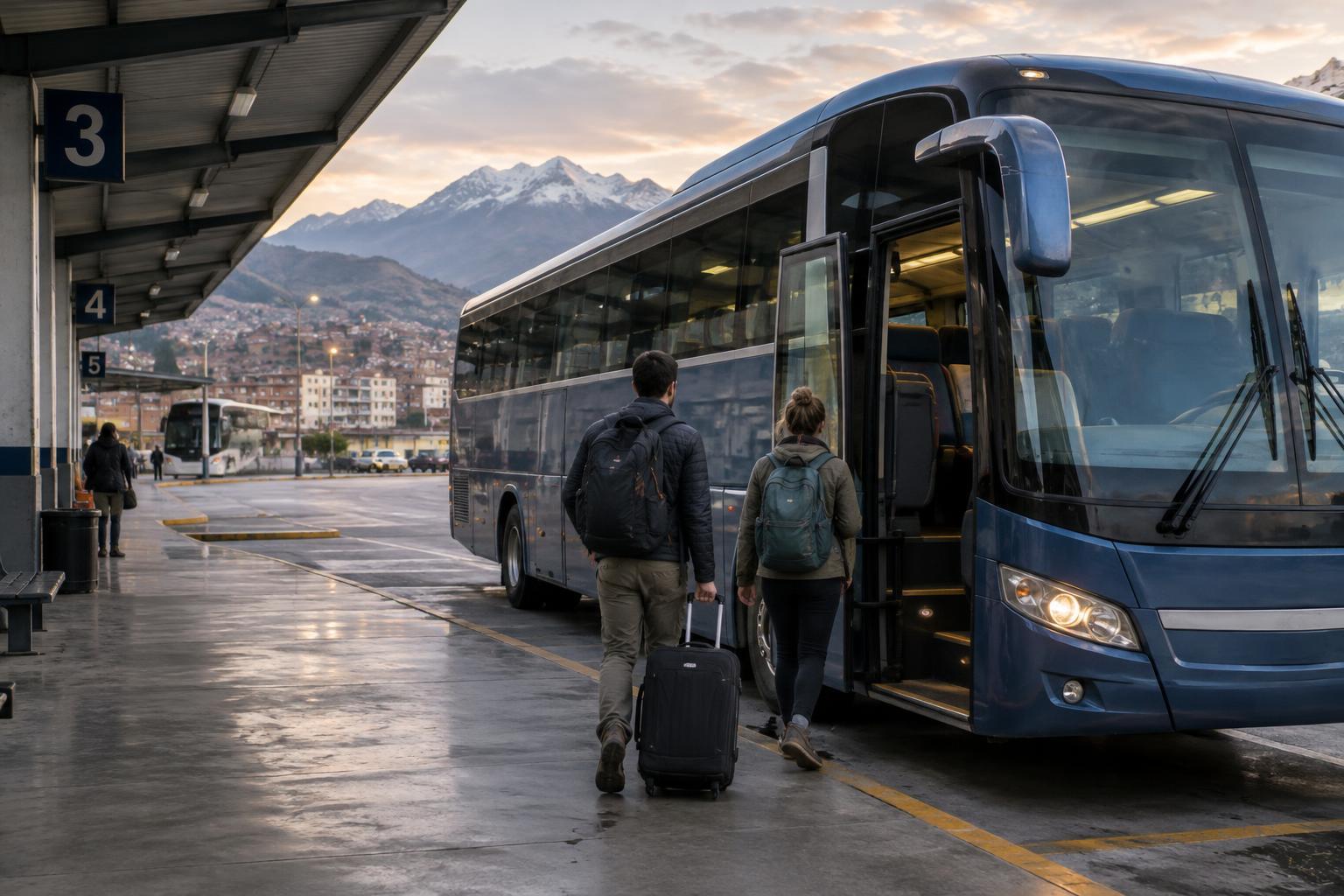
Bus terminals can be large and busy, with separate counters, waiting areas and boarding gates. Arrive early enough to find the correct operator and confirm your platform, particularly if the terminal is unfamiliar or you need to check a bag. Departure boards, gate numbers and announcements may change. If you are unsure, ask at the operator’s counter rather than assuming that a nearby bus with the right destination is yours.
Keep your passport or other identification, medication, valuables and a warm layer in a small bag that stays with you. Ask how checked luggage is tagged and retain any receipt needed to reclaim it. In crowded areas, keep your belongings close without letting vigilance overwhelm the trip. A simple plan for reaching your accommodation at the other end is especially useful if your bus arrives late at night or early in the morning.
Prepare for an overnight journey
An overnight bus can save daylight for exploring, but it is not always a substitute for a night’s sleep. Pack water, a snack, tissues and anything you need to settle in comfortably. Temperatures inside the bus may feel different from those outside, so layers are more adaptable than one heavy item. Download maps and entertainment before boarding, and charge your devices in advance rather than relying on an onboard socket.
Plan your arrival with some flexibility. You may reach your destination tired, earlier than check-in time, or later than expected. If you are heading into the Andes, allow time to rest and adjust to the journey before a demanding walk. The best bus is not necessarily the cheapest or the one with the most ambitious arrival time: it is the service whose route, seat, terminal and timing work together for the trip you are actually taking.