An empanada with a character of its own
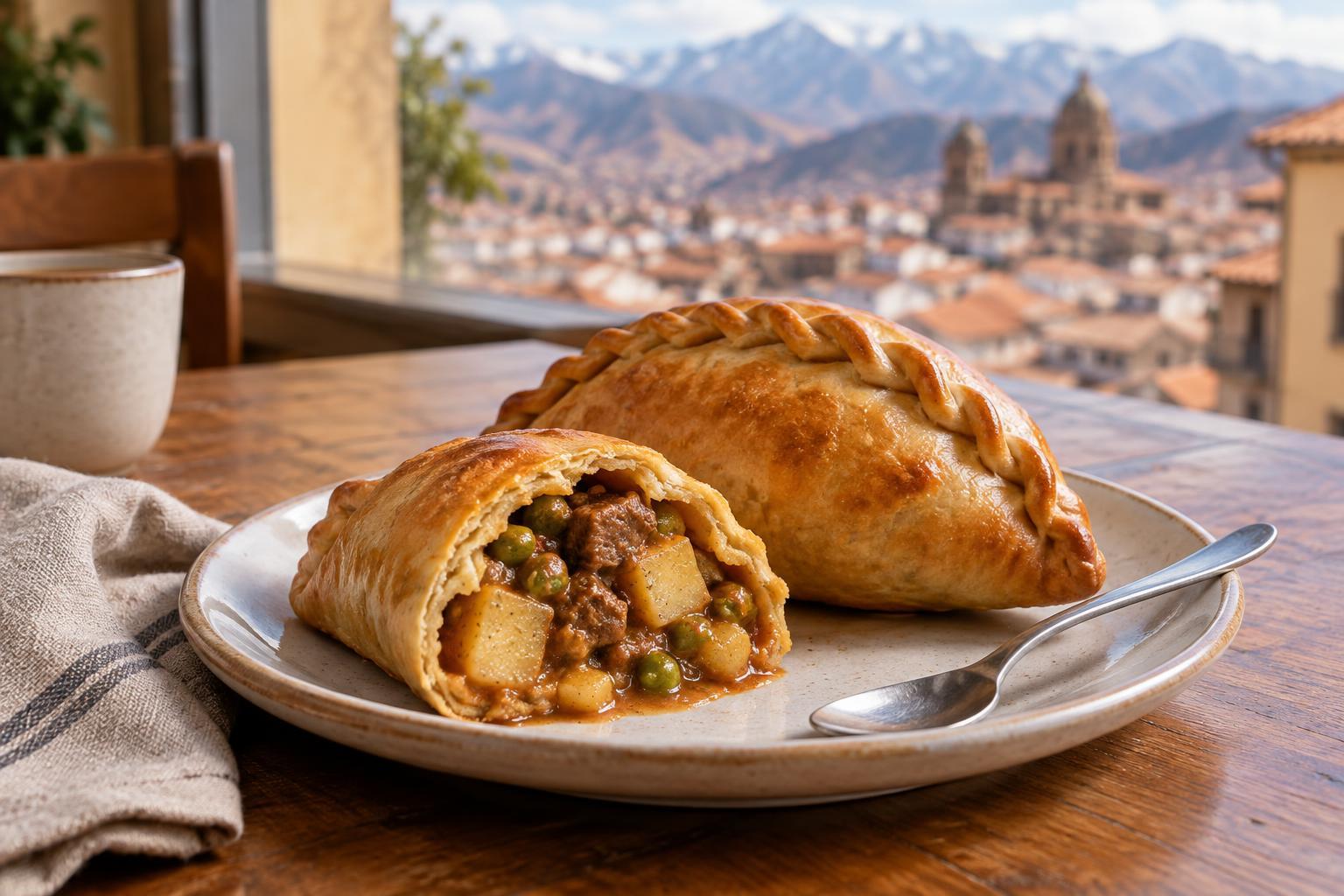
A salteña is a baked, filled pastry found across Bolivia. From the outside, its half-moon shape may remind a traveler of an empanada. That comparison is useful, but it only goes so far: empanadas vary widely across South America, while a salteña is particularly known for a rich, juicy filling enclosed in a sturdy shell.
The pastry often has a gently sweet flavor that balances the savory filling. Along its upper edge is a prominent braided or pinched seam, sometimes called a repulgue. That raised seam helps distinguish a salteña at a glance and gives you a useful place to hold it. Recipes differ among cooks and regions, so there is no single crust color, level of sweetness or amount of spice to expect everywhere.
Salteñas are often eaten as a morning snack rather than treated as a full meal, although one can be surprisingly filling. If you see several kinds for sale, ask which fillings are available and whether any are spicy. The answer may matter more than the pastry’s appearance, since two similar-looking salteñas can taste quite different.
The secret is the filling
What most clearly sets a salteña apart from a less juicy empanada is what happens when you open it. Beneath the crust is a generous mixture of meat or vegetables and a seasoned sauce. Common additions can include potato, peas, egg or olives, but combinations vary. Beef and chicken are familiar options; vegetable-filled versions may also be available.
The filling needs to be moist enough to produce that characteristic burst of juice while remaining enclosed during baking. One way cooks achieve this is to prepare the filling ahead and chill it until its liquid firms up. In the oven, that liquid loosens again. The result is closer to a small stew held inside pastry than to a dry pocket of filling. Not every salteña will be equally brothy, but the possibility of a spill is part of eating one.
Flavor can combine sweetness, savory depth and chili heat. A label describing the filling may not tell you how hot it is, so it is worth asking if you prefer a milder snack. If you avoid meat, check the ingredients even when a salteña is described as vegetable-filled: the pastry or sauce may still contain animal products. A brief, specific question is more reliable than an assumption.
How to eat one without wearing it
The simplest method is to keep the salteña upright, with the braided seam at the top and the rounded base supported by your hand. Take a small bite near the upper edge, then pause. You can sip some of the hot liquid through the opening before taking another bite of pastry and filling. A spoon can help if one is available, but it is not essential.
Work slowly down from the opening rather than cutting the pastry in half at once. Tilting it sideways or squeezing it firmly can send the sauce out through the first gap it finds. The filling may be hotter than the outer crust suggests, so a little patience also saves your tongue. A plate or napkin underneath is sensible, especially for your first attempt.
There is no need to turn eating a salteña into a test of technique. If it leaks, use the plate and enjoy what remains. The practical goal is simply to let the pastry hold the filling for as long as possible. Once you understand why it must stay upright, the method feels intuitive.
Enjoying salteñas while traveling
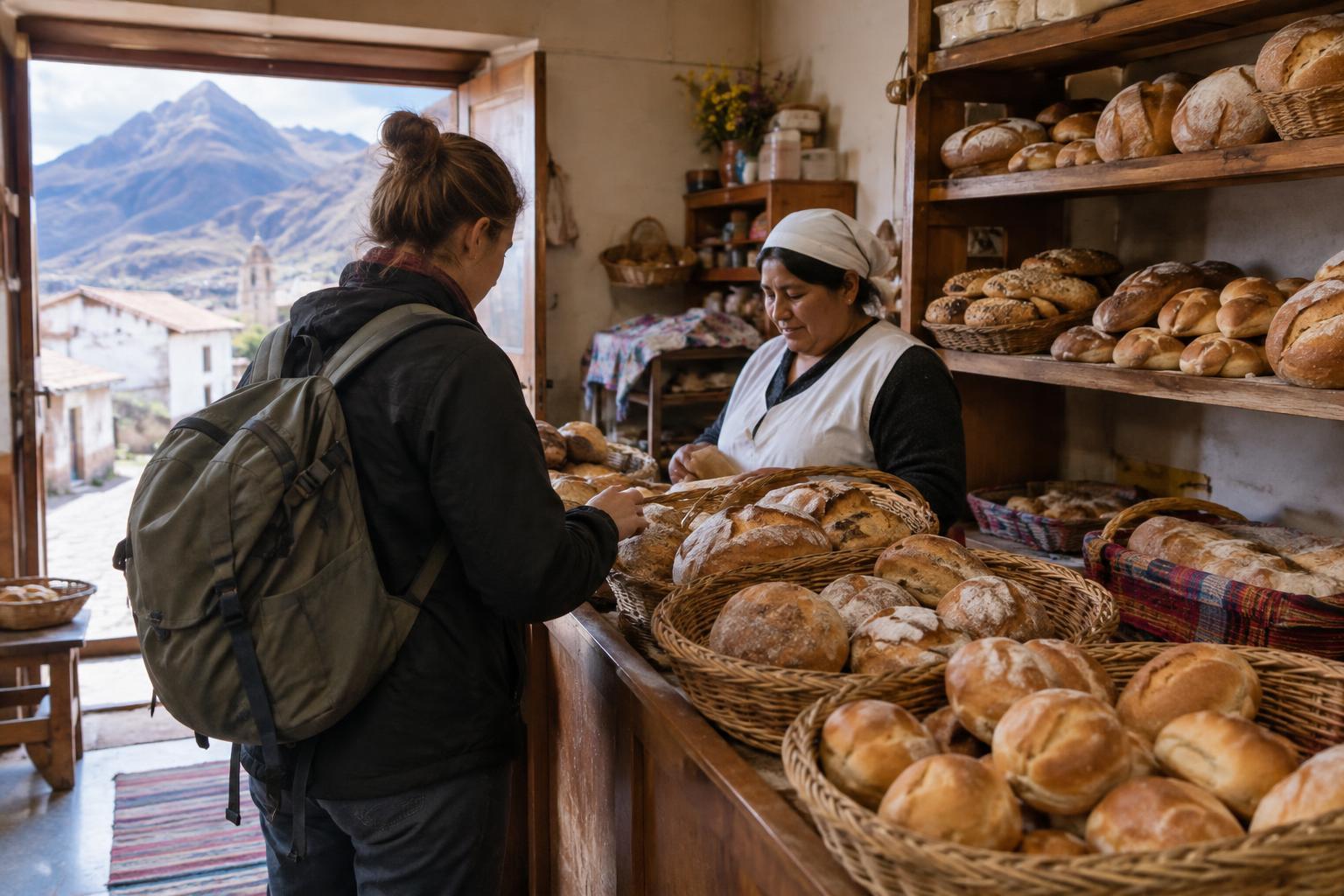
A salteña is an approachable introduction to everyday Bolivian food because it is made to be eaten by hand and comes in many variations. Try one when you have time to stop, rather than while rushing between transport connections. Standing still or sitting down makes it easier to manage the filling and notice its balance of pastry, sauce and spice.
When ordering, choose the filling that appeals to you and ask a straightforward question if an ingredient or heat level is unclear. If you are comparing salteñas from different places, pay attention to the crust, the amount of juice and the seasoning without assuming one version speaks for every cook or community. Those differences are part of what makes a familiar-looking pastry worth trying again.