More than a plate of barbecue
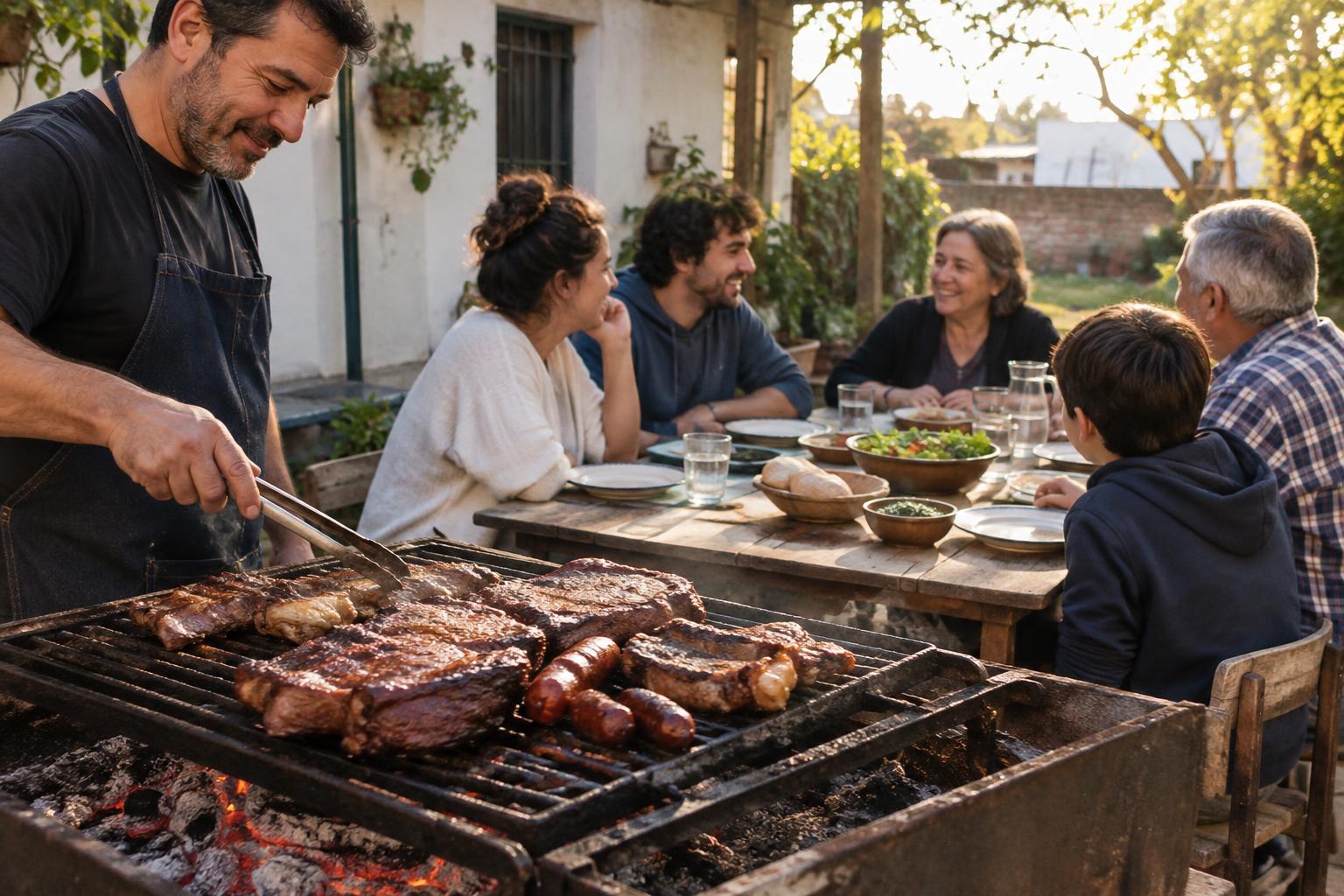
An asado can mean the act of grilling, the food itself or the gathering around it. In Argentina, it often brings family or friends together for an unhurried meal. The person tending the fire is the asador, and the grill is the parrilla. A restaurant parrilla offers a way to try grilled dishes, but a meal in someone’s home may have a different pace and its own household customs.
There is no single script to memorise. The menu depends on the region, the cook, the budget and the preferences of the guests. Some gatherings feature several kinds of meat; others are simpler. Think of the courses below as possibilities rather than a checklist, and let your host or server guide you.
How the meal may unfold
Guests may begin with something to drink and a picada: small bites such as cheese, olives or cured meats. Grilled sausages often follow. Chorizo is commonly served on its own or in bread as a choripán, sometimes with chimichurri, an herb-and-garlic condiment. Morcilla, a blood sausage, may also appear. If you are unsure what is being offered, asking is entirely reasonable.
Achuras, or offal cuts, might arrive before the larger cuts. These can include mollejas (sweetbreads) and chinchulines (intestines). They are optional, not a test of politeness. Main cuts may come off the grill in stages rather than all at once, so it helps to take a little at first. Bread, salads and other sides can remain on the table throughout. Dessert or coffee may extend the gathering long after the grill is quiet.
Cuts and accompaniments to recognise
Labels at a butcher’s counter or restaurant do not always translate neatly into familiar English cut names. You may see tira de asado, beef short ribs cut across the bone, or vacío, a broad, flavourful cut from the flank area. Entraña is skirt steak, while bife de chorizo is a beef steak, not a sausage despite its name. Portions and cooking styles vary, so ask your server what a dish includes if you are choosing for yourself.
The fire and the meat usually take centre stage, but accompaniments matter too. Chimichurri adds a sharp, herby note, while salsa criolla commonly combines chopped vegetables with oil and vinegar. A simple salad can balance a rich plate. Condiments may be served alongside the meat rather than added by the cook, allowing everyone to season a portion to taste.
Joining the table comfortably
If someone has invited you to their home, ask whether you can bring anything rather than assuming what is needed. Once there, follow your host’s lead on when to sit, serve yourself or begin eating. The asador may be busy managing the grill, so an offer to help with setting the table or clearing plates can be more useful than stepping in at the fire. A genuine compliment or a question about a favourite cut is welcome without treating the cook as a performer.
It is fine to decline a particular cut, including offal, with a simple “no, thank you.” If you do not eat meat, mention it before accepting an invitation so your host has time to plan; do not assume that salads or vegetables will make a full meal. At a restaurant, ask about vegetarian options before ordering. Whether you drink alcohol or not, sharing the conversation matters more than matching anyone else’s glass.
Make room for local variation
A city restaurant, a neighbourhood gathering and a rural meal can all offer different versions of asado. Prices, portion sizes and service styles also differ. When ordering, check whether a cut is intended for one person or for sharing, and consider starting with fewer dishes than you think you need. At a home gathering, arriving ready to linger is usually more helpful than expecting a tightly timed sequence.
The easiest way to enjoy an asado is to pay attention to the people as well as the food. Ask questions, accept that not everything will arrive together, and take only what you expect to eat. With that approach, unfamiliar names on the menu become an invitation to learn rather than a hurdle to clear.


