Make room for the city itself
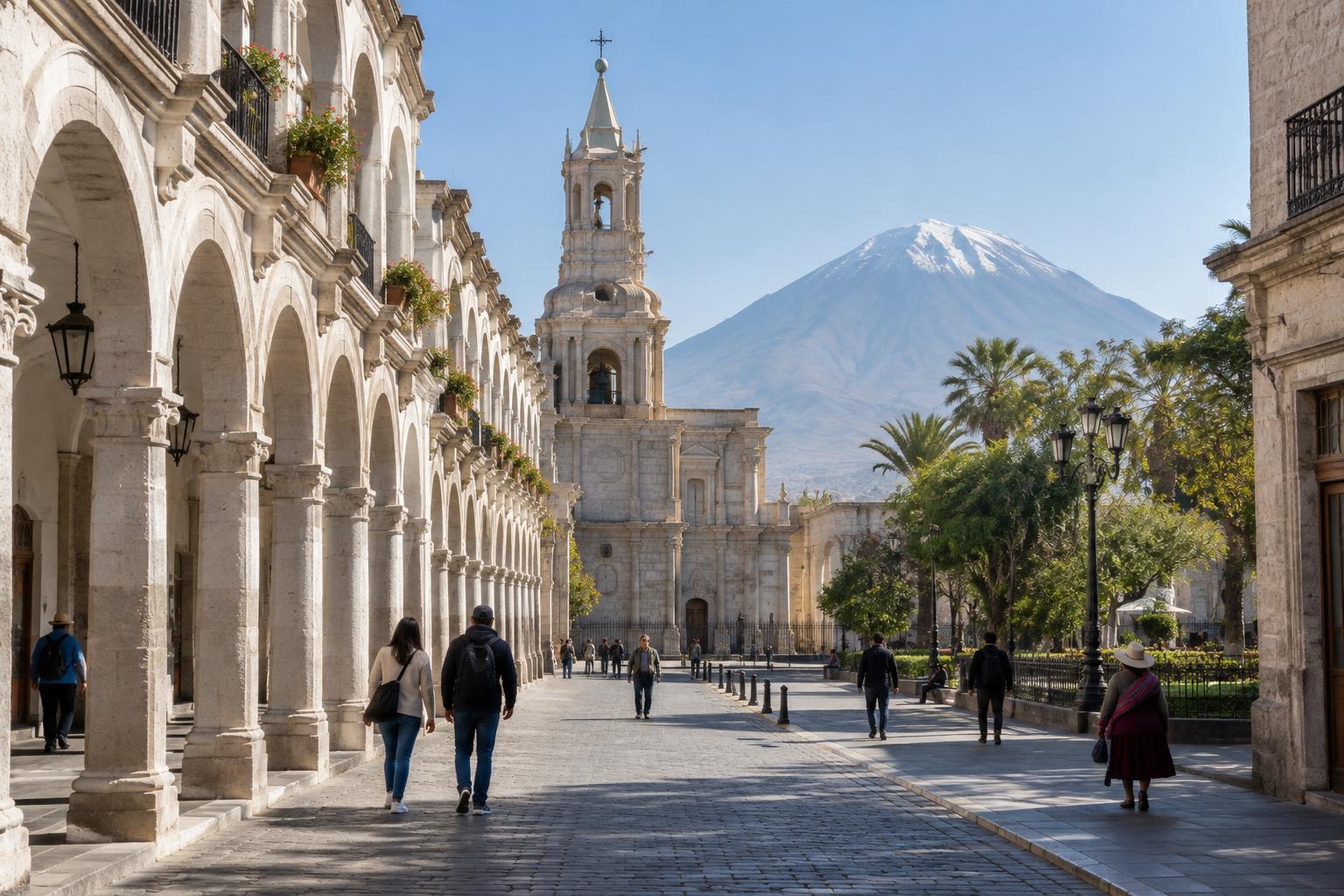
Arequipa is often treated as a departure point for the Colca Canyon. It works well as a base for that journey, but it is also worth staying for its own sake. The historic center offers streets made for wandering, broad views of surrounding volcanoes and buildings faced with pale volcanic stone known as sillar. The nickname “White City” makes sense on a bright walk, though Arequipa is more varied than any single image suggests.
Rather than filling your first day with sights, choose a place to stay from which you can comfortably reach the center on foot or by a short ride. Take a gentle circuit around the Plaza de Armas, notice how the light changes on the stonework and leave time to sit over a drink. A slower start helps you get your bearings and gives the city space to become more than a backdrop for photographs.
Build a day around a few stops, not a checklist
The central streets invite short, flexible walks. You might pair the main square with a visit to the Santa Catalina Monastery, then spend the rest of the afternoon exploring side streets or resting in a courtyard café. Museums and churches offer other ways into the city’s history, but you need not see them all in one day. Check access details locally before setting out, since hours and arrangements can change.
For a different perspective, cross toward neighborhoods such as Yanahuara, where viewpoints can frame the city against the mountains when conditions are clear. Treat the walk as part of the outing: look for everyday details, pause where the route feels inviting and allow time to return before you are tired. If you prefer not to walk the whole way, a short ride can make the visit just as enjoyable.
Let meals set the pace
Food is a good reason to linger in Arequipa. Picanterías, the city’s traditional eateries, are places to encounter regional cooking in a social setting. Dishes you may see include rocoto relleno, a stuffed pepper, and chupe de camarones, a rich shrimp soup. Menus vary, and some specialties can be spicy or substantial, so asking about ingredients and portion sizes is sensible.
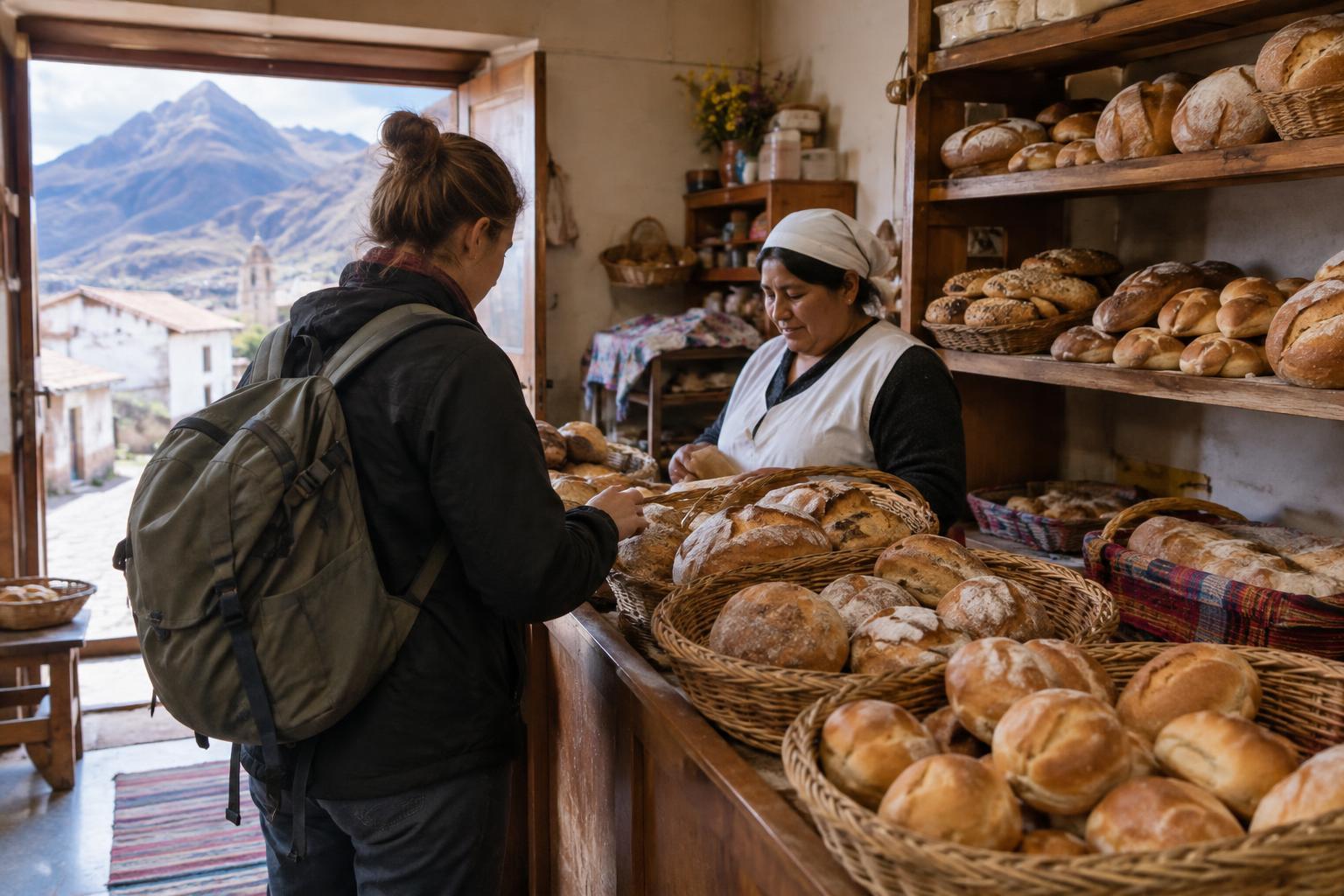
You do not need to turn every meal into a search for the “best” version of a dish. Choose a place that suits your appetite and budget, make room for an unhurried lunch and try something unfamiliar if it appeals to you. Markets can also be useful for getting a feel for local produce and everyday food shopping. As in any busy public space, move considerately, keep walkways clear and ask before photographing vendors or their stalls.
Use Arequipa as a base for wider landscapes
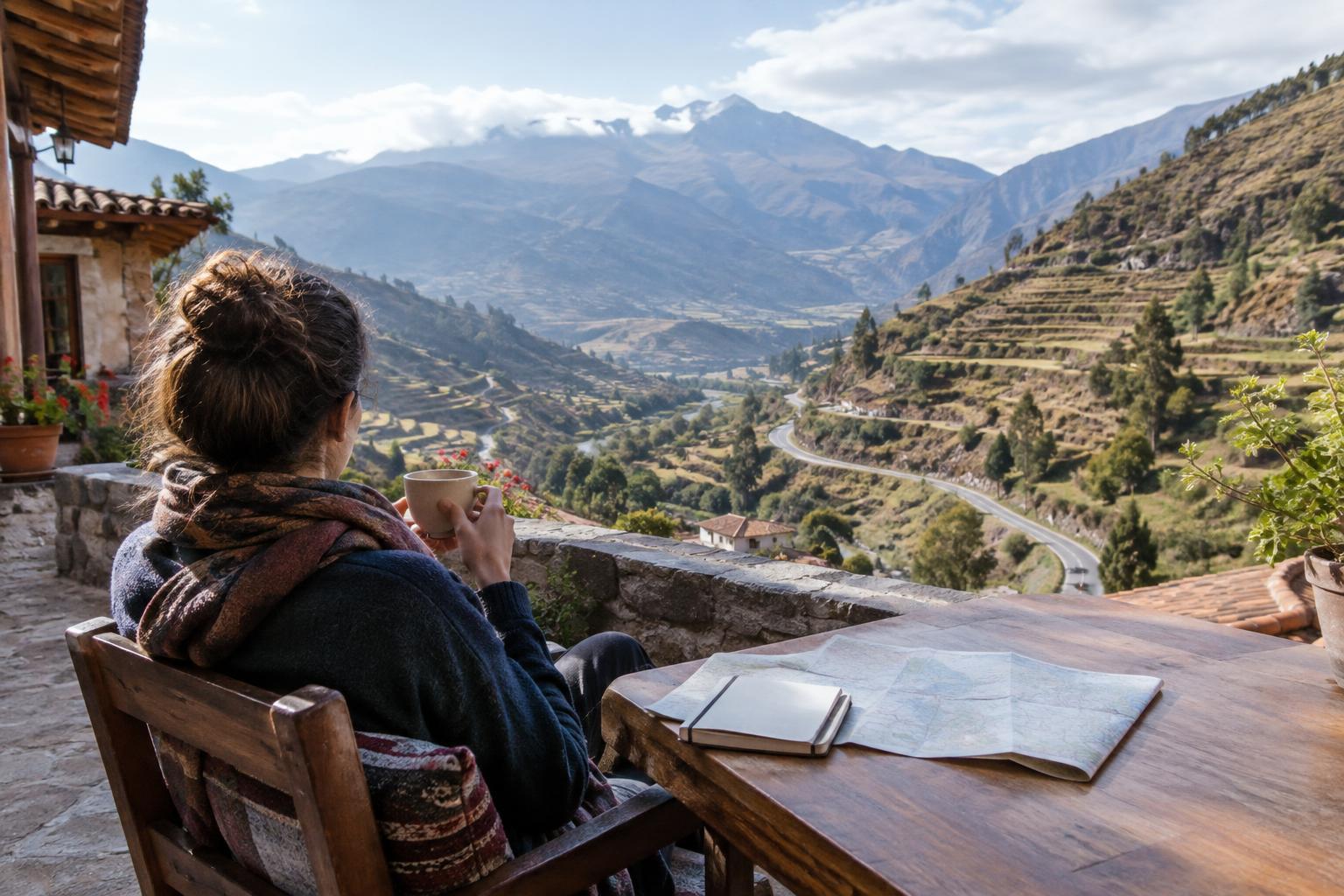
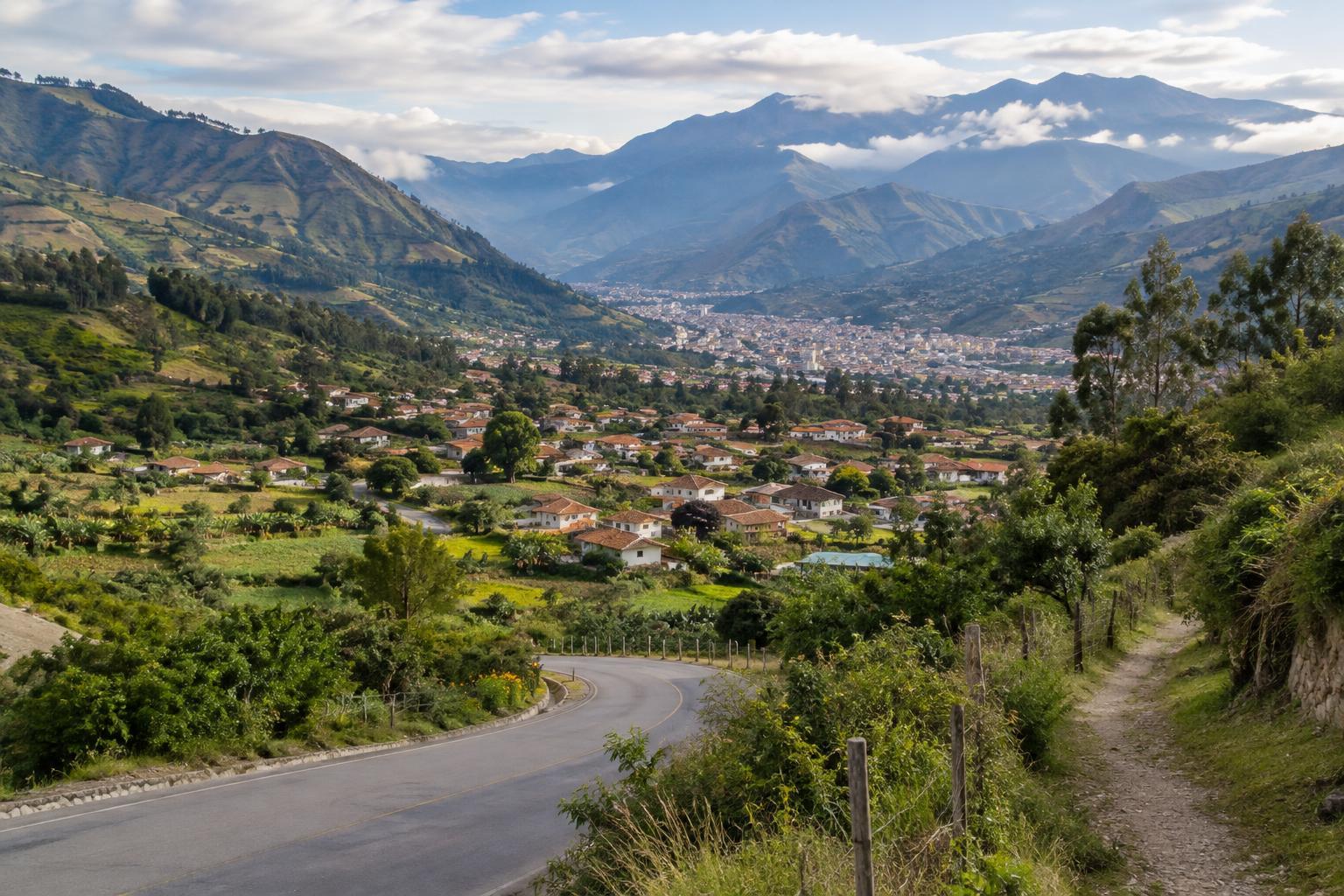
Arequipa makes it possible to combine city time with excursions into very different terrain. The Colca Valley is the best-known longer trip from here, with villages, agricultural terraces and canyon viewpoints along the way. It deserves more than a rushed out-and-back journey if your schedule allows. Spending a night or two in the valley can leave more room for walking, conversation and changes in weather.
Remember that routes out of Arequipa can climb considerably higher than the city. Travel days may involve winding roads, cool mornings and strong sun. Build in breaks, carry water and layers, and avoid planning a demanding walk immediately after a long journey. If you arrange transport or a guided outing, ask what the day includes, how much time is spent on the road and whether the walking matches your comfort level. A shorter excursion that leaves you curious is often more satisfying than an ambitious itinerary that leaves you exhausted.
Leave room for ordinary moments
A good Arequipa stay need not have a landmark attached to every hour. Keep a free morning for a second walk through the center, a return to a restaurant you liked or a change of plans if clouds obscure a view. That flexibility is especially valuable when the city is one part of a longer Peru trip: it creates breathing space between journeys rather than making every stop feel like a transfer.
Traveling slowly can also mean paying closer attention to how you move through a place. Support businesses whose services you use, follow rules at heritage sites and treat residential streets as places where people live, not just as scenic routes. Arequipa is a practical base, but its greatest advantage may be that it rewards the time you choose not to schedule.