One name, many kinds of arepa
An arepa is a corn-based round that can be cooked on a griddle, baked or fried. Beyond that shared starting point, there is no single standard version. Thickness, texture, ingredients and toppings vary by region, household and vendor. Some arepas are eaten alongside a meal, while others are substantial enough to be the meal.
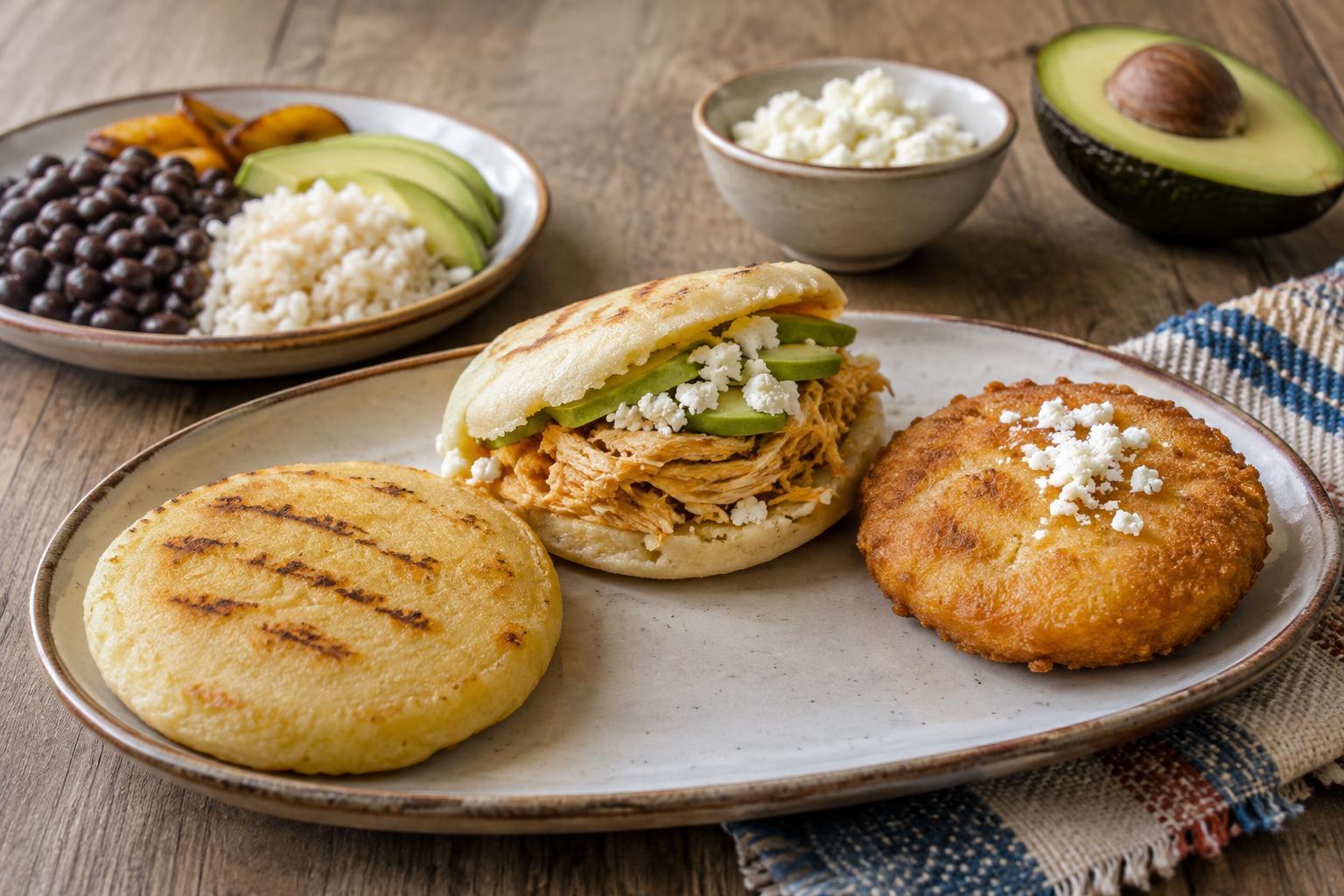
A common traveler’s shorthand is that Colombian arepas tend to be topped or served on the side, while Venezuelan arepas tend to be split and stuffed. It can help you picture what to expect, but it is not a rule. You will find differences within each country, and a menu’s description is more useful than the country name alone.
Colombian styles: from everyday accompaniment to coastal snack
In parts of Colombia, a relatively thin arepa makes an everyday partner for breakfast or a larger plate. It might be served with butter, cheese or eggs, or set beside beans and other foods. Arepas from the Antioquia region are often associated with this plainer, thinner style, which leaves room for the flavors of whatever accompanies it.
Other Colombian versions put corn’s sweetness or cheese at the center. An arepa de choclo, made with sweet corn, is often served warm with cheese; its soft texture is quite different from that of a plain corn arepa. Arepa boyacense is another distinct style, commonly made as a thicker round with cheese worked into the dough or enclosed within it. Recipes and names can vary, so the version you receive may not match one you have tried elsewhere.
On Colombia’s Caribbean coast, look for arepa de huevo. The dough is fried, opened to add an egg, then fried again to finish cooking it. Some versions include meat as well. It is a filling, crisp-edged snack rather than a neutral side dish. If you are ordering from a stall, asking what is inside is worthwhile: two arepas with the same name may have different additions.
Venezuelan styles: the arepa as a filled meal
In Venezuela, an arepa is often made from precooked corn flour, shaped into a thick round and cooked until it can be split open. The pocket holds anything from a little cheese to a generous combination of proteins, vegetables and sauces. Depending on its filling, an arepa may be breakfast, a quick lunch or an evening meal.
Popular filling names are useful to recognize, though individual cooks have their own versions. Reina pepiada generally combines chicken and avocado in a creamy mixture. Dominó pairs black beans with white cheese. Perico refers to scrambled eggs, commonly prepared with tomato and onion, making it a breakfast option. An arepa described as pabellón typically draws on the components of the dish of that name, such as shredded beef, black beans and plantain, sometimes with cheese.
The corn round itself matters as much as the filling. It may be crisp outside and tender inside, lightly toasted or cooked further after griddling. A heavily filled arepa can be messy to eat; holding it in its paper sleeve, if provided, makes the first few bites easier.
How to choose and enjoy an arepa
Start by noticing whether the arepa is listed as a side, a snack or a filled main. If a menu simply says “arepa,” ask whether it comes with anything and whether it is opened and stuffed or served whole. In Colombia, “con queso” tells you cheese is involved but not necessarily whether it is mixed into the dough, tucked inside or served on top. In either country, staff or vendors can often describe the choices more clearly than a short menu label can.
If you have dietary requirements, ask about the whole preparation rather than the corn alone. Fillings, cheese, butter, sauces and shared cooking surfaces may matter, and a fried arepa may have ingredients you cannot see. It is also worth allowing a little time for an arepa made to order: the contrast between its warm exterior and fresh filling is part of the pleasure.
Trying more than one style is the best way to appreciate how flexible this food is. A thin arepa beside breakfast, a sweet-corn version with cheese and a stuffed arepa eaten by hand offer different experiences. Treat local recommendations as invitations to explore, not as a contest over which country—or which recipe—has the definitive arepa.