A textile is more than a pattern
In the Andes, woven cloth may be made for daily use, celebration, sale or a combination of these purposes. A textile can carry food or belongings, form part of clothing, or become a gift. Its appearance reflects practical decisions as well as aesthetic ones: which fibres are available, how the cloth will be used, what a maker has learned and what they want to create.
It is tempting to treat every stripe or figure as a symbol with a fixed translation. That approach misses much of what makes weaving interesting. The Andes span many landscapes and communities, and traditions differ across them. Even within one community, makers may work in distinct styles or adapt a familiar design. Look closely, but leave room for the person who made or uses a textile to explain what matters about it.
Fibres, colour and the work behind the cloth
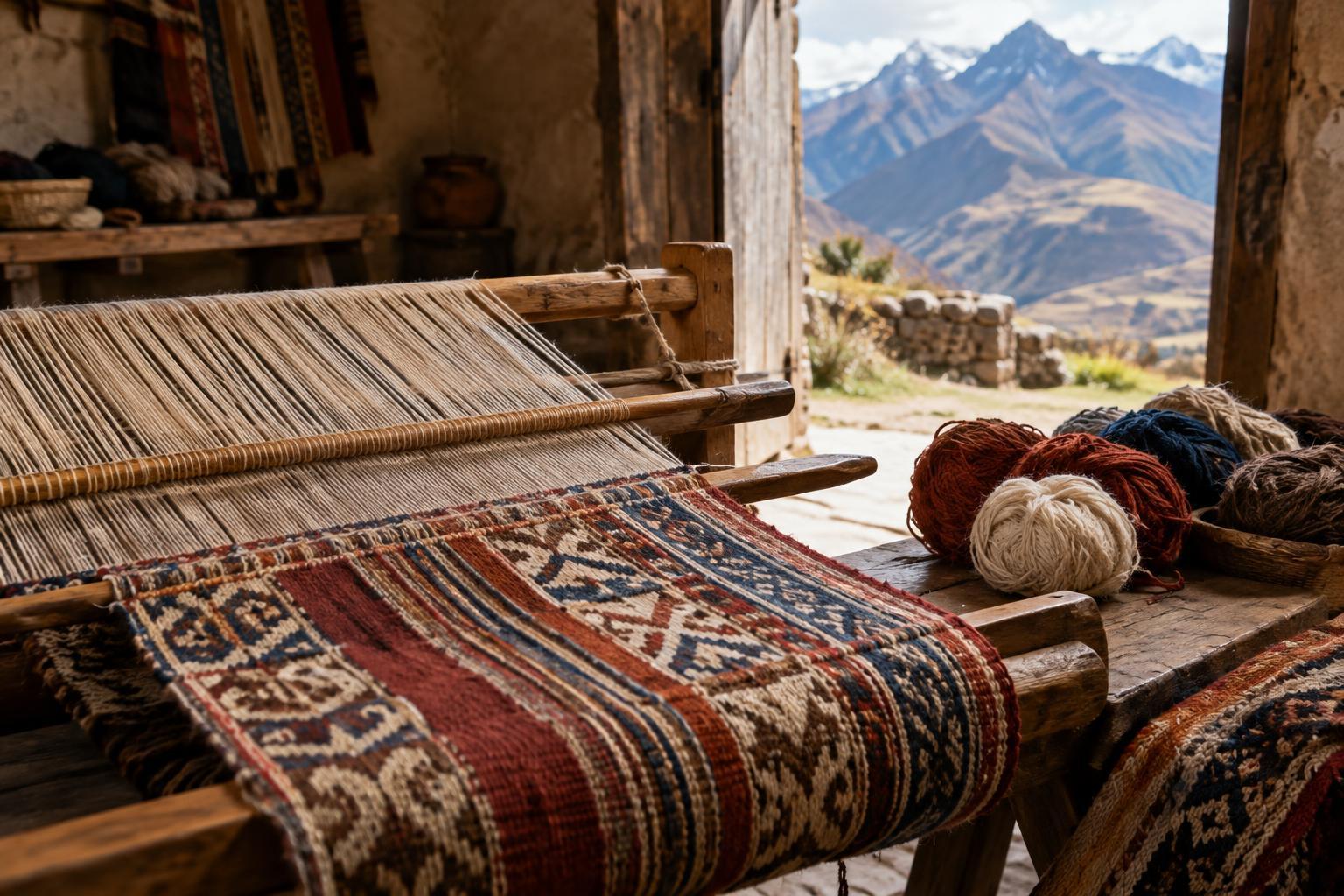
Wool from sheep and fibre from camelids such as alpacas and llamas are used in Andean textiles, though materials vary with place, purpose and access. Cotton is important in some lower and warmer regions. A finished piece may contain more than one fibre, and yarn may be hand-spun or bought ready to weave. Fibre choice affects warmth, weight, texture and how a textile wears over time.
Colour has a similarly varied story. Some makers use dyes prepared from plants, insects or minerals; others use commercially produced dyes or yarns. Neither choice, on its own, tells you whether a piece is traditional or carefully made. Preparing fibre, spinning, dyeing and weaving can each require skill and time. If you are buying directly from a maker, asking which steps they carried out can tell you more than a label such as “natural” or “authentic.”
How motifs take shape
Andean weaving often uses combinations of stripes, repeated geometric forms and figures that may suggest animals, plants, paths or aspects of local life. What you see depends partly on technique. On a loom, the arrangement of coloured threads can produce a design as the cloth is woven, rather than adding decoration afterward. Different structures create different possibilities for pattern and texture.
A motif’s meaning cannot always be read from its shape alone. Similar-looking forms may be named or understood differently in different places; a maker may also choose a design for its visual balance or because it suits a particular object. If you want to know what a figure represents, ask about that specific piece instead of relying on a general symbol chart. An answer may be a story, a simple description or a matter of personal preference.
Why designs differ from one community to another
Weaving knowledge is often passed through families and other local relationships, so a maker learns particular ways of arranging colours, working a loom and finishing edges. Local dress and the intended use of a cloth also shape its size and design. Geography influences access to fibres and dyes, while travel and trade allow materials and ideas to move between places. These influences overlap rather than producing neat borders between styles.
Community traditions are not frozen. Makers may preserve designs they value while experimenting with colour, scale or new products. Textiles made for visitors can draw on familiar skills without being identical to pieces made for local use. Nor does every resident of a place weave or share the same interpretation of a pattern. Learning a textile’s origin is useful, but it is not a shortcut to understanding every choice its maker made.
Looking and buying with respect
In a market or workshop, begin with open questions: What is this piece used for? Who made it? How was the yarn prepared? Does the design have a name here? Listen to the answer rather than expecting a particular technique or meaning. If you hope to photograph a person at work, ask first; a demonstration or a stall is not automatically an invitation to take portraits.
When comparing textiles, consider the size, materials, complexity and time involved alongside the price. If you buy a piece, care for it according to the maker’s guidance where possible, since fibres and dyes respond differently to washing and sunlight. The most rewarding souvenir may be one you understand a little better: not as a generic emblem of the Andes, but as an object made by a particular person, for a particular purpose, within a living tradition.