Arrive curious, not expecting a performance
Across the Andes, festivals can mark religious occasions, seasonal changes, local histories or the identity of a neighbourhood or community. Many bring several of these strands together. A public procession may pass through a busy square, while a nearby gathering is intended mainly for families, musicians or other participants. Customs differ between places and even between events in the same town, so it helps to observe before deciding how to take part.
If you know the name of a festival, read locally available information about its route and public events before you go. Once there, look for signs, barriers and the way residents position themselves. A welcome to watch is not necessarily an invitation to join a dance, enter a building or photograph every moment. When you are unsure, a polite question to an organiser or participant is more useful than an assumption.
Understand the movement of a procession
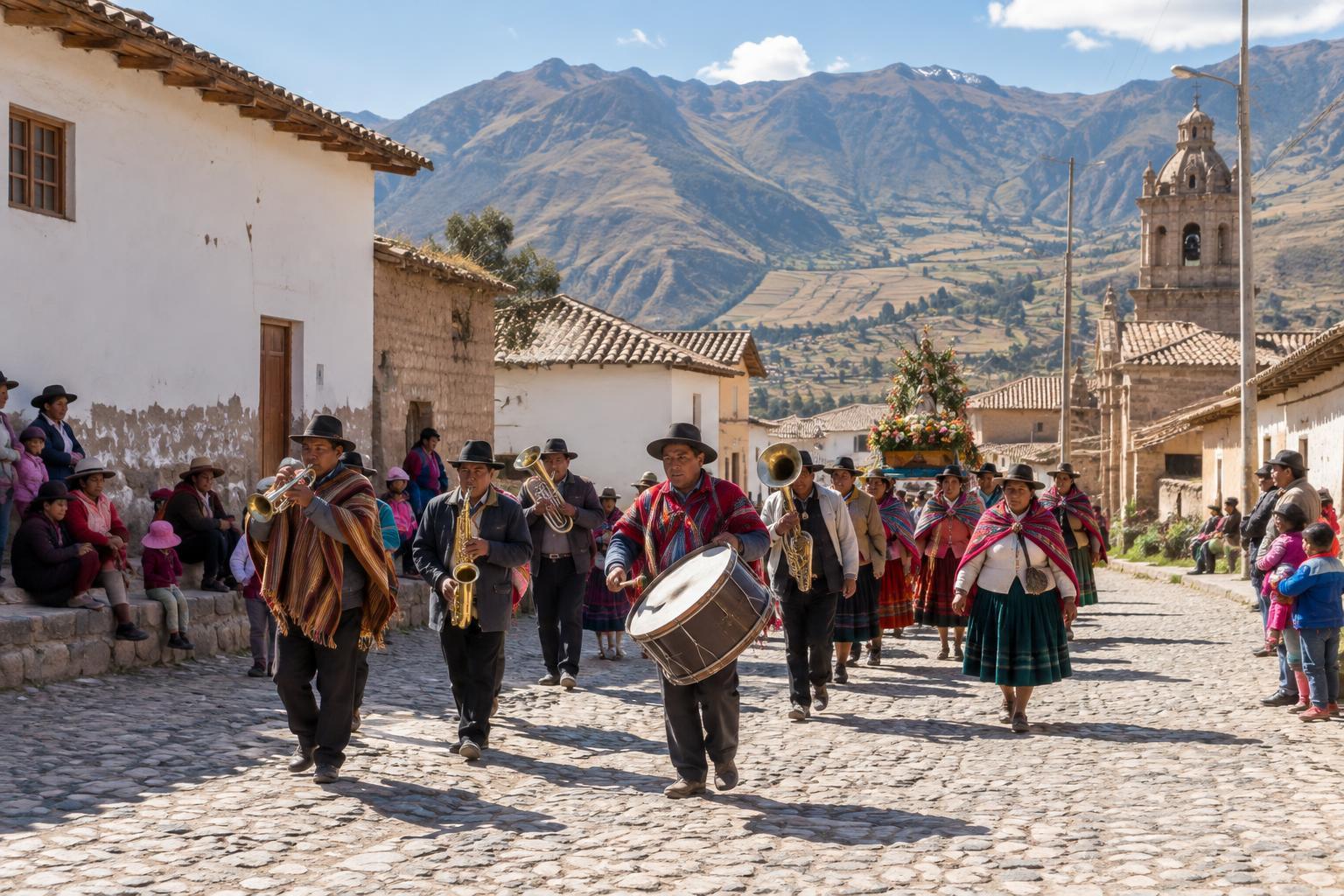
A procession may include musicians, dancers, people carrying images or other objects, and those walking for personal or communal reasons. It can pause, change pace or take a narrow street that leaves little room for spectators. Leave the route clear, especially at corners and doorways. Avoid stepping between participants to get a better view or walking backwards in front of a group while filming.
Choose a place where you can stand without blocking residents, vendors or people trying to reach their homes. If you need to cross, wait for a clear break and follow the lead of those managing the route. A crowded square can make it tempting to climb onto steps or walls, but first consider whether the spot is private, fragile or needed by participants. Giving way is often the simplest way to show respect.
Listen to the music and notice its setting
Music can do more than fill the streets. Depending on the event, it may help set a walking pace, announce a group’s arrival or accompany a particular part of a ceremony. Instruments, rhythms and songs vary widely across Andean regions; there is no single festival soundtrack. You do not need to identify every tradition to appreciate that a musical moment may matter to the people taking part.
Make space for bands and dancers who need room to move. Keep your own audio quiet, and avoid talking loudly through moments when others have fallen silent. If you are invited to dance, it is fine to accept or decline courteously. Watch how participants move and where they gather rather than assuming that every open space is a dance floor for visitors.
Know when to put the camera away
A lively public street scene may be photographed freely in practice, but visibility is not the same as consent. Ask before taking a close portrait, especially of a child, someone preparing clothing or someone engaged in prayer. A gesture toward your camera and a simple question can help when you do not share a language. If the answer is no, lower the camera without trying again from farther away.
Be particularly cautious inside religious buildings, near offerings or during quiet ceremonial moments. Follow posted rules and any request from people responsible for the space. Do not use a flash where it may distract participants, and do not ask someone to repeat an action for a picture. When photographing from a distance, think about context too: an image shared later can reach an audience that the person pictured never expected.
A good test is whether taking the photo changes what is happening. If you must step into a procession, interrupt a conversation or draw a child away from their family, let the moment pass. Watching without recording can be a fuller way to experience it.
Be a considerate guest beyond the main event
Festivals often extend into markets, meals and informal gatherings. Buying food or a small item can be a pleasant way to participate, but ask before photographing a stallholder at work and avoid treating someone’s home or shared meal as a visitor attraction. Dispose of rubbish carefully, respect queues and keep access routes open.
Plans can change with weather, local decisions or the needs of participants, so allow time and avoid demanding that an event match a schedule you found elsewhere. If someone corrects your behaviour, respond calmly and adjust. You can leave with a strong memory of a festival without seeing every part of it: listen closely, make room for others and accept the boundaries people set.


