Why a bakery is worth a stop
Bread is part of daily life in many Andean towns and cities, but there is no single Andean bakery experience. A shop in a highland village may have a different selection from one in a large city. The breads, opening hours and way customers order can also vary from one street to the next. That variety makes a bakery a good place to explore without treating one visit as a lesson about an entire region.
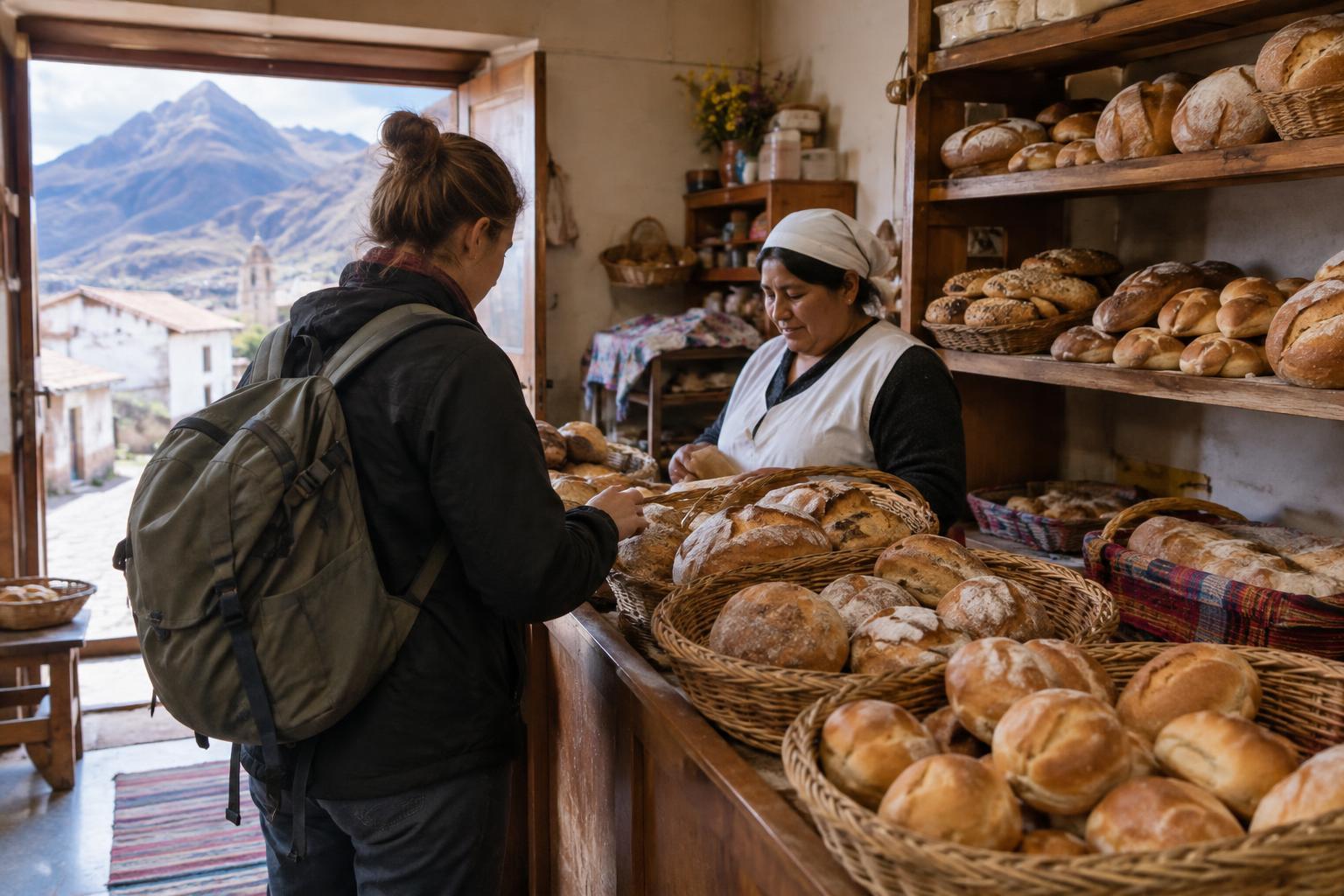
A neighborhood bakery may sell bread for breakfast or an afternoon snack, alongside pastries and other baked goods. Some have a counter where staff serve customers; others let customers choose items before paying. Pause at the entrance and watch how the queue works. If trays, baskets or tongs are provided, follow the shop’s system rather than reaching for bread with your hands.
Look beyond the familiar loaf
Travelers who expect only sliced sandwich bread may find rolls, flat or round breads, sweet buns and filled pastries. Names and recipes can change across borders and within a country, so the most useful approach is to notice what is actually in the case. A bread that looks plain may be slightly sweet, while a shiny topping could be an egg wash rather than a sweet glaze. Ask if the distinction matters to you.
You do not need to know every name before ordering. Point to an item and ask, “¿Cómo se llama?” (“What is it called?”). For a simple description, try “¿Es dulce o salado?” (“Is it sweet or savory?”). Staff may be busy, especially when several customers are waiting, so keep questions brief and let others take their turn. Buying one unfamiliar item at a time is a low-pressure way to discover what you like.
A bakery also offers small clues about local routines. Notice what people buy in pairs, what sells quickly and whether customers take their purchases away or sit down. These observations are more useful than assuming that a bread has the same role everywhere it appears.
Ask clearly about ingredients and prices
If you avoid particular ingredients, ask before buying rather than judging by appearance. “¿Lleva queso?” asks whether something contains cheese; “¿Lleva carne?” asks about meat. For eggs, milk or other ingredients, “¿Lleva…?” followed by the ingredient is a useful starting point. An answer at a busy counter may not settle a serious allergy concern, especially if baked goods share equipment, so choose an option you can assess with confidence.
Prices may be displayed per item, by weight or for a package. If the sign is unclear, ask “¿Cuánto cuesta este?” (“How much does this cost?”) while indicating the bread you want. Then check whether you pay at the counter where you ordered or at a separate till. Carrying small-denomination cash can make a modest purchase simpler, though payment options vary by shop.
If you want several of the same item, hold up a number of fingers or say “dos de estos” for two of these. Check what has been packed before leaving, particularly if you bought several similar-looking breads. A polite “gracias” and a moment spent making room for the next customer are often all the etiquette the exchange requires.
Make the visit part of a wider food journey
Try bread while it is fresh, then notice what you might pair it with: a hot drink, fruit or something purchased elsewhere. Keep crumbs and packaging with you until you find a suitable bin. If you photograph the shop, focus on the food or ask before including staff and customers. A bakery is a workplace, not a staged attraction.
Food routines can be a rewarding way to compare places without declaring one version more authentic than another. For further browsing about ordinary rituals elsewhere, explore Everyday Customs · Sweden Culture Guide; for a broader cultural comparison, visit Swedish Culture · Sweden Culture Guide. If you enjoy reading about how travel and place connect beyond South America, browse Nature and Travel · Sweden Culture Guide as well. Back on your route, let each bakery speak for itself: learn a bread’s name, ask what you need to know and leave space for the next town to surprise you.